
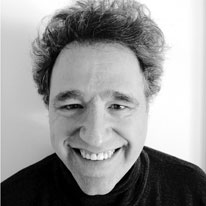
Samantha Power brings to foreign policy an activist impulse that many in the pro-Israel community wish was more prevalent among American diplomats.
Except Power, a former White House National Security Council staffer nominated June 5 by President Barack Obama to represent the United States at the United Nations, also has directed her interventionist inclinations at Israel.
A former journalist and Harvard-educated lawyer known for her work on human rights and genocide, Power presents a rare and polarizing dilemma for the pro-Israel community: Embrace her proclivity for tough U.S. intervention and hope it never manifests in her dealings with Israel; or block her nomination.

Two conservative Jewish groups, the Zionist Organization of America and Emet, have taken the latter approach. In urging the Senate to kill Power’s nomination, they have cited a 2002 video in which Power appears to advocate transferring U.S. assistance from Israel to the Palestinians and deploying an intervention force to protect the Palestinians, among other statements.
“The overwhelming evidence of her entire record causes us great fear and concern,” the ZOA said in a statement.
Meanwhile, an array of Jewish groups including the Anti-Defamation League, the Jewish Council for Public Affairs and the Conservative movement’s Rabbinical Assembly have endorsed Power unreservedly.
The ADL and the Rabbinical Assembly each used the phrase “champion of human rights” to describe Power, who first came to wide public attention with the publication of her 2002 book, “A Problem from Hell: America and the Age of Genocide,” which considered American inaction in the face of genocides.
Notably, two groups that maintain a regular U.N. presence, the American Jewish Committee and B’nai B’rith International, had no comment. B’nai B’rith said it was withholding approval of Power’s nomination until she addressed her earlier remarks under oath during Senate confirmation hearings.
A similar dichotomy is playing out among Republican senators, with Sen. John McCain (R-Ariz.), a leading critic of what he sees as Obama’s gun-shy foreign policy, saying he would support her, and Sen. Ted Cruz (R-Texas), a tea party favorite, expressing deep skepticism at the choice.
The difference has been pronounced even among Republican Jews, with the Republican Jewish Coalition urging senators to ask Power hard questions about past statements and Rabbi Shmuley Boteach, whose failed candidacy last year for the House of Representatives was touted by the RJC, singing her praises.
Power, 42, was born in Ireland but moved to Pittsburgh as a child. Her coverage of the Balkan wars for a number of American media outlets in the 1990s led to an interest in human rights law.
Her 2002 book drew strong reviews and attracted the attention of Obama, who was contemplating a Senate run. Power joined his 2008 presidential campaign as an adviser and later the Obama White House, where she worked on multilateral organizations.
Central to critiques of Power is a 2002 chat she had with a U.C. Berkeley professor, Harry Kreisler, when she was heading Harvard University’s Carr Center for Human Rights.
Kreisler, hosting Power on his public access program, framed a question about U.S. intervention in the Israeli-Palestinian conflict as a “thought experiment” and asked Power what she would do if “one party or another” seemed ready to commit genocide. At the time, Israelis and Palestinians were mired in the second intifada.
“It seems to me at this stage, and this is true of actual genocides as well and not just major human rights abuses which we’re seeing there, you have to go in as if you’re serious, you have to put something on the line,” she said. That would mean taking the billions of dollars “serving Israel’s military” and investing it instead in the state of Palestine and a “mammoth protection force.”
Power also noted that taking such a step “might mean alienating a domestic constituency of tremendous political and financial import.”
The comments aroused widespread concern in the pro-Israel community when they surfaced during the 2008 presidential campaign, including among some who are now championing her nomination.
Power and her defenders have played down the significance of those comments, emphasizing that Kreisler had asked the question hypothetically.
Josh Block, who directs the Israel Project, praised Power, and described her views as evolving since the video.
“Over the past few years, Samantha has made a commendable effort to build ties with the pro-Israel community and develop deeper appreciation of the issues vital to our interests in the region, Israel’s security and the U.S.-Israel relationship,” Block said in an email.