
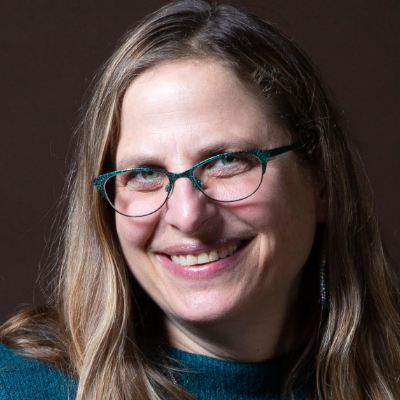
Mira Kamigaroff was a young child in Tel Aviv when the entire family was awakened by a loud noise. Her parents went outside to investigate, and found a Russian man, who was “literally starving,” she said. The man was selling his accordion to obtain money for food. So her parents bought it, even though they could barely afford it themselves.
The sixth of seven children, Mira was the daughter of Bukharan immigrants from Uzbekistan, in the former Soviet Union. And although her family was very poor, they were also artistic: The one thing her parents always managed to afford was music lessons.
“On weekends, we would gather around the Shabbat table after the meals, and we each had an instrument. We’d sing and play, from Mizrachi music — the music of the…Jews who came from Arab countries — to the Chassidic songs, and even patriotic Russian music,” she said. “We were the most musical family in the neighborhood. Everyone would go outside onto their balconies to hear us.”
Mira, who goes by only her first name professionally, is opening the musical festivities of “To Life! A Jewish Cultural Faire,” on Sunday, Sept. 10 in Palo Alto. The event begins at 10 a.m. on California Avenue near Park Boulevard.
Mira said her father had a beautiful voice and came from a long line of cantors. One of her uncles was the cantor of South Tel Aviv and sang at all the big holiday events.
Her mother also encouraged the children’s artistic endeavors.
When Mira came to the United States around 20 years ago, settling in Palo Alto, she pursued the visual arts, painting and sculpting. She also began investigating different genres of music. She trained in opera, performed in musicals and then began singing jazz.
“All along I had a lot of instruction, and I developed my voice well,” she said.
But the longer she sang jazz, she realized that to truly master it “you have to be born here. It wasn’t the right thing for me to do. It helped my singing enormously, but it just wasn’t right.”
So it was time for her to return to her roots, the music she loved as a child: Mizrachi music.
“When I hear it, my heart is filled up with joy,” she said. “When you grow up, and it’s something you love, you love it the rest of your life.”
But Mira was among the minority. Until recently, the Israeli public did not appreciate Mizrachi music in the same way that she did.
Most Ashkenazi Israelis hated it, she said. With its use of the oud and doumbek, the same instruments and rhythms found in Arab music, Israelis called it exactly that, “Arab music.” They thought it was unsophisticated, primitive and even “barbaric,” Mira said.
But in the last decade, the music that used to be confined to the shuks and bus stations has gone mainstream. As Israel has grown more tolerant of Sephardi and Mizrachi culture, Mizrachi music is now considered hip, and Israeli radio stations that never played it in the past now do.
“Now, it’s so in,” she said. “Everyone loves this music. You don’t have to go to the bus station anymore to hear it.” Mira thinks the change is “the best thing that could happen to Israel.”
Mizrachi music, she said, “is very emotional music. At that time, everything that was emotional was considered negative. When you’re trying to create a country and whatever their role models were at the time, they needed to follow the rules that they knew.”
And for her personally, playing it here has opened new doors. She has teamed up with some Arab musicians, something that would have been unthinkable had she stayed in Israel.
When she was growing up, she didn’t know any Arabs. “I had a lot of fears and a lot of stuff in my mind,” she said. “I went through five wars or whatever it was, but when I came here, I met a few of them. I learned to see the beauty and the human side of them. I’m privileged to know them and collaborate with them.”
Mira has performed at some of the Middle Eastern restaurants in San Francisco, where she now lives, and says that while her audience usually doesn’t understand a word of what she sings, they’ll sit and listen for two hours.
Which is fine with her. After so long, she feels, it’s time for Sephardi and Mizrachi Jews to celebrate their culture.
In the old days, she said, it almost felt like “trying to fit your large feet into a small size shoe, just for the heck of it,” she said.
Now, Sephardi and Mizrachi Jews can “show their essence of where they came from.”