
The 16-year-old was lucky — in that he wasn’t killed. But he suffered burns across 40 percent of his body. His leg was shattered and was set with a metal plate. More than 100 pieces of shrapnel were removed from his body. He spent two months in a burn unit and several more months in rehab.
Noam is doing OK now, but each time a bombing happens, his mother mourns not only the loss of life, but she thinks of those other mothers who will have to go through what she did.
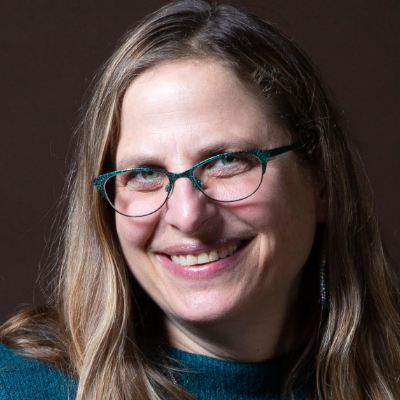
Rozenman, a Jerusalem resident, has spent much of the past five years helping her son recover. And when the intifada broke out in September 2000, bringing with it a new wave of bombings, she felt she had to do something.
“I decided I wanted to do something to affect the energy of violence and hatred that we live in,” she said, during a recent visit to San Francisco. “I see religion as a true source of healing and reconciliation.”
Rozenman was here on behalf of the United Religions Initiative, an S.F.-based organization aimed at building global interfaith cooperation.
Rozenman, raised Reform and originally from Chicago, married an Israeli. For many years, they divided their time between Israel and Los Angeles, and they became more observant. They made Jerusalem their full-time home 11 years ago.
And now more than ever, Rozenman is looking to her religion to bridge differences.
As the founder of the Interfaith Encounter Association, Rozenman is bringing together women of different faiths to do something as simple as visiting each other’s homes.
“Given the headlines of today, for Israeli Jews and Israeli Arabs to be going in and out of each other’s homes is truly miraculous,” she said.
In July, 80 Jewish, Muslim, Christian and Druze women met for two days in Nazareth, chosen specifically because of its diversity, where they discussed religious tolerance and social justice from the varying religious perspectives.
Rozenman described how women were at first a bit reluctant to share rooms with others who were of different faiths.
“But at the end of the conference they were all hugging and kissing each other,” she said, “and they came out with a plan of action.”
The organization has no political agenda, she said. And so far, it has been so successful, she believes, because it is for women only.
“Feminine energies of religion, which stress reconciliation and harmony, are the antidote to the masculine energies of religion, which are promoting vengeance and hatred in the Holy Land,” she said. “We women are attempting to strengthen nonviolent energies to overcome the religious distortions that fuel this holy war.”
In a conflict in which dehumanizing the other is too often the norm, Rozenman offered an example of women of different faiths supporting each other.
One Jewish member of the group lost her grandson, a soldier, in the incursion into the Jenin refugee camp.
“The Muslim and Christian coordinators went with me to console her, at the same time that the Muslim coordinator was collecting food to take to Jenin,” she said. “Women can be mothers and sisters together and transcend the violent reality we’re all living in and suffering from.”
When asked why one should seek out encounters with the other, rather than stay away from them, as most people do right now, she said, “I don’t want any child to be blown up or to blow himself up. I would like to see an end to the killing.”
Surprisingly, it’s not such a challenge finding women willing to participate, because women are hungering for such interaction, she said. Building on the success of the program in Nazareth, she hopes to organize such a gathering of women throughout Israel.
Interestingly, Rozenman has friends on the political right and left who think she is wasting her time.
Her right-wing friends think she is naive and a traitor for meeting with the enemy. Her left-wing friends believe religion is silly, and that her time would be better spent protesting against the occupation as they do.
She agrees with neither. “This work centers me in the common humanity we all share, and to me, it’s very strengthening to be with Muslim and Christian Arab women and be in an environment of loving and sharing,” she said. “It gives me hope. It gives me a feeling there is some sanity in the midst of the total insanity of our situation.”
She continued: “If I don’t do something, I am colluding with what’s going on. I have to do whatever I can to try and find the way to strengthen forces of love and nonviolence…to counteract the immense energy of hatred and violence and mistrust that I’m forced to live in. We’re all suffering.”