
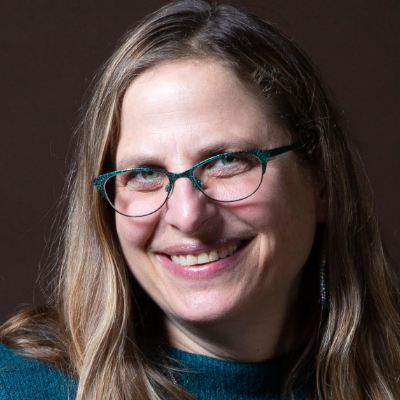
To some, a window frame is just a window frame. But to an artist, a window frame is a witness to history.
That’s why Emeryville-based artist Helene Fischman had two window frames shipped back to her from Terezin, the concentration camp outside Prague, in the Czech Republic.
Fischman, who has spent several residencies in Eastern Europe — in Terezin and in the town of Oswiecim, otherwise known as Auschwitz — has a show of her work called “Art From the Ashes,” at the Osher Marin Jewish Community Center through May 15. In September, it will be on display at the Albert L. Schultz Jewish Community Center in Palo Alto.
The window frames in question came loose from buildings in the town of Terezin in a massive flood in 2002. They were not part of the concentration camp section of the town.
“The flood rendered Terezin in shambles. It was so like a postwar visual, with piles of rubble throughout the streets,” said Fischman.
Since the window frames lay in rubble that was going to be destroyed, Fischman decided to take them and turn them into art. They are two of the pieces in her show.
In 2003, Fischman got permission to create an art studio in an old barrack of Terezin. Some local non-Jewish artists had gotten permission to use some of the old barracks for this purpose, and Fischman found about it by searching the Internet.
The residency was rather informal, meaning that once she got there, she was given a key to her barrack, and that was basically all.
“I got a key to go in this huge, very super-creepy old barrack and create a studio,” she said. “There was no one around, no community of artists. They didn’t meet with me or talk to me about what my purpose was. It was just me looking for art supplies in Prague and carting them out there.”
Since the other artists working in the barracks worked with glass, she was able to go to a glass-blowing factory where she could work with them. Fischman is not a glass-blower herself, but she created a piece she calls “Ner Tamid” (eternal light) by designing the wire mold that the glass was blown into.
In 2004, Fischman spent eight weeks as an artist in residence at the Auschwitz Jewish Center, which is located less than two miles from the infamous death camp.
The center was created “to be a place of respite, since visiting Auschwitz-Birkenau is so emotionally exhausting,” she said.
While there, she collaborated with poet Jehanne Dubrow to create a work honoring centuries of Jewish life in the town.
“There was a large Jewish community there from the 1500s to the war, and they were basically forgotten about because they lived in the shadow of Auschwitz,” said Fischman.
While the four paintings and corresponding sonnets are now permanently hanging at the Auschwitz Jewish Center, digital representations of them appear in the exhibit.
Fischman said of them, “The work is the result of spending many hours talking about what it felt like to be there and thinking about the history and Jewish symbolism and the number four and the seasons and colors, and how we could create visually and with words [a piece] that would be accessible to the viewer but with hidden symbolism, too.”
Many of the works in the show are photographs, like those of the home of Shimshon Klieger, the last Jewish resident of Oswiecim. He survived the war and returned to his family home, but died in 2000, with the home in terrible condition. Fischman got permission to go inside from his siblings, who own the house but live in the United States.
“Art from the Ashes” will be on display at the Osher Marin JCC, 200 N. Pedro Road, San Rafael, through May 15. Information: www.marinjcc.org.