
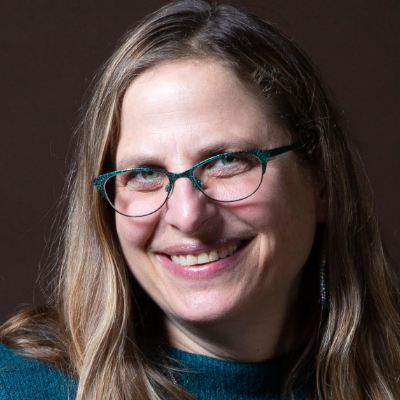
Gloria Steinem has attended a feminist seder for the past 30 years or more.
Calling it the “most consistent Jewish presence in my life,” Steinem was part of the group of prominent feminists that held the first women’s seder in New York long before such celebrations were in vogue.
“In the beginning we were much more conscious of being intransigent because we were taking a patriarchal ceremony and transforming it,” she said in a telephone interview from her home in New York. “Over time, many more people have done it, and are more likely to take that for granted.”
Steinem will be the keynote speaker at the “Power of One” annual dinner, put on by the Women’s Alliance of the S.F.-based Jewish Community Federation on Monday, March 7.
The founder of Ms. magazine and the National Women’s Political Caucus, Steinem at 70 remains one of the most powerful and well-recognized voices in the feminist movement.
As president of Voters for Choice, Steinem said it was devastating to see “the work of decades being undone” by the Bush administration.
“I understand why reproductive freedom is resisted,” she said, as it allows a system of male dominance to reign. Steinem bemoaned the fact that numerous obstacles are being imposed that hinder women’s choices.
“Even though abortion is legal, it’s inaccessible to poor women and those who need parental consent. There’s little to no sex education in the schools, suppression of condoms, even to prevent AIDS, and the suppression of the morning-after pill. Depending on our age and place and life, we experience it in different ways, but it all falls under reproductive freedom and how and when we decide to have children.”
Steinem said that after Roe v. Wade — the landmark Supreme Court decision legalizing abortion — she never thought she’d see the current erosion of reproductive rights. But on the positive side, she never thought she’d see the end of apartheid or the dissolution of the Soviet Union, either.
When Steinem first became active in the women’s movement, women were making 57 cents to every dollar a man was paid for the same work. Now it’s about 76 cents, she said.
“The issues haven’t changed, but they have diversified and deepened.”
Now a big hurdle in equalizing pay is attributing economic value to unsalaried work.
“Whether done by men or women, raising children, taking care of aging patients, or AIDS patients, or whatever, society needs to reward that work,” she said. Forty percent of the U.S. work force is engaged in such tasks, but it’s treated as if it has no economic value, she said.
“We started out only counting as work what was given an economic value because it was done by men.”
Steinem is supporting an effort to get legislation passed that would give tax credits for such unpaid work.
While the Middle East is not her area of focus, Steinem has participated in dialogues with Israeli, Palestinian and American feminists over the years, and she lent her name in support when Brit Tzedek V’Shalom — Jewish Alliance for Justice and Peace was founded, as she did many years ago when the New Israel Fund was founded.
As an adviser of an international women’s rights group, Equality Now, in 2002 Steinem helped Terry Greenblatt, an Israeli feminist and Maha Abu-Dayyeh Shamas, a Palestinian feminist, meet with the United Nations Security Council to demand that women have a greater role in the peace process.
“The women testified that they were the only people speaking with each other consistently,” she said. “But the resolution made no impact.”
On more of a personal note, Steinem, whose father was Jewish, said that she felt Judaism had greatly influenced her life in terms of its values.
Though her paternal grandmother died when Steinem was 5, she was a suffragist and the first woman to serve on the school board in Ohio, she said. She also founded a vocational school.
“I’m sure that I benefited from her tradition of ethical living and emphasis on education,” she said.
“Power of One” will take place 5 to 9 p.m., Monday, March 7, at the Hilton San Francisco, 333 O’Farrell St. Carol Saal will receive the Judith Chapman Memorial Women’s Leadership Award. The dinner is $82 plus a minimum pledge of $365 to the JCF’s annual campaign. Information: (650) 919-2110 or [email protected].