
If you can’t beat ’em, join ’em.
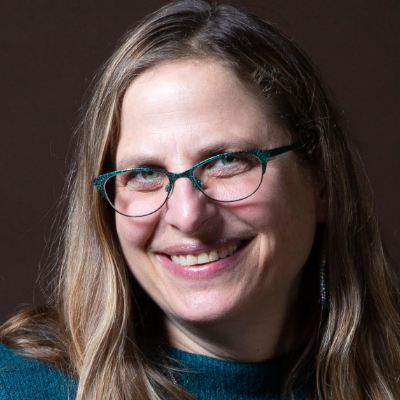
That’s why Alon Tal, formerly one of the Jewish National Fund’s harshest critics, now sits on its international board.
The Israeli environmentalist was in the Bay Area earlier this month on behalf of the Arava Institute for Environmental Studies, an institution he founded. While here, he warned about the dire environmental problems Israel and the Middle East are facing.
According to Tal, when building its forests, the JNF “would plant whatever it wanted, wherever it wanted.”
He said the JNF’s forestation practices were irresponsible at best, destructive at worst.
“We argued that some areas have to be natural woodlands and some shouldn’t be touched at all. The planning had to be happening at a more detailed level.”
As head of the Israel Union for Environmental Defense, Tal took the JNF to the Israel Supreme Court several years ago and won. The court ruled that the JNF was acting like a “state within a state” and changed its practices. So much so, that Tal and four other “green” activists now serve on JNF’s international board.
The 44-year-old Tal grew up in North Carolina and moved to Israel when he was 17. Noting that an usually large percentage of activists in the Israeli green movement are American transplants — himself included — he said that in this era of redefining Zionism, it was time for diaspora Jews to “be more aware and more involved and help Israelis transcend the pettiness of the present political discourse and preach a higher ground.”
“The last thing I did at the IEUD was to give the OK to sue the JNF, so it was one green organization suing another for its practices.”
But even though the result was what he was hoping for, Tal said, “Perhaps I got it wrong. The best way to influence JNF’s policy was to get on the inside. Now I’m chairman of sustainable development.”
Located at Kibbutz Keturah in the Negev desert, the Arava Institute draws students from around the world with its interdisciplinary approach to environmental studies at both the undergraduate and master’s level. At any given time, Israelis, Palestinians, Americans and Jordanians are studying about how they can work together to solve environmental problems of the region.
And while Israel has made some strides in fixing its environmental record, much more needs to be done, Tal warned.
In one often-quoted statistic, in the year 2003, while 200 Israelis were killed in terrorist attacks and 500 were killed in traffic accidents, 1,200 were killed by air pollution, and that was only in the cities of Tel Aviv and Ashdod. That figure came from a report by the Environmental Protection Agency, in cooperation with the Israeli Ministry of the Environment.
The report caused Israel to reduce sulfur content in fuels and close the gap between Israeli and European fuel standards.
Unlike the past four years, Tal said, “This is a happy time for me to be here, peace is back.”
But there were many lessons to be learned from the first round of the peace process, he said. He warned that if not negotiated carefully, the fruits of peace could bring more highways and development that only creates more pollution and toxic waste.
Finally, Israelis are voting for local candidates in HaYerukim, Israel’s Green Party more and more, he said, showing raised environmental consciousness.
Tal concluded by saying that no discussion about environmental issues in Israel for a Bay Area newspaper could be complete without mentioning the S.F.-based Goldman Fund. “There’s not a single environmental initiative in Israel that hasn’t been touched by them in some way.”