
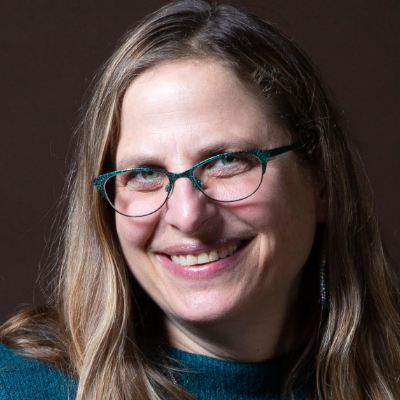
It’s not every day that one hears an Arab quoting Golda Meir’s line, “There will be peace when the Arabs love their children more than they hate Jews.”
And there are probably not a whole lot of Arabs lining up to go on a speaking tour on behalf of an organization called “The Israel Project” — a Washington, D.C.- and Jerusalem-based organization whose mission it is to educate journalists and the public about Israel (www.theisraelproject.org).
But Nonie Darwish did both, as she visited the Bay Area last week on a speaking tour called “Moms For Peace,” sponsored by the Israel Project and, locally, by the S.F.-based Jewish Community Relations Council and the Israel Center.
Accompanying her was Miri Eisen, who was born in San Rafael but moved with her parents to Israel as a child, and recently retired as a colonel in intelligence with the Israel Defense Forces.
The two women — who spoke Feb. 14 at the St. Claire Hotel in San Jose, and Feb. 15 at the Westin St. Francis in San Francisco — had not met before doing the weeklong tour but became fast friends.
Darwish was born in Cairo, the daughter of Lt. Col. Mustafa Hafaz, an Egyptian officer who directed the fedayeen, a militia that launched many attacks against Israel. When she was a young girl, her family moved to Gaza.
Hafaz was responsible for the deaths of so many Israelis that when Darwish was 8, the Israelis carried out an operation to kill him. He was promptly named a “martyr,” and a main square in Gaza is named in his honor.
“Which one of you will avenge your father’s death by killing Jews?” Darwish remembers being asked.
She also remembers learning in Gaza’s schools that Jews are like dogs, that peace with Israel is a sign of weakness, and that Israeli soldiers kill pregnant Arab women for sport, just to see whether they are carrying a boy or girl.
Finally, her widowed mother took the children back to Egypt, where Darwish witnessed honor killings, polygamy and female genital mutilation, all done in the name of Islam. “There is something wrong with the way my religion was practiced and taught,” she said.
Now living in Los Angeles, Darwish called friends back in Egypt after 9/11. She was shocked to hear that they blamed it on the Jews.
Darwish, who is a frequent contributor to the far right-wing Front Page Magazine, did not mention in her talk that she later married a Christian and converted to Christianity.
While Darwish spent most of her talk disparaging the Arab world and Islam, Eisen spoke more about her personal life — specifically the challenges of raising children in Israel.
She acknowledged that while the Israelis were full of hope in the ’90s, as they thought they were headed toward peace, things were not the same for the Palestinians.
“For them, it got worse and worse,” she said. “Their state was not looking closer at all.”
She said the outbreak of the second intifada changed everything, especially parenting.
Describing a memo that crossed her desk alerting her that a terrorist was on the loose in her neighborhood, she said, “What does a working mom do? This was a war that came into our homes and into our hearts and left a scar.”
Eisen said that she went into the Palestinian territories a lot in her capacity in the army, and what she saw in the schools was deeply troubling. While Israeli children were using apples and oranges to learn addition and subtraction, Palestinian textbooks asked, “if three olive trees are cut down by Israeli settlers, and if four houses are knocked down by Israeli bulldozers,” she said. Posters of “martyrs,” i.e. suicide bombers, hung on the walls as if they were movie stars, she said.
And yet, if one of her children comes home after a terrorist attack saying, “‘I hate all Arabs,’ I have to give an opinion as a mother.”
While intolerant voices can be heard in Israel, both women indicated that they are heard much more so on the Palestinian side.
“Tolerance needs to be on both sides,” said Eisen.