
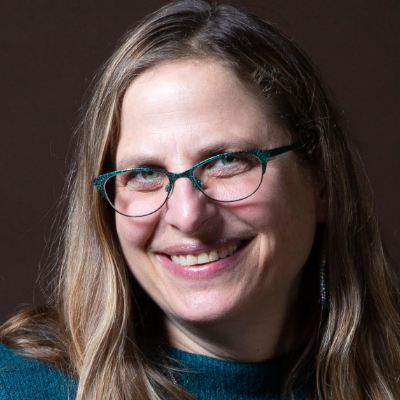
Whenever Karine Elharrar wants to see a movie, she has to call the theater to find out whether it’s accessible to people in wheelchairs. Even if it is, she still may find that her place in the theater is behind a column, blocking the view.
Elharrar, 28, is a lawyer from Israel. At the age of 9, she began experiencing discomfort when she ran, and was diagnosed with muscular dystrophy. The disease progressed slowly, but by the time she was 19 she was in a wheelchair.
Elharrar has spent the last year at American University in Washington, D.C., as one of two law students selected for a fellowship by the New Israel Fund.
The New Israel Fund was founded in San Francisco by people concerned that certain segments of Israeli society, including the disabled, were not getting their share. The fellowship selects two lawyers who have already worked in civil or human rights and brings them to the United States for a year to get American experience. They then return to Israel, where they work for a non-governmental organization that usually is an NIF grantee.
Elharrar was a good candidate. Before coming to the United States, she worked on behalf of the poor. Here, she has worked for two disability rights organizations — Mental Disability Rights International and the American Association for People with Disabilities — as well as taking classes, joining students from 72 countries.
She came to San Francisco not only to meet with New Israel Fund board members, but also with some of the local pioneers in the disability movement. They wanted to know what they could learn from Israel, she said.
In Israel, disabled people pay fewer taxes. The government helps sponsor the purchase of a special car and with public housing.
But Elharrar said much still needs to be done.
Before 1999, there was a major difference between America and Israel, regarding the disabled.
“The U.S. was more progressive,” she said, citing the field of special education as one example. “Here the disabled had rights by law, and in Israel, it was more like charity cases.”
In 1999, a major law was passed in Israel, granting equal rights to the disabled. But that law has been implemented very slowly, she said.
In 2005, a second law was passed, dealing with accessibility, and it reached much further than the first. If only it were implemented, Elharrar said, Israel would be the most progressive country in the world.
She said Israel still is not very comfortable for wheelchair users. “One stair can ruin my whole day.”
When Elharrar returns to Israel, she plans to work for Bizchut, a non-governmental human rights organization for people with disabilities. Bizchut began with seed money from the New Israel Fund.
“My goal is to expand the number of lawyers working on this issue in the small district courts and not only the Supreme Court,” she said. “People with disabilities are considered weak, and they don’t often know their rights are being violated. Allowing them to go to court is allowing them to be part of society and to get their rights and abolish the stigma.”
After all, the way Elharrar sees it, only the environment makes her disabled.
“In an office with only stairs, I’m a disabled person,” she said. “But in an office with a ramp, I’m like everyone else.”