
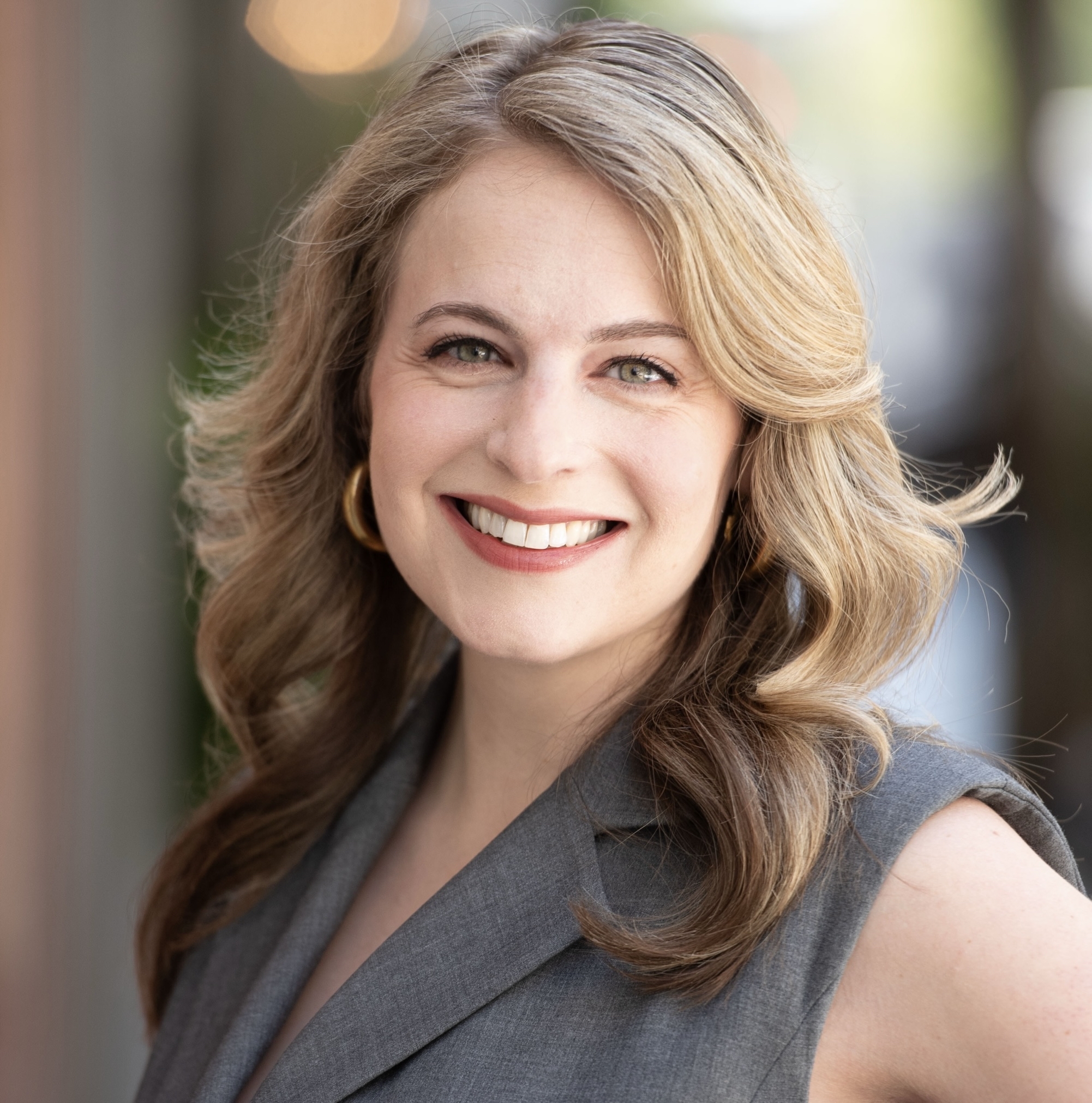
If Toby Salk’s Berkeley home were burning down, she knows exactly what belongings she’d rescue on her way out: the mahjong set that belonged to her grandmother and mother, and two more sets that belonged to her aunts Alice and Rose.
“They are my prized possessions,” Salk said.
Eighteen years ago, Salk was laid off from her job as director of creative services at retailer Sharper Image. “I was over 50, and I couldn’t get a job,” she said. “Someone suggested that I teach mahjong — and I thought it was ridiculous.”

Salk, now 72, had been playing mahjong recreationally with different groups of Jewish women for practically a lifetime, some 30 years, and eventually warmed up to the suggestion.
Word spread, and Salk’s mahjong classes became a hit. For over 15 years, she has drawn a steady stream of newcomers to her monthly brunches, introductory classes, strategy lessons and virtual information sessions. Over the last couple of years, though, Salk has noticed a “surge” in the game’s popularity, particularly among women who are inheriting mahjong sets from loved ones and want to pick up the game in their memory.
“I wouldn’t even know how many times I’ve been contacted by women who say, ‘I have this set. It was my mother’s. I wished I would have learned, and I want to learn now,’” said Salk, who grew up in Queens watching her mother and sisters play.
Mahjong originated in China in the 1800s and caught on in the U.S. around 100 years ago, eventually morphing into a version of what is now known as American mahjong. And it continues to evolve. Long associated with “little old Jewish ladies,” the game is having a moment among younger Jewish adults. While it is challenging and difficult to master, it is also highly social. And for many, the game is a powerful connection to their mothers and grandmothers.
Mahjong in America
The American version, which has its own rules and slightly different tiles than the original, cemented itself in Ashkenazi Jewish culture when five Jewish women in New York City founded the National Mah Jongg League in 1937 to standardize the rules.

Abercrombie and Fitch, then a sporting goods retailer, had begun manufacturing American mahjong sets in the 1920s. But without standardized rules, the game was overly complicated and confusing, according to the league website.
American mahjong is traditionally a four-person game using tiles that represent three suits (bams, cracks and dots) and four symbols (dragons, winds, flowers and jokers). Each player aims to collect a winning combination of 14 tiles. The complicated rules generally stay the same year to year, but the tile combinations change annually, determined by the national league. The league sells a tri-fold card with the update, something its 350,000 members highly anticipate each year. Earlier this month, the league mailed out the 2024 card — its 87th.
Over the years, proceeds from card sales have been donated to Hadassah, Brandeis University and many hospitals and medical research foundations. In the past, “every card that they sold, they gave to the war efforts, or charities, or all kinds of organizations along the way,” Salk said. “And it’s still done that way.”
A mahjong set typically includes 152 tiles, dice and four tile racks. In 2014 the Contemporary Jewish Museum in San Francisco presented “Project Mahjong,” an exhibit that featured antique ivory tiles and modern plastic ones, oral histories, vintage photographs and other iconic tributes to the game’s impact on American Jewish culture.
Millennial mahj
Jillian Osheroff, 25, grew up in Foster City watching both of her grandmothers play mahjong with their friends. She has vivid memories of the loud and lively games her “Grandy” Gloria Brickman played with a core group of Jewish women.
“They’d have their little chicken salad with the crackers that they bring for the lunchtime snack,” she recalled. “It was very, in a way, mythical to me.” But it also felt inaccessible, she said, partly due to her young age.

Osheroff described Brickman, 87, as a “mahjong queen” who, like many avid players, is a fierce competitor.
“She takes it very seriously. And maybe that’s why for me, it always felt like I can’t, I’m never going to get to that level,” Osheroff said.
Last year, Osheroff started playing too, but with people her own age. Her foray into playing the game was a young adult introductory mahjong brunch at Hobee’s Restaurant in Mountain View. (I met her through the young adult beginners lessons I teach on the Peninsula.) Now, she plays with a group of beginners in her peer group at Harry’s Hofbrau in Redwood City, where they continue sharpening their skills and enjoy a meal together. Both men and women participate.
“I don’t know if I can put myself in the shoes of what my grandmothers were feeling when they were my age,” she said. “But I’m assuming it has that same feeling of you sit down, you have your food, you’re chatting, you’re laughing. It’s nice to have that community.”
Sarah Pinfold, 32, plays mahjong with Osheroff’s group. She never had any interest in learning mahjong until her grandmother Shirley Pinfold, whom she talked to on the phone every day after work, died in 2020. Pinfold considered her grandmother her best friend.
“I was finding different ways to still keep her memory alive while not being so sad about it, and I think it’s just a happy memory to remember the time when I was at her house and watching her play,” said Pinfold, a San Mateo resident who works in commercial real estate. “Watching her do something that she really liked to do.”
Pinfold’s grandmother grew up in a San Francisco neighborhood with many Chinese immigrants. She attended Chinese “tea parties,” Pinfold said, where she learned the Chinese version of mahjong. Later, through the Jewish community, she picked up American mahjong.
‘Thirsting for it’
Molly Shapiro, 33, of Berkeley has a similar story about her grandmother Arlene Shapiro Bierman, whom she calls Bubbe Arlene. When her grandmother, who played mahjong several times a week, died in 2019, Shapiro began learning the rules. While working at Berkeley Hillel, she started a group called the Bay Area Mahj Squad — BAMS, a pun on mahjong tiles of the same name — and began teaching her friends the game.
Recently, Shapiro, an executive assistant and life coach, went to Boichik Bagels in Berkeley for a Monday morning mahjong meetup with strangers. She was the youngest person there by several decades and enjoyed the age diversity of the group.
“I really miss having grandparents,” she said. “That’s a thing I haven’t had since 2019. And so I’ve actually been really thirsting for it.”
When Shapiro visits Orange County to see her family, she plays mahjong with her mother and sister-in-law, using the set that belonged to her Bubbe Edith, her maternal grandmother.
Mahjong is ideally played with four people, but three can make it work.
“When the three of us play, we always have this extra pile” of tiles, Shapiro said. “We call it the bubbe pile.”

San Francisco resident Mira Cohen, 26, plays a two-person version of mahjong with her mother, Viviane Wildmann, who lives in Los Altos.
Wildmann began playing with women from her havurah (friendship group) at Congregation Beth Am when Mira was an infant and would sit in her lap. For Mira’s bat mitzvah, Wildmann’s mahjong group gave Mira her own set, with beautiful green-backed tiles, in honor of Mira’s middle name, Emerald.
Wildmann still plays mahjong with her longtime friends. During the pandemic, she started playing with her cousin in Utah using online mahjong sites.
“If she plays at home and if I’m there, I swear I’m good luck,” Cohen said about her mom. “If I come down to observe a game, she wins.”
Karen Gruschka, 30, of San Jose, enjoys playing mahjong with Osheroff, Pinfold and other Jewish young adults, both men and women. She relies on her mother, Myra, for a deeper understanding of the complex rules.
“I play with her and teach her more details about the game and strategies,” said Myra Gruschka, who lives in Belmont. “I think we have fun playing.”
Amanda Cohen, 36, of San Mateo, plays mahjong with the set she inherited from her grandmother. She’s the fourth generation in her family to play. Her mother in Philadelphia has mahjong cards passed down from her mother that date back to the 1940s.
“It just makes me feel connected to so many iterations and generations of Jewish women,” Cohen said. “It’s like we have this thing in common.”
Mob wife mahjong
Myra Gruschka learned to play mahjong, as many women do, at her synagogue. She now plays most of the time by rotating through her friends’ homes. But Laurie Beijen of San Francisco describes those settings as “places with bad coffee and bad lighting.” That’s why she is putting a new spin on mahjong that she hopes feels more elegant for women, especially moms, who want a night out on the town.
Mahjong means “sparrow” in Chinese. So earlier this year, Beijen, along with friends Alice Meyers and Kara Yugoff, started Sparrow’s Lounge, a series of beginners lessons, tournaments and pop-up mahjong events in San Francisco with fun themes.
“Mahjong is like poker night for women,” Beijen said of the goal of Sparrow’s Lounge, though men are welcome too. She said her events draw interest from Jewish and non-Jewish women alike, with male participants few and far between.
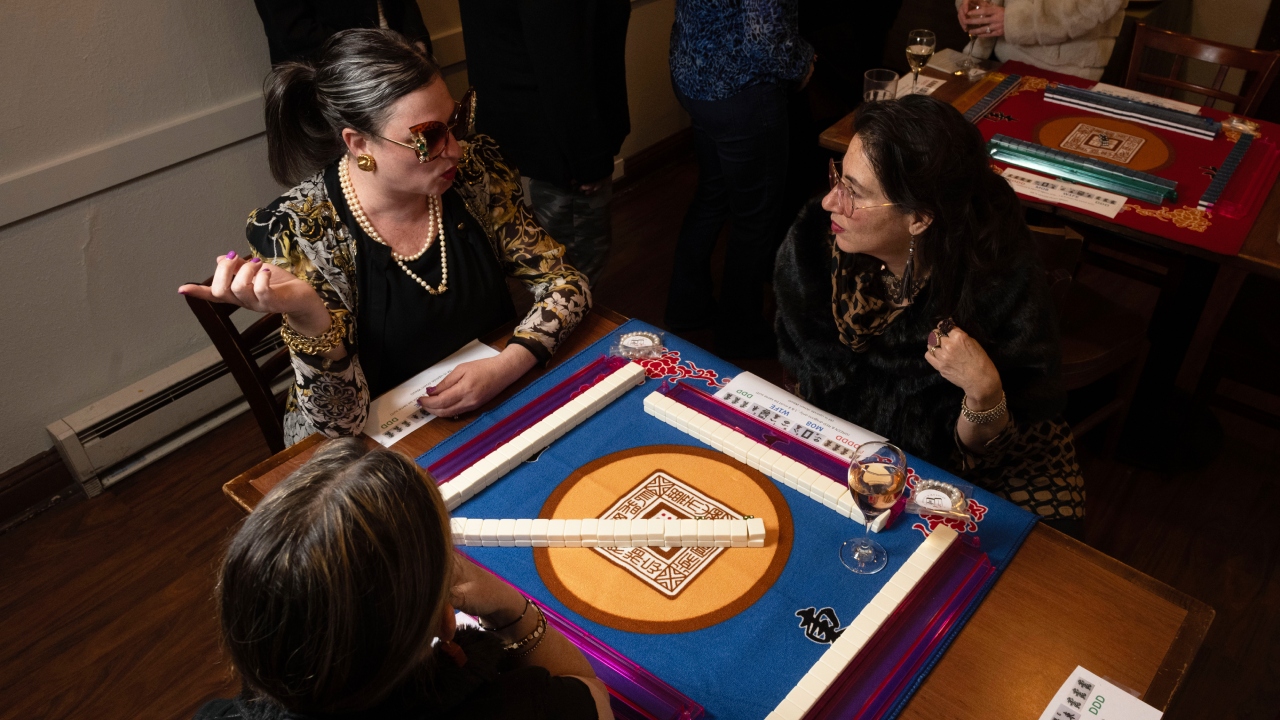
Sparrow’s Lounge hosted its first pop-up in February, in the backroom of a candy shop in San Francisco, and sought to create a “speakeasy” ambiance. The theme combined Valentine’s Day and Lunar New Year and featured candy and dragon-themed prizes, in honor of the year of the dragon.
In March, the theme was “mob wife mahj night” at an Italian restaurant in West Portal with “lots of gold jewelry, red lips and big hair,” Beijen, 49, said.

This month Sparrow’s Lounge hosted an April Fools event, giving a last hurrah for the 2023 league card at the Links Bar and Grill. And in May, Sparrow’s Lounge plans to host a “Cinco de Mahjo” tournament with lunch and cash prizes. A portion of proceeds will be donated to Shalom Bayit, the Bay Area-based agency dedicated to preventing domestic violence in the Jewish community.
“This isn’t our grandmother’s mahjong anymore,” Beijen said. “We harken back to the tradition, and that’s definitely where a lot of that nostalgia comes from. But I love that people are learning and making it their own and doing fun things with it.”
Salk has also noticed a more diverse group of people coming to her mahjong lessons, from outside the Jewish community and across ages and ethnicities. She said the 2018 film “Crazy Rich Asians,” which put the intensity and complexity of mahjong on display, certainly renewed interest in the game.
She regularly receives emails, text messages, cards and letters from people who came to her mahjong class many years ago and express gratitude for connecting them to people who have since become friends.
“We’re like sisters. We’re bonded,” she often reads in the notes describing the friendships formed through mahjong. “I think that’s one of the best parts of anything I’ve ever done.”
Shapiro said that when she attended her grandmother’s funeral, she reconnected with the women from her grandmother’s decades-old mahjong group who she’d known throughout her life.
“They were like, ‘Are you still biking to work? Are you still doing this thing?’ and I was like, “Oh my God, how did you know?’ And they’re like, ‘Well, Arlene told us everything,’” Shapiro said.
“For me, it’s so beautiful that she had this community that showed up for her even after she passed away,” she said. “That’s what I wanted.”
Now, with the mahjong tiles passed down from her two bubbes and growing interest from her peers, Shapiro is creating that community for herself.