

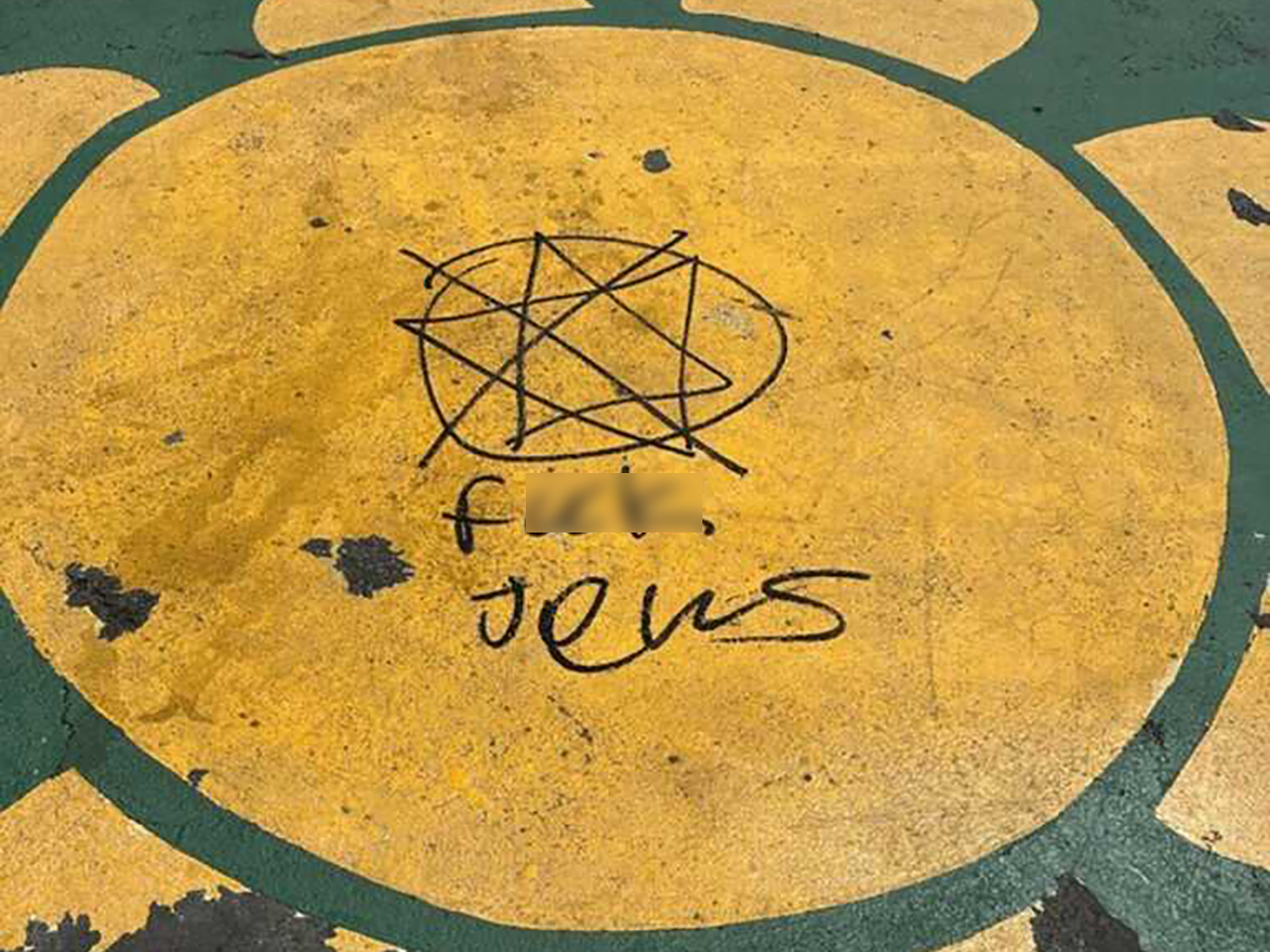
“Kill the Jews” scrawled on a wall in Noe Valley. “Zionism Kills” painted on highway signs in Oakland. Since Oct. 7, too many of us have encountered antisemitic, anti-Israel and anti-Zionist graffiti and vandalism in our communities, compounding our collective trauma and undermining our sense of security and belonging.
Over Father’s Day weekend, vandals painted a Palestinian flag over an entire flight of stairs at San Francisco’s Alta Plaza Park and accused Israel of murdering fathers in huge letters on the pavement below. The graffiti was painful for anyone with affinity for Israel to see.
One Pacific Heights resident sprang into action. She took photos, reported the graffiti to the city, filed a police report and alerted the Anti-Defamation League and the community security team at the Jewish Community Federation and Endowment Fund.
Another neighbor who happens to volunteer with San Francisco’s graffiti abatement program obtained cleaning supplies, and residents came together to scrub away the graffiti even before the city’s Department of Public Works had a chance to respond.
How many of us would have known what to do had we encountered a message of hate? How many of us — feeling targeted and triggered — might have moved on hoping that others would act?
Data drives policy. It all begins with you filing that initial police report.
Law enforcement, local governments and organizations like ADL and the Federation play important roles in safeguarding our communal well-being. But everyone’s partnership and participation are vital. Here are steps to take when you encounter any type of hateful graffiti and vandalism.
First, follow the example of the proactive Pacific Heights resident: Document, photograph and report offensive graffiti when it is safe to do so. Most municipalities have websites and phone numbers to request graffiti abatement. Detail the hateful nature of the graffiti and the enduring harm it causes while visible. Ask for an estimate of how long it will take to remove the graffiti. The system isn’t perfect, so your patience and persistence may be necessary.
Second, it is important to report hateful vandalism to local law enforcement online, in person or by calling the agency’s non-emergency phone number. (Call 911 for any emergency or crime in progress.) This is the necessary first step to ensure law enforcement investigates these incidents fully, documents them as potential evidence in any current or future criminal case, analyzes trends and allocates their resources effectively to serve the community. Data drives policy. It all begins with you filing that initial police report.
Finally, contact our agencies. Report antisemitic and hate incidents to ADL through our online portal. Your incident report will immediately enter ADL’s database and route to the regional office corresponding to your ZIP code for followup where appropriate. We may also flag the incident for possible inclusion in ADL’s annual Audit of Antisemitic Incidents, which provides an essential snapshot into the state of antisemitism nationally. We depend on engaged community members to help us compile this vital data.
For explicit threats, acts of violence or physical damage to Jewish organizations, contact police first and alert the Federation’s community security team using this Incident Reporting Form so we can bring our collective resources to bear. (Information entered into that form also goes directly to the national Jewish security initiative, known as the Secure Community Network.)
As difficult as the months since Oct. 7 have been, our community is resilient, and our institutions are strong. But we have to act together. Everyone can play a role in helping to counter antisemitism and hate when you encounter it. Thank you for being our partners in this communitywide effort.