

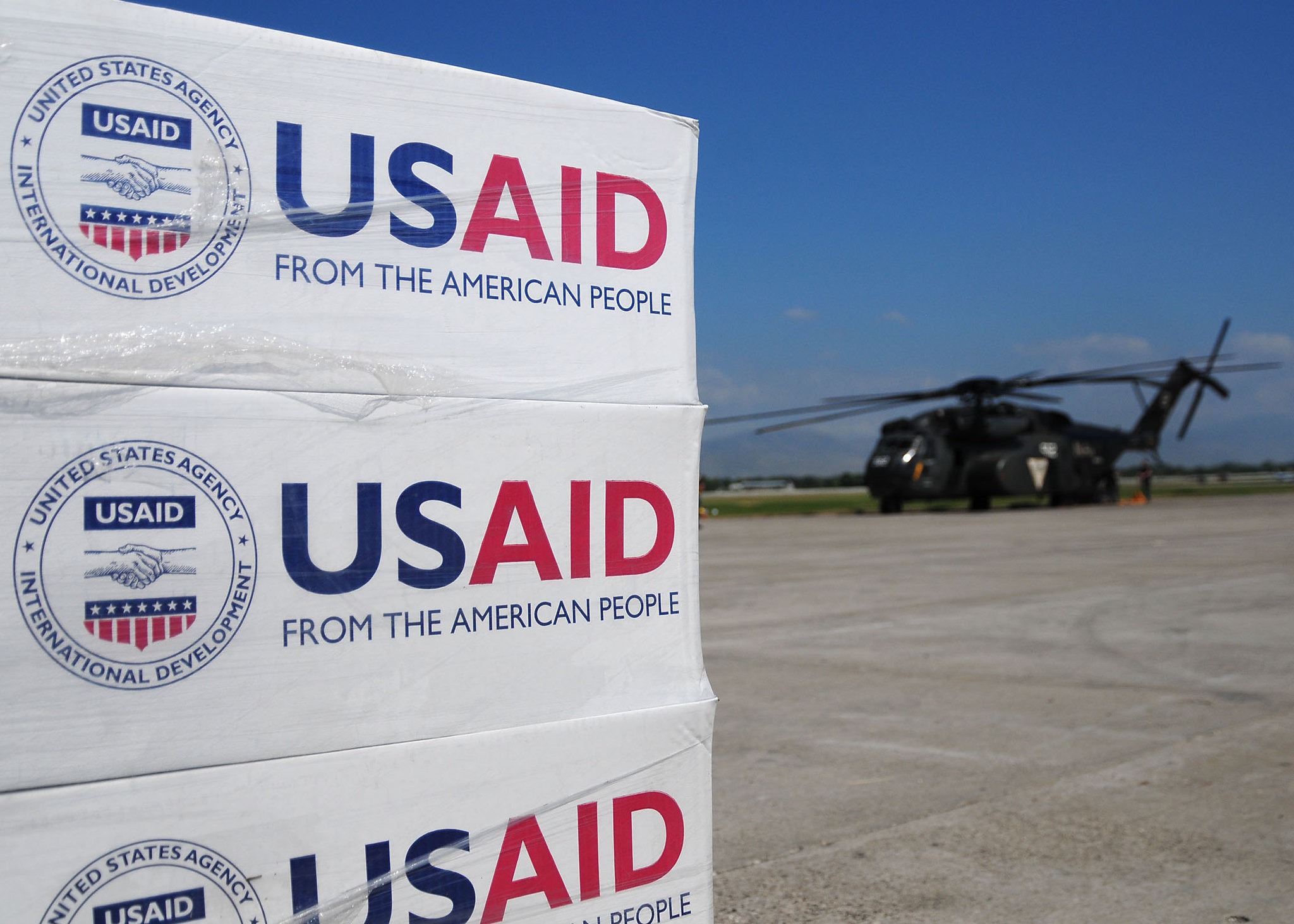
Before the U.S. Agency for International Development’s website was dismantled by the new Trump administration, it stated, “USAID leads international development and humanitarian efforts to save lives, reduce poverty, strengthen democratic governance and help people progress beyond assistance.”
USAID, where I once proudly worked, was essentially describing itself — albeit in classically stodgy governmental prose — as the outward-facing part of the mission set forth in Emma Lazarus’ sonnet “The New Colossus”:
…Mother of Exiles. From her beacon-hand
Glows world-wide welcome; her mild eyes command
The air-bridged harbor that twin cities frame.
“Keep, ancient lands, your storied pomp!” cries she
With silent lips. “Give me your tired, your poor,
Your huddled masses yearning to breathe free,
The wretched refuse of your teeming shore.
Send these, the homeless, tempest-tost to me,
I lift my lamp beside the golden door!
Lazarus’ poem, one of the greatest works of Jewish American literature, welcomed many of our families to this goldene medina. Despite fits and spurts of a tenacious antisemitism, American Jewry has thrived here.
I am one of many beneficiaries of America’s embrace of Jews. Upon graduating from college in 2011, my great American dream was to move to Washington, D.C., and work in foreign relations. In 2014, I started a job at USAID.
I was drawn to USAID by my Judaism; our somewhat nomadic history and the eternal link between Jews all over the world led me to feel like a citizen of the world. I was also motivated by my belief that each person is made b’tzelem Elohim, in the image of God. Many who work in the international development field are drawn by a similar sense of compassion and global citizenship.
And of course there is the practical side to USAID’s work. The agency’s raison d’etre and the best case for its federal funding is that its projection of American soft power is the U.S. government’s most cost-effective diplomatic tool.
The Trump administration claims that its philosophy is “America first,” but its behavior demonstrates a creed of “America only.” Closing USAID is not just a bureaucratic change. It signals a shift away from a vision of America that is engaged, compassionate and strategic.
As Jews and as Americans, we must respond by opposing this shift and by articulating and championing a vision of progressive patriotism.
This vision must be framed positively: America’s highest value is not its exceptionalism, but how we use the great privilege of our wealth and power. I believed this long before I left government work and became a rabbi. My commitment to that perspective has only deepened over the years.
In Pirkei Avot, Shimon Hatzadik famously teaches that the world stands on three legs: Torah, avodah (service, either in prayer or in good deeds), and gemilut chasadim (acts of lovingkindness). I have seen these words fulfilled in USAID’s work.
I worked on a program called Partners for Enhanced Engagement in Research, which gave grants to scientists doing critical policy work for governments that did not have the means to fund research. I helped American institutions of higher education — from major agricultural research institutions to diverse urban community colleges — connect to similar institutions abroad and expand the impact of their work. I saw colleagues help end the Zika virus epidemic, provide water access in drought-stricken Kenya, protect against rising water levels in Bangladesh, help Indonesians rebuild after the Sulawesi earthquake and tsunami, and so much more.
Any American tourist knows that the U.S. dollar goes far in low-income countries; the most expensive part of many of USAID programs was paying American farmers for their crops and American drug companies for their medicines. USAID also partnered with American corporations, such as Microsoft, to expand internet access in rural India, Nigeria and South Africa. In fact, from 2001 to 2014, the value of USAID’s public-private partnerships exceeded $16.5 billion.
Now America will lose all of that income. And much worse, millions around the world could die. Nobody wins.
If service and lovingkindness — two out of three legs the world stands on — collapse, how will the world go on?
As Jews, we know what happens when countries close their doors, ignore suffering and frame compassion as weakness. As Americans, we know that security comes from partnerships of mutual benefit and the value of a good reputation.
Rabbi Mordecai Kaplan taught that American Jews are dual citizens of both the Jewish and American civilizations. As such, we don’t just live here; through us, our Jewish values shape what this country stands for. Louis Brandeis famously said, “To be good Americans, we must be better Jews.” He was making a point about Zionism, but it also applies to responding to this moment in history with clarity and diligence.
Losing USAID shows us that something about America is broken. But our outcry against that proclaims there is an equal and opposing force for good within this country. Even as we feel besieged by domestic antisemitism, our Jewish community must take up the work of avodah and gemilut chasadim when the government steps away.
The work before us isn’t just the fight against populist isolationism. It’s also about claiming and propagating a vision of America that we are proud to call our own, one that reflects both Jewish and American values. And then we need to put our money where our mouth is.