

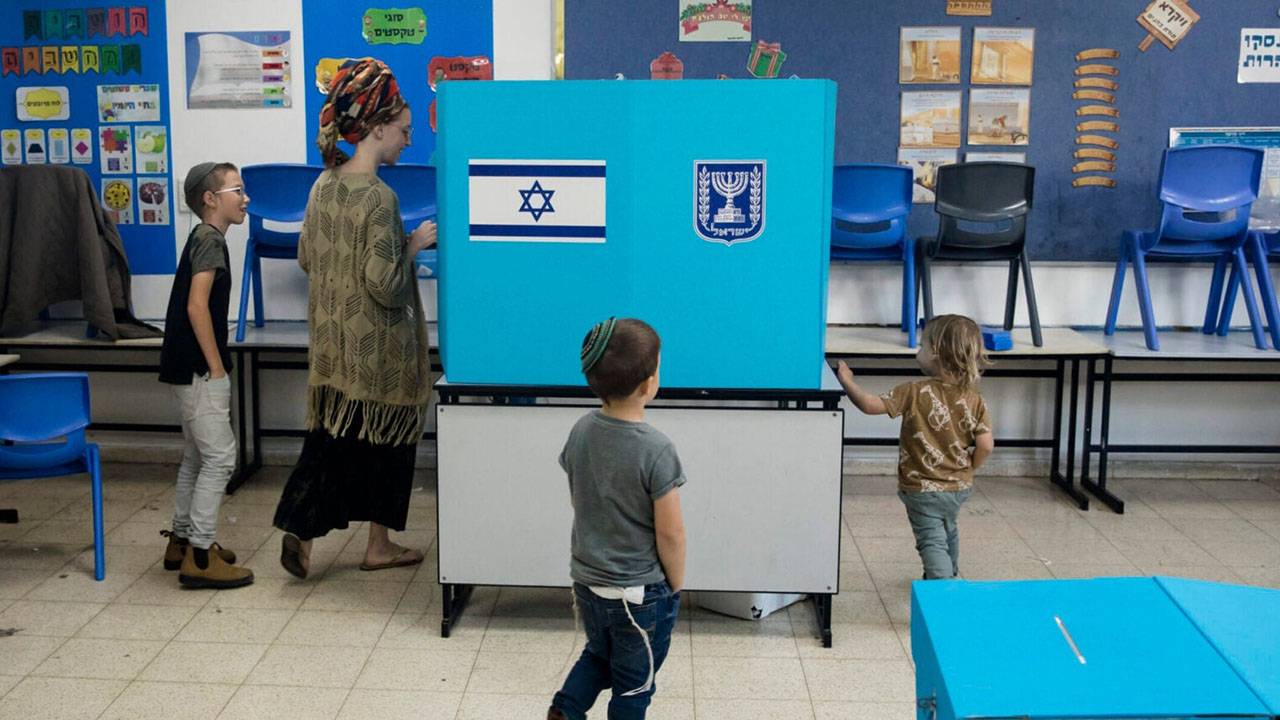
(JTA) — After several months in which it seemed possible that elections would be called earlier, Israel now has a date for its voters to head to the polls to pick a new government.
The Knesset House Committee on Sunday affirmed an election date of Oct. 27, the latest allowed under law, following months of political maneuvering to force an early collapse of the government by both the opposition and the governing coalition.
The determination puts Prime Minister Benjamin Netanyahu’s government on track to be the first to complete a full term in more than half a century, with the Knesset set to disperse on July 17.
The timeline means that the intense final weeks of campaigning will overlap with the three-year anniversary of the Oct. 7, 2023, attack on Israel that is looming large over the race, particularly for Netanyahu, who was in charge at the time.
It also means that Israelis living abroad — who number more than ever before — now know when they must be in Israel if they wish to vote. Unusually, Israeli law does not allow for absentee voting except in a narrow number of situations, meaning that almost anyone with an Israeli passport who lives outside of Israel must travel back to cast a ballot.
In past elections, Israelis abroad have faced tough decisions about whether to fly home to vote — most recently in 2022, when Israel had a fifth round of elections in four years.
This time around, there are even greater pressures.. A record number of Israelis have moved abroad in recent years, with 70,000 leaving in 2025 alone and causing Israel to experience an unusual net migration loss. Flights, meanwhile, are historically expensive, owing to cancellations by foreign carriers amid war-induced uncertainty. At the same time, the stakes of the election are high, with analysts and politicians of all ideologies warning that Israel’s democracy is at an inflection point.
Netanyahu and his supporters say reelecting him is the only way to keep Israelis and Jews around the world safe, while a wide range of opposition parties say only they can safeguard the country’s future, For now polls suggest that the opposition has a majority of voters’ support — though it’s not clear which bloc will have the necessary votes to form a government and, within the opposition bloc, which parties will command
Recent polls have shown a new party formed by Gadi Eisenkot, a former army chief whose son was killed during the Gaza war, leading among the opposition and rivaling Netanyahu’s own Likud party in its share of voters. A joint party led by the former prime ministers Naftali Bennett and Yair Lapid also has support from significant numbers of voters, as does a left-wing party led by the retired army general Yair Golan. Parties will hold primary elections in the coming weeks.
Some initiatives are already underway to help Israelis abroad get home for the election. The AID Coalition is collecting information from interested Israelis with the goal of potentially chartering flights to boost the number of people who can make the trip — though each voter will bear his or her full costs.
“Don’t let distance silence your voice,” the group tweeted on Sunday, after the election date was announced.
Meanwhile, Israeli academics have set a slew of conferences for the days before the election, across dozens of fields. Israeli Science and Academia Week says it “seeks to leverage the arrival of thousands of Israeli researchers from abroad to Israel during the Knesset election period to create professional meetings, encourage research collaborations, reveal new academic opportunities, and strengthen the international status of Israeli academia.” It may also have the effect of enabling Israeli academics working abroad to get their institutions to subsidize their travel and permit them leave during the school year.
Israelis posting to social media are already noting a spike in ticket prices just ahead of Oct. 27. But many are also sharing screenshots of their ticket receipts that show the number of days until their trips — and the election.
“My entire feed is full of screenshots of flight tickets to Israel for election day. People spending money, taking time off, and coming specifically just to vote,” tweeted Avi Edelson, an anti-government activist. (His LinkedIn account identifies him as working at El Al, Israel’s main airline.) “It reminds me how much people care about the future of this country.”