

“Oct. 7th was a response not an attack. Do your f****** HW.”
So declared a placard carried by a Berkeley High School student at a 2026 “teach-out.” Next to it is a map of Israel in the colors of the Palestinian flag, implicitly proclaiming: From the river to the sea, Palestine will be free of Israel. A photo of the sign later appeared in the school’s yearbook — on a spread titled “social justice.”
As a former New York City public high school teacher, current UC Berkeley historian who has published on civil rights history and a parent of two BHS students with family in Israel, this picture — proudly displayed under the heading “social justice” — was a gut punch. It mocked the very pedagogy and social justice it purported to celebrate, while demonstrating how normalized anti-Zionism (which calls for the elimination of Israel, as opposed to criticism of Israeli policy) has become in school districts across California, several of which are currently being sued and investigated over antisemitism.
How did the phrase “social justice” become synonymous with support for the elimination of a 78-year-old nation-state? Where is the social justice in presenting the mass murder, mutilation, kidnapping and rape of civilians perpetrated by Hamas on Oct. 7, 2023, as anything other than an attack on innocent people, including children and elderly? Moreover, how did such a perverted conception of justice become so commonplace that it passed scrutiny with the teacher supervising the yearbook’s production?
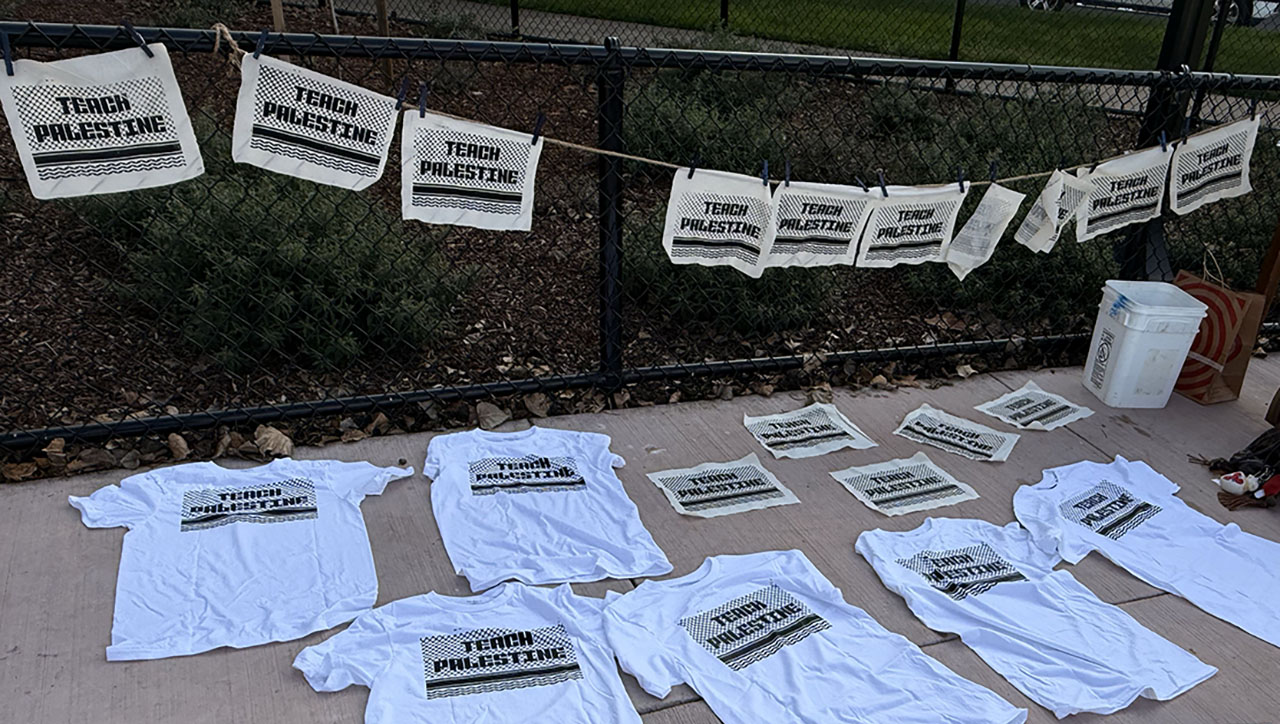
The answer to these questions stems from the explosion and perversion of “social justice” in education. Teachers hold annual conferences on “teaching for social justice.” Their unions do the same, while also centering “social justice” in their mission statements. Advocacy organizations, such as Teach Palestine, promote curricula “necessary for all schools who are committed to anti-racism, equity and social justice.”

Never mind that philosophers have long-debated the meaning of justice. No, these educational evangelists purport to have found the light, including, most recently, as it illuminates the Israeli-Palestinian conflict. Using their platform as a pulpit, they deploy contested claims about Israel — that it’s a “settler-colonial,” “apartheid” state committing “genocide” against Palestinians — as uncontested truths, as the equivalent of gravity to physics.
In classrooms where this occurs, a complex, decades-old, two-sided conflict gets reduced to a simplistic, one-sided caricature. Indoctrination trumps inquiry, chilling student thought and expression.
Some students have learned these lessons so well that they insist there is nothing to learn from those who don’t share their moral certitude. For example, a leader of a student group said of her dean at UC Berkeley Law during a public radio interview, “I don’t read his op-eds.… I don’t feel like I need to engage with people … on the wrong side of justice,” referring to his belief in the right to Jews’ self-determination on part of their ancient homeland.
At BHS, the 2026 yearbook proclaims, an “intense activist culture” of “always justice in action … has been cultivated.” If dogmatic self-assurance in being on the right side of justice is the fruit of this cultivation, it’s high time to dispense with the “social justice” pedagogy that helps seed this bitter crop. Acquiring deep knowledge and honing sophisticated, engaging pedagogy is a lifetime’s pursuit. Delivering instruction that flows from this sturdy foundation is an act of profound social justice, just by a different name — teaching. Focus on that.
By this measure of social justice, California schools are perpetrating a serious social injustice. For example, from 2015 to 2025, math proficiency rates for Black students in Berkeley have been a consistently dismal 16-26% (versus 74-82% for white students). English proficiency rates are little better. Comparably abysmal scores and gaps can be found in Los Angeles, Oakland and San Francisco, despite substantial increases in per pupil expenditures since 2016-17.
What could serve the cause of social justice more than teaching math and English proficiency to students who lack it and closing the enormous achievement gap in the process as California educators could learn from their counterparts in Mississippi?
As for teaching “social justice,” existing policy in Berkeley and elsewhere provides sound guidance: Teachers must “ensure that all sides of a controversial issue are impartially presented, with adequate and appropriate factual information.” This same policy proscribes teachers from advancing their “own historical, religious, political, economic or social bias.”
Even my daughter, in 8th grade, sensed that a teacher wearing a “Teachers for Palestine” pin was no more appropriate than a teacher wearing a “Teachers for Israel” pin or a MAGA hat. This policy is basic pedagogical duty — not to mention completely consistent with jurisprudence on free speech and its limits in classrooms.
In 2015, charges of racism prompted BHS to retract the yearbook and initiate a “restorative justice process.” Thus far, despite appeals from parents, school leaders have not even offered an apology for having failed to do due diligence when it comes to vetting the yearbook’s contents. Nor have they issued a statement affirming the district’s values by disavowing the yearbook’s conflation of “social justice” with justification for Hamas’ attack.
After these steps are taken, BHS can tackle how to do better justice to “social justice” by approaching instruction of it as fluid, debatable and replete with what the great sociologist Max Weber once called “inconvenient facts” for all “party opinions,” rather than fixed and reducible to slogans on pins or posters best left for bumper stickers; respecting the boundary between classroom and picket line; and maintaining a firewall between what teachers can say as private citizens exercising free speech from what they may say and display in their classrooms exercising academic freedom, which is essential for teaching students how, rather than what, to think.