
With June upon us, the quest for summer reading begins.
One story Jewish novelists generally have avoided is that of the world’s most famous Jew. And perhaps with good reason: After Sholem Asch, one of the leading Yiddish writers of his day, released “The Nazarene,” his 1939 novel portraying Jesus from a Jewish perspective, he was rejected soundly by his Jewish readership, and his reputation never recovered.
 But times have changed, and today there is great interest in exploring the Jewish roots of the Christian story. In this context, acclaimed British novelist Naomi Alderman’s bold new novel, “The Liars’ Gospel,” is particularly welcome.
Set in Roman-occupied Judea during the years following Jesus’ death (his name is rendered in the book as Yehoshuah, as most of the Jewish characters are called by their Hebrew names), the book is divided into four sections, each narrated by a figure from the gospels.
The first storyteller is Yehoshuah’s weary and hardened mother, Miryam. Her mournfulness is rooted not only in her son’s death, but in his earlier rejection of her in favor of his new family of followers. When she takes in one of these devotees who appears at her door, she has little use for his stories of miracles.
Miryam’s narrative is followed by that of Yehoshuah’s former disciple and betrayer Iehuda (Judas Iscariot), who, following a crisis of faith, has come to live among the privileged Romans, even as he largely despises their ways.
The final two narrators express two poles of Jewish response to the Roman occupation.
 Caiaphas, the high priest appointed by the Roman governor, is hated by many as the greatest collaborationist of them all. However, he comes off as more a pragmatic politician than a lover of Rome, having convinced himself that there is no alternative to acceding to Roman rule if the Jewish people and their Temple are to survive.
At the opposite ends of the socioeconomic and ideological spectrums is the final narrator, Bar-Avo (Barabbas), the man recorded in the New Testament as having been preferred over Yehoshuah when Pontius Pilate offers to release a single prisoner according to the will of the assembled crowd. Bar-Avo is cast as a militant leader of the Jewish resistance against the Roman occupation. Where Yehoshuah preaches “Love your enemies,” Bar-Avo seeks to destroy them.
The figure of Yehoshuah emerges in assorted memories, coming across alternately as mad and brilliant, self-absorbed and revolutionary. But in many senses the book is less a portrayal of the man than of his stormy era, in which he constitutes a minor figure.
Alderman’s depiction of Judea during this terrible period is vivid. Whereas the New Testament sanitizes the Romans’ cruelty (likely a pragmatic move — with Jerusalem conquered and Jesus’ followers seeking adherents by the time the gospels were written, what gain would there be in demonizing Rome?), Alderman’s pages are bathed in blood. And little of it belongs to Jesus — his death becomes merely one crucifixion among thousands as the Romans respond to Jewish rebelliousness with increasing brutality.
Alderman’s final achievement is in the arena of storytelling itself: One of the fascinating characteristics of the gospels is that the picture we receive of Jesus’ life and teachings is formed in multiple accounts at variance with one another. Alderman’s use of four voices explicitly recalls the pluralistic dimension of these texts, and also introduces the question of trustworthiness. We are convinced that each of the narrators of “The Liars’ Gospel” regards his or her story as being true, but we also witness how their consciousness and perception are affected deeply by the hardship of life under the Romans. And our sense of the slipperiness of truth increases when we experience moments with Jesus that will be assigned different details and meaning when they are later chronicled by the authors of the canonical gospels.
 The role of the narrator is also a central feature of Rebecca Miller’s accomplished new novel, “Jacob’s Folly.” Where many a narrator relates events as the proverbial fly on the wall, the narrator in this book is, in fact, a fly on the wall.
This comes to be when 18th-century Parisian Jewish stage actor Jacob Cerf dies and finds himself reincarnated as a housefly in 21st-century Long Island. It’s a lousy fate (he initially thinks he has come back as an angel), except that he finds he has the unusual gift of being able both to listen to people’s thoughts and to influence those thoughts.
It’s a talent he applies to two locals in whom he takes an interest: Masha Edelman is an Orthodox Jew who feels caught between her family’s strict religious observance and her desire to pursue an acting career. And Leslie Senzatimore is a volunteer fireman and unsuccessful boat repairman with a heart of gold.
Recalling his own abandonment of religion and marriage in order to pursue a life of hedonism, Jacob the fly becomes determined to use his powers to push both Masha and Leslie beyond the boundaries of their own traditions and moral codes.
Miller’s fine detailed style makes the book’s fantastical conceit surprisingly easy to swallow. The book is at its richest when Jacob reveals his memories of his previous life in pre-revolutionary Paris, navigating between the religious environment into which he was born and the possibilities of life in the era of the Enlightenment.
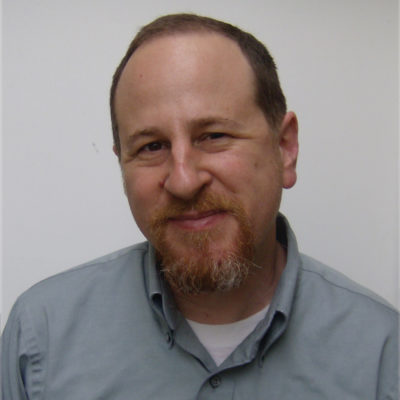
Howard Freedman is the director of the Jewish Community Library, a program of Jewish LearningWorks, in San Francisco. All books mentioned in this column may be borrowed from the library.
“The Liars’ Gospel” by Naomi Alderman (320 pages, Little, Brown and Company, $25.99)
“Jacob’s Folly” by Rebecca Miller (384 pages, Farrar, Straus and Giroux, $26)