
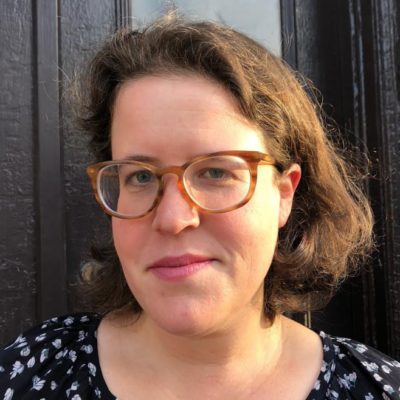
Name: Kate Levinson
Age: 65
City: Inverness
Position: Author, psychotherapist, owner of Point Reyes Books
J.: Your book “Emotional Currency” aims to help women improve their emotional relationships with money. Why is that relationship so complicated?
Kate Levinson: In this culture, money is so much a part of our identity. Once we have enough to provide for the necessities, it’s really about what money symbolizes to us, what it carries in our sense of self. There’s nothing like having a woman who says, “I’ve inherited enough money from my father or my husband dying to never have to work again,” and she’s wearing clothes that are obviously really worn, and she says she can’t go and buy herself a new outfit unless it’s at the thrift store. Not that she necessarily needs to go to Nordstrom, but you want to be able to both spend money and not spend money. You want to be able to give to other people and spend money on yourself and others, and be able to deny yourself as well.

J.: How did you become interested in how women relate to money?
KL: I had an emotional crisis around money that had nothing to do with my financial situation. We sold our house in Oakland with the idea that we would buy a house in Inverness. It was a time when the real estate market was escalating; we were renting in Oakland, and I would walk through the neighborhood thinking that I would never be able to afford a house there again, thinking that I would be out of the real estate market completely. I had a roof over my head, I had money in the bank, I had an income, but when I walked in the neighborhood, I felt like I was a bag lady. I’d wake up in the middle of the night afraid, and I was really obsessed with feeling that I was a step away from being homeless. It was very real to me.
J.: You run workshops for women to explore the role money plays in their lives, and you recently held the symposium “Women, Money and Spirit” at Dominican University. What do your workshops offer?
KL: Workshops are small groups of 10 or 12 women talking about or exploring whatever the essential issues are for each of them. We each have a unique relationship to money, and money touches so many aspects of our lives. But we each have places where we’re unconscious or wounded or blocked or obsessing, and so the workshop is a place where we can talk about what’s bothering us in our money lives and understand what contributes to the topics or issues that we’re having and do some work to heal or change.
J.: What particular issues do women have in relation to money?
KL: Women often over-indulge their children or support adult children past the time they should. Mothers often have a hard time saying no to their kids when their kids ask for money or ask for things. Love’s a very common area of confusion with women. Women who have more than their partners and continually support their partners’ businesses or support their partners’ or husbands’ hobbies in an attempt to secure the relationship or in an attempt to buy love.
J.: What symbolic role does money play in the Jewish community?
KL: I think Jews tend to be good around money, savvy about money — not across the board, but generally. And I think there is a great deal of ambivalence around money among some Jews because it’s one of the negative stereotypes that people hold about Jews, around greed and shiftiness and power. We’re hyperaware of how much people have and don’t. There’s so much in our culture of having it and losing it. I think my being very aware of money has come in part from my being Jewish.
“Talking with …” focuses on local Jews who are doing things we find interesting. Send suggestions to [email protected].