
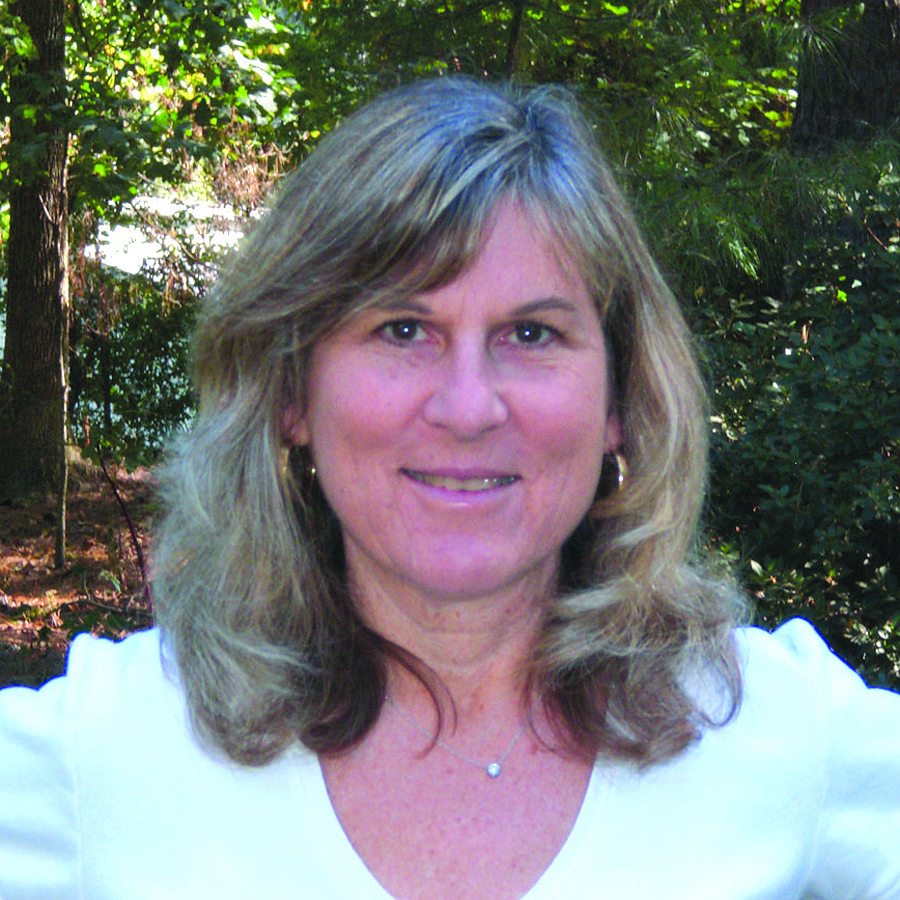
Had it not been for an eye-opening visit to the U.S. Holocaust Memorial Museum, Janis Cooke Newman would never have written “A Master Plan for Rescue.” The Holocaust and World War II are front and center in her new novel about a Catholic boy and German Jewish refugee who befriend each other in 1942 New York City.
“I was doing research in D.C. for my book about Mary Todd Lincoln [“Mary: Mrs. A. Lincoln”], took a day off and went to the Holocaust Museum,” recalled Newman, who lives in San Francisco’s Glen Park neighborhood. “I came across the story of the St. Louis … and it was staggering to me.”

With 940 aboard — most of them Jews fleeing the Nazis — the St. Louis left Hamburg, Germany, for Havana on May 13, 1939. The passengers had applied for U.S. visas and expected to stay in Cuba only until they could enter the United States. Unfavorable circumstances — including anti-Semitism — intervened.
Only 26 people were allowed to disembark in Havana, and the U.S. rebuffed pleas for assistance. The St. Louis returned to Europe, where the refugees eventually were resettled outside Germany. However, with the German invasion of Western Europe, an estimated 254 perished.
Newman, who had always thought of the United States as “the good guys” in World War II, found the saga of the St. Louis “mind-blowing.”
“I am going to write a novel and put a character on the St. Louis,” she decided.
That character is Jakob, a lonely, broken man who left behind the love of his life, Rebecca. Though sickly and suffering from a bad heart, she was well aware of the fate of Jews in Berlin as the Reich took over. At her insistence, and after she disappeared one day, Jakob fled, finagling a first-class ticket onto the St. Louis.
He never saw Rebecca again, though he sent her messages by carrier pigeon, in hopes they would reach her in Paris, where he imagined that she lived.
 Jakob relates his life story to 12-year-old Jack, a Catholic youth who also lost “someone who was dear to him,” says Newman. Jack’s father died in an accident, and the young boy has difficulty accepting it. His mother, meanwhile, lives in a fog of despair, hardly aware of her son’s comings and goings.
“The book is so much about denials,” says Newman, 60.
How Jakob and Jack meet, bond and concoct a master plan for rescuing a boatload of Jewish refugee children bound for New York unfolds in Newman’s captivating, imaginative novel.
It took seven years to write.
Newman said that in addition to her research — which included reading travelogues — her father’s tales about wartime life in New York City also provided rich background material, including detailed descriptions of schools he attended as a youngster, his apartment on Dyckman Street, how he listened to the radio and other vignettes of everyday life.
Another person who proved key in helping Newman craft the novel: her son. She began the book when he was 12, deciding, “I want to write from that [his] place.” Thus, Jack is the narrator. “It took awhile to find that voice,” she concedes.
The tragic love story between Jakob and Rebecca — told in the words of Jakob — was much easier to write, Newman says.
“A Master Plan for Rescue,” Newman’s second historical novel, has been well received.
A Jewish Book Council review describes it as “a novel about the life-giving power of storytelling, and the heroism that can be inspired by love.”
In a San Francisco Chronicle review, Berkeley author Elizabeth Rosner writes: “A Master Plan for Rescue” “balances beautifully on the thin line between wishful thinking and reason, between the imagination and the intellect. … If coincidences and repetitions occasionally suggest that the author is tipping her hand, the cumulative effect is wondrous. Like magic.”
Writing historical fiction is both interesting and informative, Newman says. “When you write in another period, “you get to live in that period.”
Janis Cooke Newman and four other writers will discuss their novels at 2 p.m. Oct. 10 at Books Inc., 601 Van Ness Ave., S.F. www.booksinc.net