
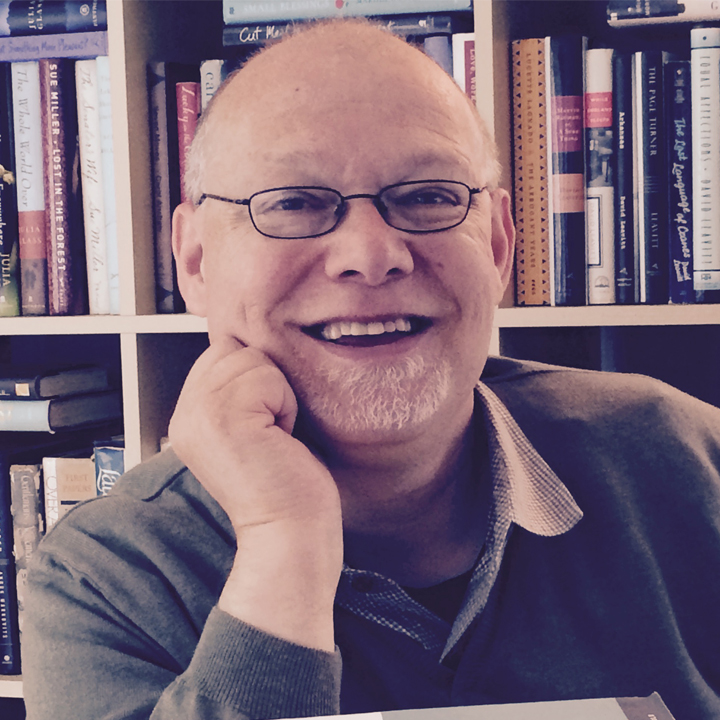
Thanks to Robert Alter, Israel’s best-known contemporary poet will achieve greater recognition with the release of an English-language compendium of Yehuda Amichai’s work.
Edited by Alter, the U.C. Berkeley professor emeritus of Hebrew and comparative literature, “The Poetry of Yehuda Amichai” has been greeted with fanfare both here and abroad.
With translations by Alter and other scholars, the collection is the largest volume of Amichai’s work to appear in English. While the project was pleasurable on many levels, one of the greatest joys “was translating poetry that had never been translated before,” said Alter, an award-winning translator and writer of biblical works.

On Monday, Dec. 7, Alter will participate in “A Celebration of Yehuda Amichai” at the JCC of San Francisco. Participants include contributing translators Chana Kronfeld and Chana Bloch of Berkeley, as well as Amichai’s widow, Hana Sokolov. The evening will also feature a video and musical performance by his daughter, Emanuella Amichai.
It is wholly fitting that a gathering to highlight Amichai’s poetry be held in the Bay Area, since the poet was a frequent visitor to the Berkeley campus, where he was a poet in residence and visiting professor.
Amichai, who died in 2000 at age 76, was taken with the region’s physical beauty and wrote a number of poems about his experiences here. Among them: “North of San Francisco,” comparing a factious, fractious Israel — “In my land, called holy, / they won’t let eternity be: /they’ve divided it into little religions, / zoned it for God-zones” — to a more tranquil Bay Area (“Here the soft hills touch the ocean … Even the scent of a ripe melon in the cellar / is a prophecy of peace.”).
Alter said Amichai relished his time at Berkeley because it afforded him a level of anonymity. As a celebrated poet in Israel, he was often approached on Jerusalem streets and cafés, and schoolchildren assigned his poetry would not infrequently call his listed number to ask him the meaning of this or that poem. (“He told them, ‘You may think what you want, but write what the teacher thinks,’ ” recounted Hana Sokolov, a retired Hebrew University professor.)
Amichai’s modesty and wry humor enabled him to respond to his fans with grace, even in the most unlikely of locations, including Berkeley’s Cheese Board Collective, where one of the cooperative’s staff members, who had worked on a kibbutz, waxed enthusiastic on spotting him there with Alter.

Amichai also voiced a balanced perspective on his place in the world in his response to a Berkeley student’s question “Did you see God on the battlefield?” His reply: “No, I saw guys being killed.”
Indeed, the constant tensions and conflicts Israel has experienced informed much of Amichai’s work, including his poem “What a Complicated Mess” (… what confusion! ‘The second son of the first husband / is off to fight his third war.’ ”).
But much of Amichai’s poetry, Alter pointed out, centers on the timeless subjects of love and loss, such as “Return from Ein Gedi,” as well as the quotidian affairs of ordinary people in the poem “Miracles,” describing two women at an Albuquerque restaurant table.
Unlike such Israeli writers as Amos Oz, David Grossman and A.B. Yehoshua, Amichai is not known for voicing a particular ideological perspective in his writings, which also include fiction, essays and children’s literature, said Alter. What makes him stand out as a literary figure, Alter said, is his extraordinary use of the Hebrew language, his ability to intermingle sound play, puns and allusions with classical and biblical texts. His was a “concentrated, dense form of expression,” said Alter. While many readers delight in what they view as Amichai’s “accessibility,” they should not be fooled into thinking that his poetry is a what-you-see-is-what-you-get free verse.
Amichai, who was born in 1924 to an observant Jewish family in Wurzburg, Germany, immigrated with his family to pre-state Israel in 1936. “Germany was never far from his thoughts,” said Sokolov, his widow. “It was part of his landscape.”
Sokolov said that Amichai’s father, who was a member of a chevra kadisha (Jewish burial society) in Germany, was called upon to tend to the bodies of two Jewish teenagers who had been killed by anti-Semitic neighbors in their small town. It was this experience that led him to convince more than 100 close and distant relatives to make aliyah in the 1930s. As a result, few, if any, of Amichai’s family perished during the Holocaust.
While few of Amichai’s poems deal directly with the Shoah, some allude to the tragedy, including “Patisserie Josef,” a European-style pastry shop in Jerusalem, where “a German couple atones in quiet talk / for a sin from another place.”
“A Celebration of Yehuda Amichai,” 7 p.m. Monday, Dec. 7 at the JCCSF, 3200 California St. $27. www.jccsf.org
“The Poetry of Yehuda Amichai” edited by Robert Alter (576 pages, Farrar, Straus and Giroux)