
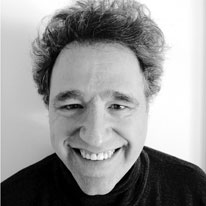
Ayman Odeh got the rapturous Jewish reception he had wanted. It just wasn’t from the Jews he had hoped to reach during his recent trip to America.
The Arab Israeli lawmaker’s Dec. 13 speech to a conference hosted by the Israeli daily newspaper Haaretz and the New Israel Fund, a nonprofit that focuses on civil rights in Israel, earned a standing ovation, participants said. But his message of mutual support and solidarity between Arabs and Jews, catnip as it was for the liberal room at a Manhattan hotel, did not entirely erase the bad taste left the previous week when he refused to enter another room in New York filled with Jews of influence.
On Dec. 10, Odeh balked at the last minute at entering a meeting convened by the Conference of Presidents of Major American Jewish Organizations because the umbrella group’s office shares space with the Jewish Agency for Israel, which facilitates Jewish immigration to Israel.
The resulting testy exchange with the Presidents Conference leadership set off a day or so of recriminations, each side accusing the other of bad faith, scuttling one of Odeh’s missions on his first tour as head of the Joint List, the third largest faction in the Knesset with 13 seats. Odeh had hoped to recruit U.S. Jews into a civil rights era-style bid to achieve equality for Israel’s Arab citizens.

Odeh’s message of common destiny did come across loud and clear at the Haaretz-NIF conference, and in a joint message he issued Dec. 13 with Rabbi Rick Jacobs, the president of the Union for Reform Judaism who had also attended the conference.
“The only future is a shared future,” the statement issued by aides to both men said. “We both understand the importance of honest, deep, difficult and necessary conversations.”
Contrast the “deep and difficult” in that statement with Jacobs’ rapturous description of his meeting Dec. 8 with Odeh at Temple Emanu-El in New York.
“MK Odeh has an inspiring vision for a brighter future for Israelis and Palestinians,” Jacobs said after the earlier meeting. “We were delighted to host MK Odeh in one of our leading houses of worship, to share with him the beauty, history and activism of our Reform Movement, and to discuss together our shared commitment to a vision of Israel that draws from the prophets of justice and righteousness for all.”
Jacobs’ statement was issued just a day before the dust-up at the Presidents Conference.
“Representatives of a broad spectrum of organizations came to hear him and were rightly upset by his decision not to appear, although he was in the building lobby,” the Presidents Conference statement released after the incident said.
Odeh said he could not, as a representative of Israel’s Arab citizens, enter a Jewish Agency office.
“I cannot in good conscience participate in meetings in the offices of organizations whose work displaces Arab citizens, just as in the Knesset, we do not participate in the Ministry of Defense, the Foreign Ministry, and the Ministry of Aliyah and Immigrant Absorption,” Odeh said in his statement.
A spokeswoman for Odeh said the displacement of Arab citizens cited by Odeh referred to the Jewish Agency’s affiliation with the Jewish National Fund, which Arab Israeli groups have long challenged for policies they say have favored Jews over Arabs in leasing land.
The spokeswoman also said Odeh sees aliyah, the immigration of Jews to Israel, as expanding the Jewish majority in Israel at the expense of its Arab population.
Jewish organizational representatives who were stuck upstairs while Presidents Conference staff spoke with Odeh in the lobby were taken aback, as was Jacobs, who said he was “profoundly disappointed by MK Ayman Odeh’s decision to walk away from that important opportunity for him, for the cause of equality in Israel, and for the Conference of Presidents.”
Odeh offered to meet elsewhere, but the Presidents Conference said in its statement the request was “outrageous.”