
Related Stories:
- East Bay International Jewish Film Festival serves up a smorgasbord of Yiddishkeit
- VIDEO: ‘Midnight Orchestra’ reprises Moroccan family discord
When social psychologist Stanley Milgram conducted his groundbreaking obedience experiments in 1961, his interest was grounded in a desire to understand the Holocaust — an event his family escaped when his parents left Eastern Europe.
“Experimenter,” screening March 11, centers on those controversial experiments, the fallout and Milgram’s subsequent career, while portraying his Jewishness as a driving force in his choices.
“The Holocaust was a significant motivation to propel him into the areas he was searching, and he explicitly cited [it] as a background for trying to understand darker aspects of human nature,” says “Experimenter” writer-director Michael Almereyda.

“The obedience experiments — which are his first experiments, how the film begins and what he’s best known for — were shaped by his speculation about human nature,” he says.
The experiments at Yale, where Milgram was a professor, found that a majority of ordinary people would reluctantly follow an order by an authority figure to inflict pain on another person. The results, according to Milgram, suggested that Americans were capable of behaviors similar to that of Germans who complied with immoral orders in the Nazi era.
One of the finest American films of 2015 yet inexplicably overlooked, “Experimenter” screens at the Century 16 in Pleasant Hill. A talk by Lehrhaus Judaica guest speaker Elaine Guarnieri-Nunn, Bay Area director of the Holocaust education organization Facing History and Ourselves, will follow.
Almereyda’s thoughtful, poignant and dryly comic film informs the audience of Milgram’s Jewish background from the outset and provides several reminders in the course of the film.
“It seemed inappropriate to elide it or blur it or ignore it because it was a key part of his identity, as a man in the world but also as a scientist asking questions about human behavior,” Almereyda says. “I was aware of how deeply Jewish he was, that he married a Jewish woman who also was the daughter of immigrants, that there weren’t that many Jewish people in the [Ivy League] community and his friends tended to be Jewish, and how that sense of his identity was a huge part of who he was.”
Inevitably, as a Jew and a social psychologist, Milgram’s perspective would have been affected by the Holocaust. His experiments, in fact, began the same year as the trial of Nazi war criminal Adolf Eichmann in Israel.
“Milgram comes out with a very heavy quote talking about how ‘during the Second World War people were exterminated with the efficiency applied to making appliances,’ ” Almereyda says. “That’s a carefully worded and rather cynical statement, but its impact is resonant to this day.
“Genocide is a very efficient undertaking these days, and has been throughout the 20th century. You don’t have to be Jewish to be mindful of genocide, but we’re cognizant of that as one of the main shadows in recent human history, and he was trying to come to terms with it.”
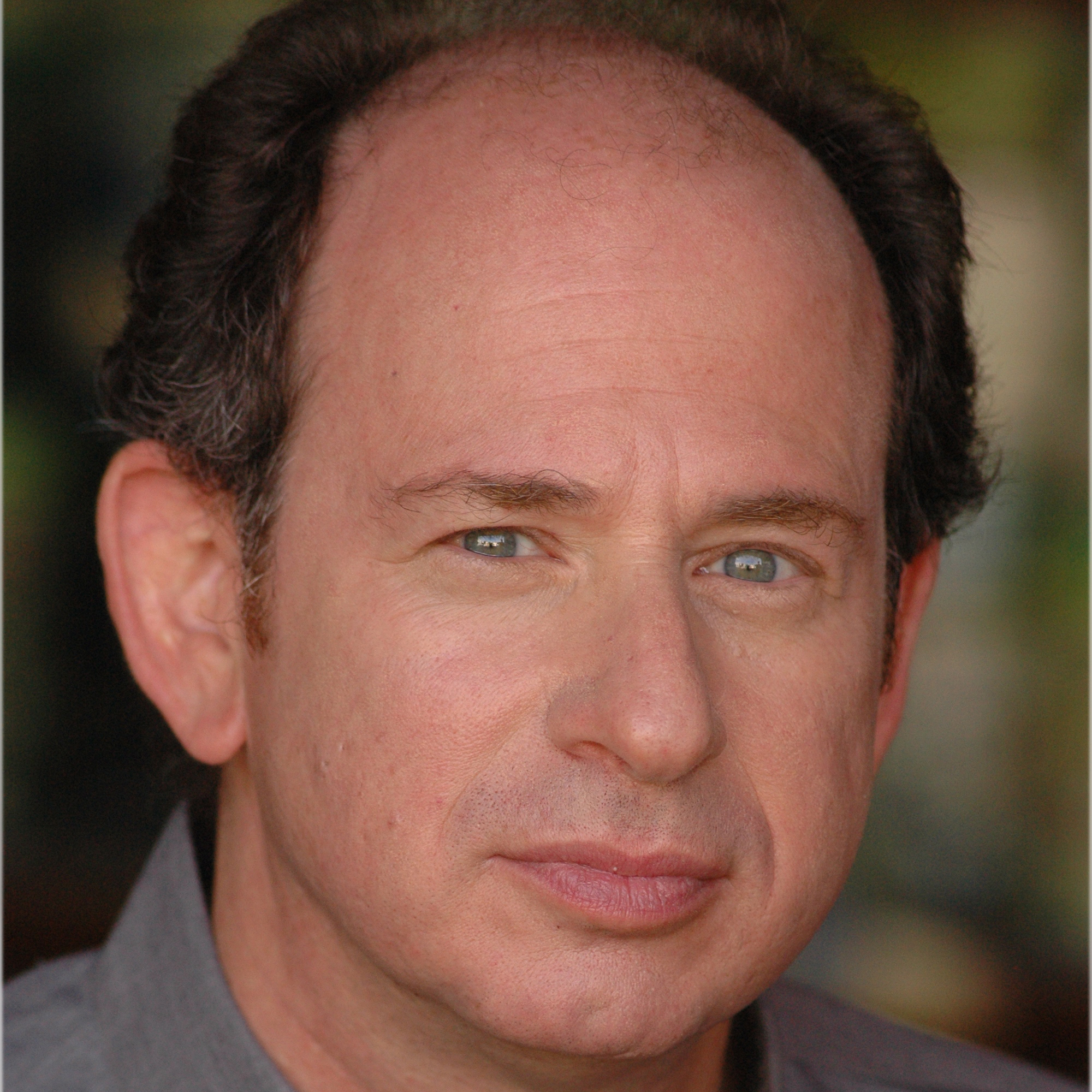
A soft-spoken “displaced Midwesterner” and longtime New Yorker, the 57-year-old filmmaker had a secular Jewish upbringing in Overland Park, Kansas, before his family moved to Southern California when he was 13.
His quirky independent films include “Twister,” starring Harry Dean Stanton and Crispin Glover; the vampire saga “Nadja,” with Peter Fonda; and “Hamlet,” with Ethan Hawke and Bill Murray.
Almereyda researched and wrote the “Experimenter” script some seven years ago, inspired less by current events than by the fact that Milgram’s story hadn’t been explored in film.
“It’s abidingly interesting and relevant and compelling,” the filmmaker mused during a visit last year when “Experimenter” played the San Francisco International Film Festival. “He left a lot of papers behind and they’re all at Yale and one can have access to them. I didn’t make up much of this movie. Almost everything, even the wacky, quirky things, is verifiably true.”
“Experimenter” stars Peter Sarsgaard and Winona Ryder. Almereyda confides that he originally wanted a Jewish actor to play Milgram but had to relinquish that ideal. “There is, as far as I know, no young Dustin Hoffman who’s a leading man right now,” he says with a smile. “Young Dustin Hoffman would have been a great Stanley Milgram.”
When Sarsgaard was suggested, Almereyda checked out his performance as Jewish man-about-town David Goldman in “An Education” and was instantly persuaded.
Viewers of “Experimenter” are less likely to focus on the film’s performances, however, than on the more compelling issue of how much empathy one might feel for strangers.
“The film is meant to be a bit of a mirror, as Milgram’s work was [meant] to mirror human nature,” Almereyda says. “It’s meant to make you question your own behavior and your own life. Not as an indictment but as a kind of exploration, because we can all be more conscious. That was Milgram’s hope. There’s a lot of ways that immoral or questionable or violent behavior is inescapable in life, and in history. But the process of self-awareness is one way to turn the tide.”
“Experimenter,” 12:15 p.m. March 11 at the Century 16, Pleasant Hill (Rated PG-13, 90 minutes)