
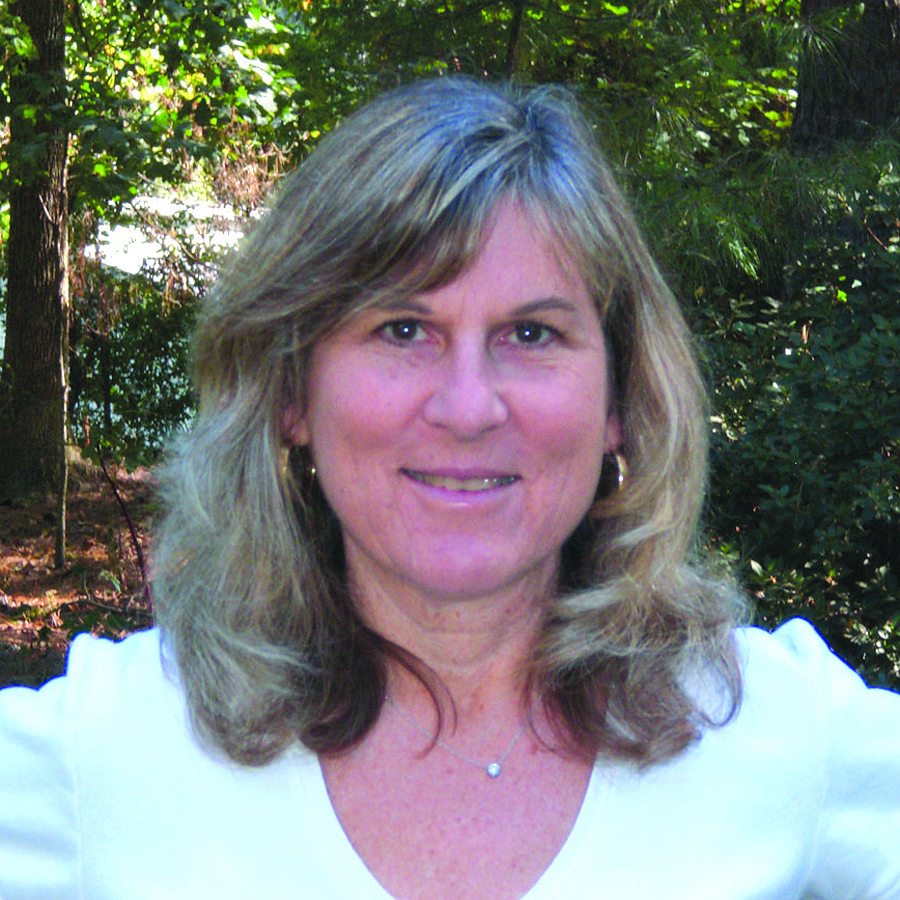
The grand opening this weekend of the exquisitely renovated and remodeled 80-year-old Rafael theater brings to life a vision long held by Mark Fishkin.
“I had always had a dream of having our own home,” says the founder and executive director of the nonprofit Film Institute of Northern California, which produces the Mill Valley Film Festival.
Yet you’d hardly call him a “dreamer.”
Yes, he has grand plans to offer innovative, year-round educational programming for students and to show top-notch, independent films at the state-of-the-art San Rafael facility, which now has three theaters.
But Fishkin also tapped his promotional savvy and business acumen to pull off the project, which was more than eight years in the making. He drummed up support from an impressive cast of heavy hitters in the Bay Area film industry and philanthropic circles; a powerful film institute board of directors, especially longtime director Ann Brebner; and the city of San Rafael, which sold the historic but decrepit theater to the group for the grand sum of $1.
Fishkin, a one-time potter who as a student “was always gravitating to writing and art,” traces his yin-yang balance to his upbringing.
His mother, a classical pianist, pushed higher education and the arts.
His father, a manufacturer of children’s wear, believed in old-fashioned hard work. Growing up in the Bronx, the oldest of seven children, Fishkin’s dad had to drop out of school to help support his Russian immigrant Jewish family.
Fishkin was raised in the largely Jewish suburban enclave of Roslyn, on New York’s Long Island. His father helped found one of the first synagogues in the area.
Now a resident of Petaluma, Fishkin still occasionally attends services and celebrates the major holidays. His 10-year-old daughter and his wife, who is not Jewish, are actively engaged in activities at Reconstructionist Congregation Ner Shalom in Cotati.
Fishkin has made a point of bringing “good Jewish films” from around the world to the Mill Valley Film Festival, which he founded in 1978. A highlight, however, involved showing the documentary “Survivors of the Holocaust,” to some 400 high school students. A survivor who was featured in the movie spoke to the students. “That was a very powerful, moving experience,” he said.
The institute will show “The Last Days,” which recently won an Academy Award for best documentary feature, to high school students during the film’s four-day run at the Rafael Monday, May 3 to Thursday, May 6. Film producer June Beallor of the Survivors of the Shoah Visual History Foundation will be on hand for the event.
Fishkin is passionate about bringing meaningful films to students and foresees “tremendous growth” in outreach and education efforts.
“That’s the beauty of film,” he said. “No matter what the subject, there’s a film that you can adapt to an interesting and educational format.”
During showings, “usually the kids are a little noisy at first, and then after about 10 minutes you can hear a pin drop. And the questions [afterward] are so intelligent.”
The film institute will continue to collaborate with San Francisco’s Jewish Film Festival by showing some of that festival’s films at the Rafael, he said.
The Rafael Film Center, downtown at 1118 Fourth Street, is a beauty.
Built in 1919 and reconstructed after being gutted by fire in 1937, the site was deemed unsafe and unusable after the Loma Prieta earthquake.
It’s now seismically retrofitted with 100 tons of steel and pushed up, down and sideways to accommodate an 80-seat auditorium with Internet connection and video-conferencing capabilities, a 350-seat main theater and a 130-seater in what once was the balcony. The complex also features a cafe, board room, snack concession and elegant lobby.
The design by architect Mark Cavagnero, who renovated San Francisco’s Palace of the Legion of Honor, captures the neoclassical splendor of the original theater. Grand flourishes include a circular steel staircase from the main lobby to the second floor, offering an up-close look at circa-1938 murals that were discovered during construction — hidden behind mirrors — and refinished.
Several art deco chandeliers were salvaged and restored. “We thought they were bronze, but it was nicotine,” said Fishkin.