
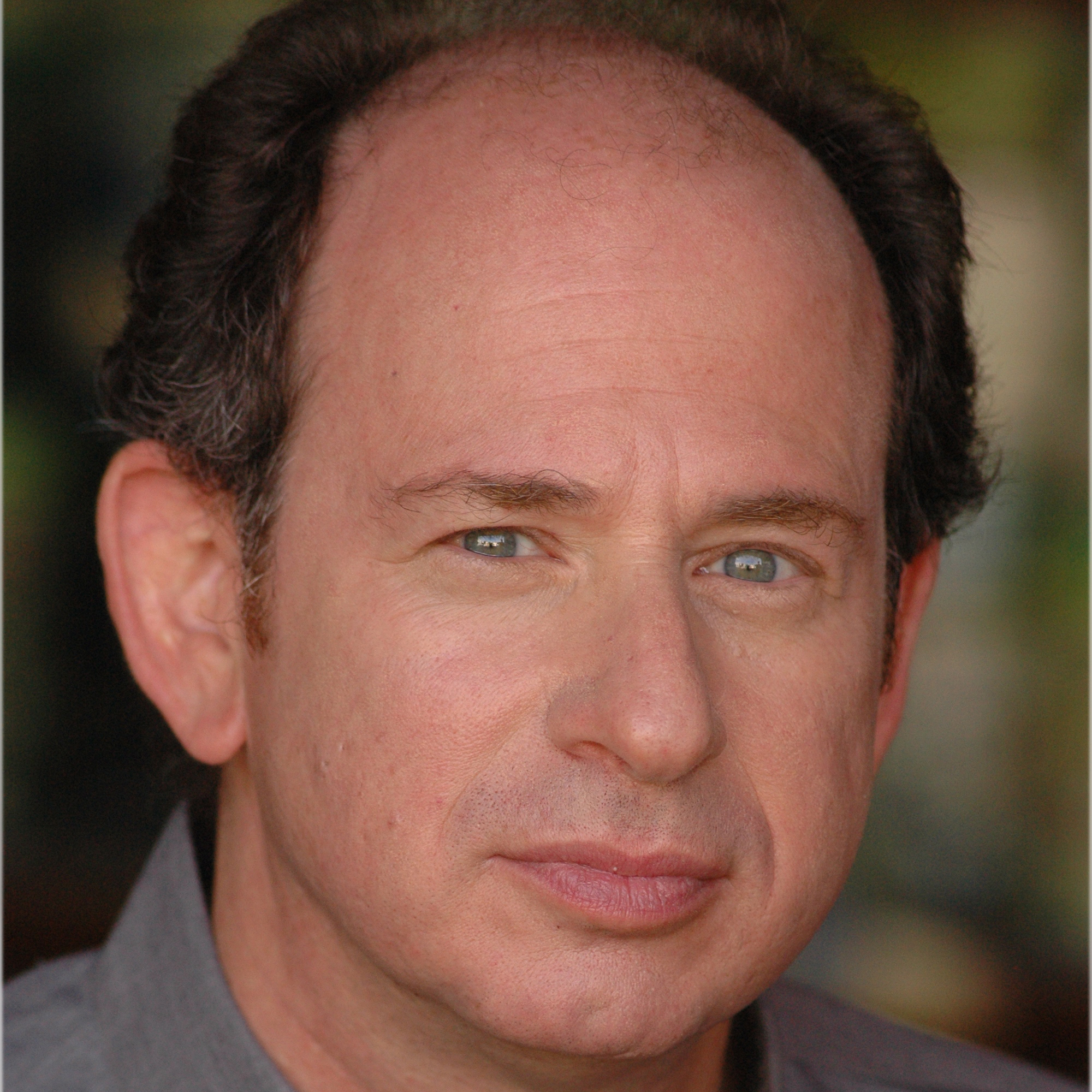
There’s an unwritten law that filmmakers don’t openly criticize their peers’ work. Radu Mihaileanu doesn’t abide by this code, however, when it comes to the Holocaust.
Born in Romania and based in Paris, Mihaileanu wrote and directed the affectionate farce “Train of Life.” The bittersweet film imagines a shtetl’s hopelessly wacky scheme to evade the Nazis by acquiring a train and “deporting” themselves to safety in Russia. It screens twice in the Mill Valley Film Festival before opening commercially next month,
Since “Train of Life” premiered a year ago at the Venice Film Festival — on Roberto Benigni’s home turf, so to speak — Mihaileanu has had to deflect comparisons between his film and Benigni’s “Life Is Beautiful.” He doesn’t even wait for the question anymore before launching into a rant.
“I’m not opposed to fairy tales,” Mihaileanu declares in perfect English, on the phone from Paris. “We grew up with Sholem Aleichem. But it was clear we were in a fairy tale. With Benigni, it’s all mixed up.”
While countless novelists and narrative filmmakers have drawn on the Holocaust in their work, Mihaileanu accuses Benigni of crossing a line.
“We always did fiction and reality,” Mihaileanu, 41, says. “What’s new is we mix fiction and reality to make a virtual reality. To be commercial, we invent another history, which is fake. People will push us in an economic way to change history.”
While Steven Spielberg may have detested Benigni’s movie, the director of “Schindler’s List” was diplomatic and evasive. Mihaileanu doesn’t hold back about “Life Is Beautiful,” derisively calling it “Shoah Lite.”
“I hated the spirit of that film. Benigni’s film, if I understood well, says you have to lie to the next generation — and close your eyes to anti-Semitism — if they are to survive. I say you have to fight it.”
While Mihaileanu is puzzled by the worldwide success of “Life Is Beautiful,” he’s absolutely bewildered by the response of the Jewish community.
“My big problem is with the people, especially Jews, who saw the film and didn’t react. We have to be always awake.”
Mihaileanu speaks a little Yiddish — at the beginning of his career, he collaborated with the Bucharest Yiddish Theater — but he’s not an observant Jew. “I have a faith and a long dialogue with somebody — I’m not sure if it’s God,” he remarks dryly.
The filmmaker set most of “Train of Life” in a shtetl, as a tribute to his father, who was born in a shtetl in the capital of Moldavia. During the war the elder man was deported to a work camp, from which he escaped.
“The most important thing was if I was right or wrong in the eyes of my father,” Mihaileanu confides. Fortunately, his father approved of the film, which was shot in French with a smattering of Yiddish and German.
Mihaileanu also screened the film for numerous Holocaust survivors to soothe another concern. “I wanted to make sure the film doesn’t betray their memory, and that it’s the way they want to speak to the next generation.”