

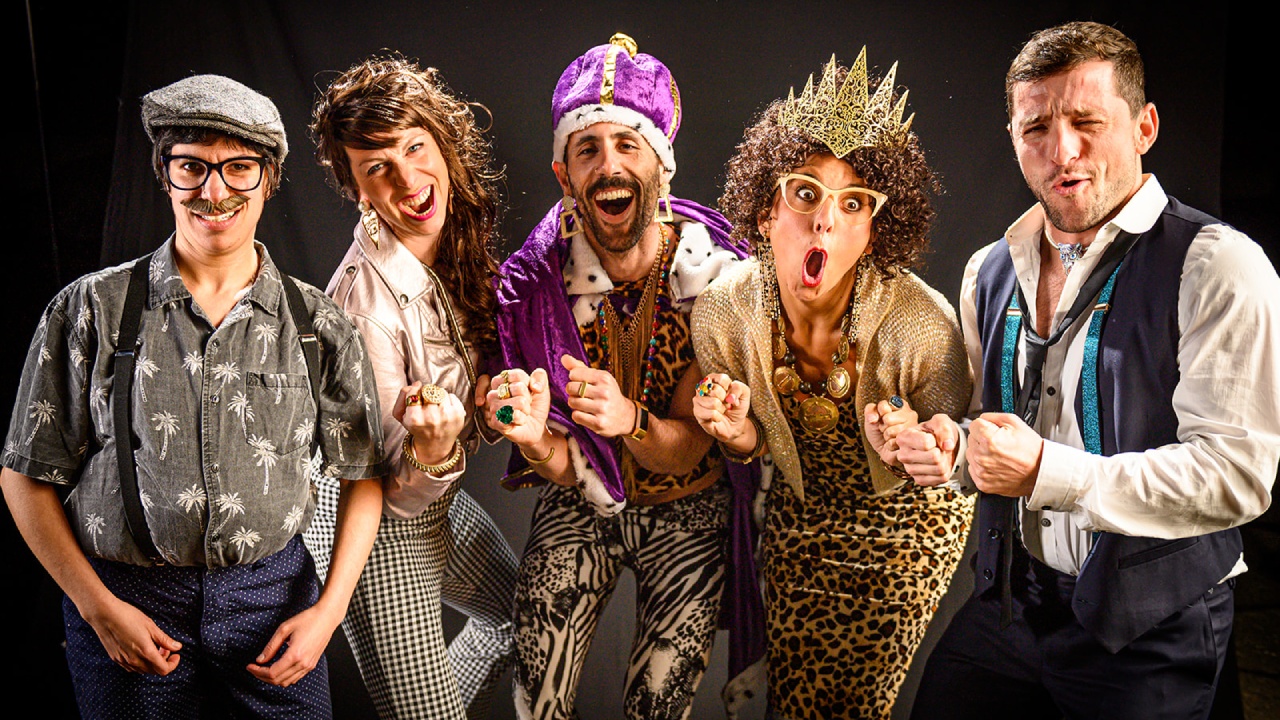
The popular Purim spiel and musical parody “The Shushan Queens” returns this month, with two shows March 5 and 6 at Ashkenaz in Berkeley. And for this year’s show, the creative team decided to focus on a topic that has been relevant since Esther’s Persia, and is especially so today: antisemitism.
But don’t worry: “The Shushan Queens” is lighthearted in a Megillah-meets-“Rocky Horror Picture Show” way, according to the team, with costumes, groggers and audience participation. There’s a musical number in which grievants “blame it on the Jews” in a play on lyrics from the Lizzo song “Juice,” and a scene where Esther must save her people by showing her “Jew Colors” — sung to the tune of “True Colors” by Cyndi Lauper.
For writer, director and producer Kiki Lipsett, the blend of Jewish, queer (most of the cast is LGBTQ), feminist and political themes with comedy makes the show “a creative dream come true.” It is also an opportunity, she said, to push the envelope and use comedy as a form of social commentary on serious issues, including the recent surge in antisemitism.
“We all know these things are horrible,” Lipsett, who works as the young adult programs director at Urban Adamah, told J. “But part of the beauty of doing this [show] is to build in moments of community catharsis where we get to laugh and cry and gasp and be in those moments of shock together around these themes.”
“The Shushan Queens” follows the traditional Purim story while also highlighting the inherent absurdity of antisemitic tropes. While writing this year’s script, Lipsett researched the blood libel, an age-old antisemitic claim that Jews kill Christian children to harvest their blood for ritual purposes.
Another antisemitic trope that the script touches on is the idea of “dual loyalty,” which in Biblical times implied that Jews were not to be trusted because their true allegiance was to their religion rather than to the place in which they lived. This idea was prevalent in the Megillah (Haman references it while trying to justify the extermination of the Jews of Persia to King Ahasuerus) as well as Nazi Germany. More recently, former President Donald Trump made comments that drew on the dual loyalty trope.

“I think that we’re in a collective moment of trauma in the community because comments from comedians, rappers, the former president are so normalized at this point,” said Ezra Reaves, who is co-directing, co-producing and starring as King Ahasuerus in the show for the first time. “So we’re really just letting the original story resonate with people individually.”
Reaves, 34, is a trans actor, comedian and experimental theater writer who lives in Oakland. He has starred in a number of theater, film and TV productions in San Francisco, Los Angeles and New York. Last year, Reaves co-founded Tarot & Palm Theatre, which will be adapting the classic young adult novel “The Outsiders” from a trans perspective for San Francisco Playhouse.
Now in its sixth year, “The Shushan Queens” has been playing to large crowds since its inaugural show in 2017, with the exception of 2021 when live performances were on hiatus due to the pandemic. Audience members are invited to come in costume and stay after the show for a dance party with the cast that will feature a bar and homemade hamantaschen.