

The Torah column is supported by a generous donation from Eve Gordon-Ramek in memory of Kenneth Gordon.
Yitro
Exodus 18:1-20:23
Our culture is noisy. Stores blast music, ads visually scream their urgent message and our cellphones bombard us with words and melodies. We live in a sheet of sound.
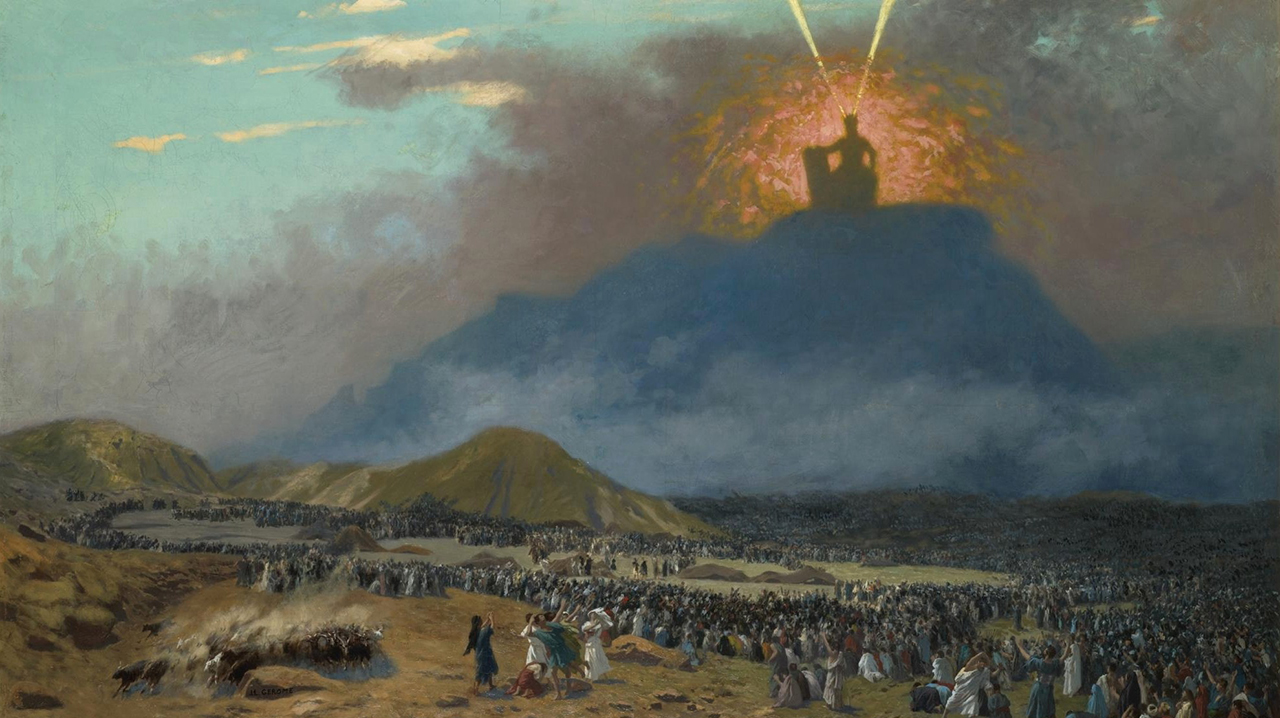
Interestingly, in this week’s section, the Bible describes the giving of the Torah amidst a great deal of tumult. “There was great thunder and flashes of lightning … The mountain trembled fiercely. The blare of the shofar grew ever louder, as the entire people assembled at the foot of Sinai” (Exodus 19:16). It was a surround-sound, three-dimensional experience.
But that was just the opening act.
The sages tell us that this dramatic explosion preceded the giving of the Torah. The actual revelation took place amid awesome, cosmic silence.
Rabbi Yochanan said: “When God gave the Torah, no bird chirped (tzipor lo tzavach), no bird beat its wings (ohf lo parach), no ox bellowed, the angels did not sing, the sea did not stir, no creature uttered a sound.
The world was silent and still (ha’olam shotek umacharish), and the Divine Voice spoke: ‘I am the Lord your God (veyatza hakol: Anochi Adonai Elohecha).’” (Shemot Rabbah 29:9). Out of a total stillness came that immortal revelation that changed the world forever.
So what was the purpose of the tumult? Wouldn’t God’s voice alone have been enough to inspire reverence in the hearts of the people? Why did the boom have to give way to a silence so deep that you could hear a pin drop? What was the importance of this?
The answer is as challenging today as it was 3,000 years ago. Our world is a very noisy place. If we want to hear God’s voice, we must make it possible by learning how to break through the clamor and busyness of our daily lives and to make space for quiet, uninterrupted time to study Torah — to set aside time each day during which we are unavailable for business, social obligations or ringtones.
To shut the door of the mind is to invite intellectual and spiritual suffocation.
In that calm space, we study. And in that still space of study, we find God and discover our true self.
God’s voice reaches us only when we render it possible to truly hear it, in the quiet after the storm of social activity, in the silence after the thunder of business and in the 15 minutes of quiet Torah study where heaven and earth kiss and where greatness is born.
This pursuit of quietude and learning is not just a spiritual journey but also a path to numerous tangible benefits. Learning Torah brings more than spiritual fulfillment. It keeps us young and vibrant, increasing our happiness and broadening our horizons.
We should never stop going to school in the broadest sense, constantly expanding our knowledge. Learning is the ultimate renewable resource.
Some minds are like concrete: all mixed up and permanently set. But minds, like parachutes, work best when open.
To shut the door of the mind is to invite intellectual and spiritual suffocation.
Judaism commands us to serve God with our heart, soul and might. But it has been no less insistent that we serve God, too, with our minds — with minds that stay open and keep growing.
Our society spends billions of dollars on diet foods and drinks, exercise equipment and transient health fads and activities. All these testify to our fear of growing in the wrong places and in the wrong ways as we age. That’s good. We need to keep our bodies healthy to go where we want to go.
But we also need another type of fear: one of failing to grow in our unique human dimension — the dimension of the mind. The failure to tend to the mind is just as disastrous, in fact, probably more so.
Thus, in the quiet moments of Torah study, we not only embrace the Divine but also nurture our intellect, ensuring continuous growth in all aspects of our being. In this balance of silence and learning, we find the essence of a truly fulfilling life.