

The Torah column is supported by a generous donation from Eve Gordon-Ramek in memory of Kenneth Gordon.
Pekudei
Exodus 38:21-40:38
In the last minutes of the last public interview he gave, the late Rabbi Abraham Joshua Heschel stressed that people have an inherent need to celebrate.
“Man cannot live such a shallow life,” he said. “He needs exultation. He needs moments of celebration.”
Given the horrible headlines and images on social media, in newspapers and on television, celebrating can feel like the last thing we want to do right now. The news about Israel and Gaza has led Jews to come together for healing, community, moral clarity and solace. But for good reason, Oct. 7 and the ongoing Israel-Hamas war have led us to put collective Jewish celebration on the back burner.
If Heschel is correct that we all have a latent need to celebrate, it’s also true that revelry has recently been manifesting for us primarily outside of a Jewish context.
The tragic news of the past several months has exacerbated a bigger underlying dynamic. While we attend joyous Jewish events such as weddings, b’nai mitzvahs and Purim parties, many of us have celebrated in non-Jewish events settings such as sporting events, social gatherings and music concerts, and out-of-the-ordinary events such as Taylor Swift’s Eras tour, the San Francisco Pride Parade, New Year’s Eve and the San Francisco 49ers’ playoff run (must all good things come to an end?).
For most of us, the majority of our daily joy happens when we are not thinking about our Jewish identities, and it often happens when we are not in community settings. We listen to uplifting music while driving, we watch moving videos on social media, we get excited after a Golden State Warriors win (must all good things come to an end!?), or we enjoy a weekend afternoon with our families.
While there is absolutely nothing wrong with partaking in any of these everyday joys, perhaps we are missing out on something by not celebrating more within Jewish community.
Heschel’s aspiration for a life that included celebration occurred within the context of a Jewish outlook on life. Yes, Heschel prayed three times a day, kept kosher and observed the holidays. But beyond that, Heschel advocated for celebration inscribed within a Jewish system for making meaning in the world.
This approach offers a sense of deep connection, belonging and purpose in both bein adam lechavero (between oneself and other people) and bein adam lamakom (between oneself and one’s sense of God).
When we contrast the type of joy that involves listening to a pop song in one’s AirPods, it’s clear to me that community-based Jewish joy allows for a much more profound experience.
Interestingly enough, both this time in the yearly Jewish calendar and this week’s Torah portion teach us about the importance of celebration.
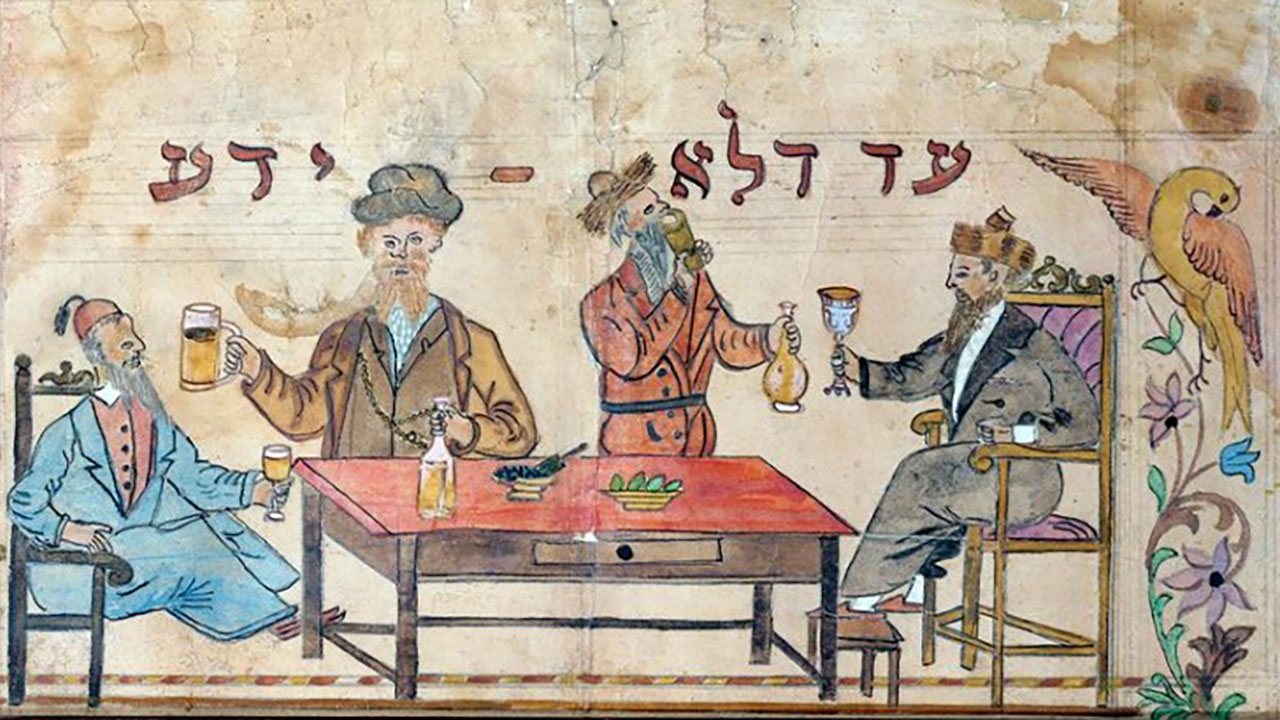
As Purim approaches, I am reminded of the words from the Babylonian Talmud: mishenichnas Adar marbim b’simcha, “those who enter Adar [the current Hebrew month] should increase their joy.” (Ta’anit 29a) These words, which have often been set to music, set the tone for Adar. (Because this is a Jewish leap year, we get all the more joy because there are two Adars this year!)
Our Torah portion Pekudei also offers an ancient example of collective celebration. Its description of the ornamented priestly garments offers a sense of richness and ornamentation that connote celebration.
“They also made bells of pure gold, and attached the bells between the pomegranates, all around the hem of the robe, between the pomegranates: a bell and a pomegranate, a bell and a pomegranate, all around the hem of the robe for officiating in.” (Exodus 39:25-26)
The text makes clear this celebratory ornamentation fulfills a deeper purpose. This portion, which concludes the Book of Exodus, comes to a crescendo after all of the detailed embellishments of the priestly garments and the tabernacle are finished. Then, after all of this elaborate handiwork, “the presence of Adonai fills the tabernacle.” (Exodus 40:34)
The implication seems to be that part of what brings God’s presence to Earth are these celebratory details.
Even if we are hurting and concerned about weighty, painful events in the world, this time in the Jewish year and this Torah portion teach us that we should find ways to experience collective Jewish joy.
This is not to say that we should ignore our ethical responsibilities or pain over what is going on in Israel, Gaza and elsewhere. Ultimately, though, celebration will make us more whole, allowing us to better meet the challenges of our time. Celebrating with other Jews fulfills the innate human need that Heschel described — and it does so in an enriching and profound way.