

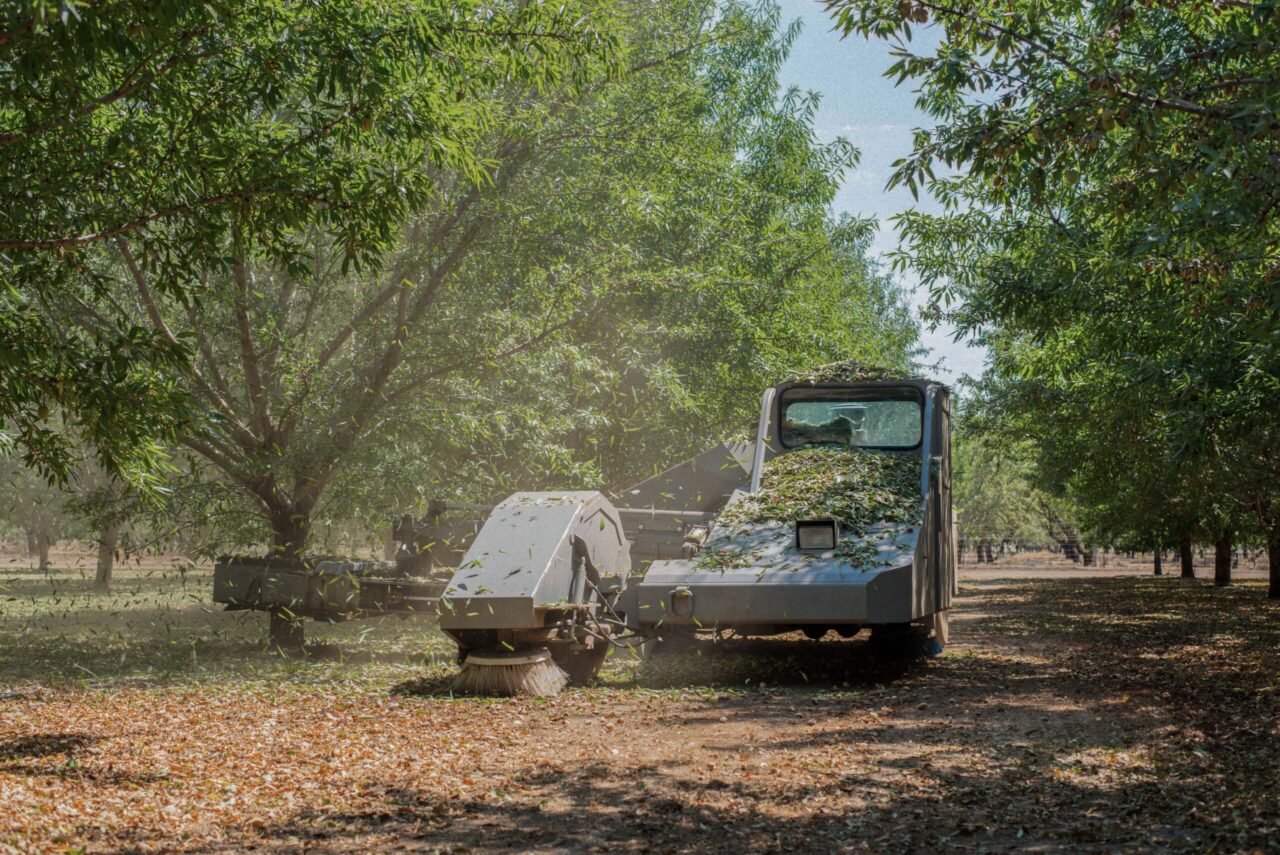
If you see a tractor lumbering across a field and suddenly realize there’s no one inside, it just might be due to a cooperation agreement between the U.S. and Israel that’s quietly been driving innovation for over 45 years.
The Binational Industrial Research and Development Foundation, or BIRD, was created by both governments in 1977 with a mission of supporting “mutually beneficial” R&D. Through BIRD, the governments jointly approve grants for around 30 projects per year to the tune of $1 million to $1.5 million each.
It’s a positive note in a tense time for the two countries’ diplomatic relationship, said Anat Bujanover, BIRD’s director of business development for the West Coast.
“It’s encouraging innovation in any sector by fostering dynamic beneficial partnerships,” she said.
Each project must have an Israeli company and a U.S. company involved and offer a plan for commercially viable products. In the case of FieldIn, an Israeli company with offices in San Jose and Fresno, it’s autonomous tractors. FieldIn, which is working with an agriculture investment company based in Turlock, won a grant last summer.
According to FieldIn co-founder Boaz Bachar, automation can help farmers who can’t find enough skilled labor.
“It’s a very hard thing today to find good employees in agriculture,” he said.
For BeeHero, an Israeli startup now headquartered in Palo Alto, a 2020 BIRD grant advanced its work on beehive sensors to help prevent colony collapse, in a project alongside Woodland-based Tauzer Apiaries.
BeeHero co-founder and CEO Omer Davidi credits BIRD with helping his company break into the U.S. market.

Netafim, an Israeli leader in high-tech irrigation, likewise worked with Visalia-based Polaris Energy Services on precision irrigation methods after receiving BIRD funding in 2019.
BIRD doesn’t fund only agriculture. It also supports projects in renewable energy, cybersecurity and medical technology, among others. Twice a year the BIRD board — which includes representatives from the U.S. Commerce and State departments and Israel’s Finance Ministry — meets to decide which projects to back.
“We look at three criteria. One of them is the level of synergies between the two companies — I think that is the most important component — then the level of innovation and the market opportunity,” Bujanover said.
BIRD will fund up to 50% of a project and only asks for repayment if it becomes commercially successful.
The organization has backed more than 1,000 projects since its founding.
Bujanover said BIRD started out in the late 1970s more as a way to help Israeli companies get a boost from the bigger U.S. market. While first it was more about linking small Israeli companies with big American ones, now she sees it as supporting partnerships that take innovative ideas from both countries and give them a chance to grow.