

The Torah column is supported by a generous donation from Eve Gordon-Ramek in memory of Kenneth Gordon.
Pesach Shabbat Chol Hamoed
Exodus 33:12-34:26
With the tastes, aromas and sounds of the Passover seders still fresh in our minds, one refrain feels especially present this year: Dayeinu! It would have been enough for us!
Dayeinu was likely the first seder song you learned, even before the famous Four Questions or one of the many renditions of “Who Knows One?” With its familiar and repetitive refrain of “dai-, dai-yeinu,” everyone at the seder can almost always join in the singing.
Both the poet and the composer of Dayeinu remain anonymous, though it’s been in the haggadah since the earliest prayerbooks in the 9th century CE. At the apex of the “maggid” (story) section of the ritual, it follows the retelling of the plagues and precedes the explanations of the great seder symbols: the shank bone (or other substitute for the Passover sacrifice), the matzah and the bitter herbs.
The traditional Dayeinu has 15 stanzas, thought to correspond both to the 15 Psalms of Ascent and to the 15 steps in the ancient temple where the Levites stood to sing. Its seeds derive possibly from the prophet Malachi, whom we read last Shabbat. We heard “ad bli dai,” or “I will pour you out a blessing” (Malachi 3:10), which the Talmud translates as “until your lips are exhausted from saying dai – enough!” (Ta’anit 9a, explained in the haggadah of Rabbi Jonathan Sacks).
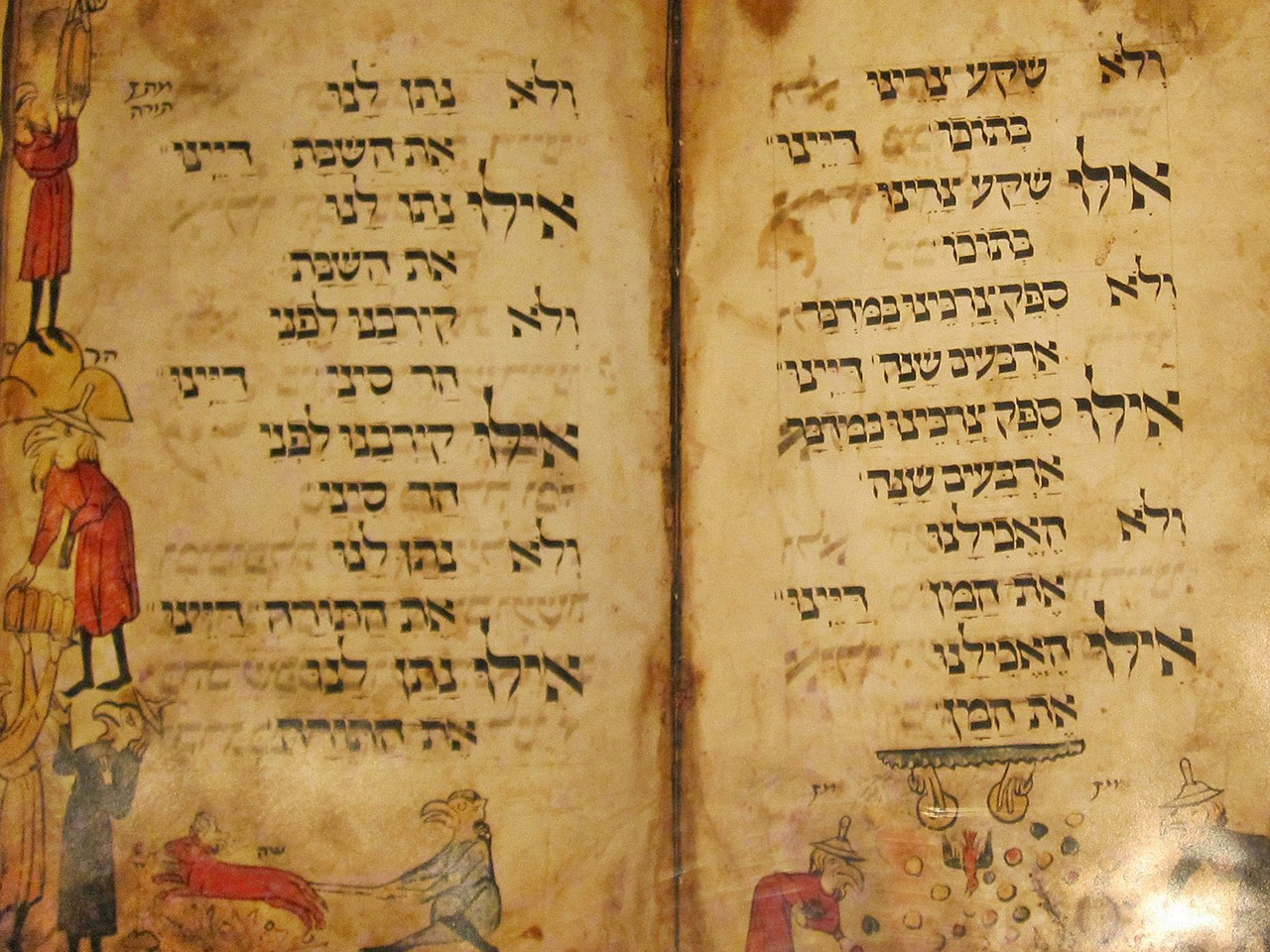
The original text of Dayeinu gives thanks that the Holy One who…
Brought us out of Egypt
And brought judgment upon the oppressors
And upon their gods
And killed their firstborn
And gave us their wealth
And split the sea
And brought us through on dry land
And drowned our enemies
And provided for our needs in the desert
And fed us manna
And gave us Shabbat
And drew us close at Mount Sinai
And gave us the Torah
And brought us to the land of Israel
And built for us the great chosen temple there
At each stage, we say it would have been sufficient. But would it have been enough to not receive the Torah or arrive in the Land of Israel? What would Jewish history be without every stage, even the ones that are difficult and painful for modern ears?
Sacks offers that each stanza is a tikkun, a “making right” for the ingratitude of the Israelites. They complained about everything in the wilderness: the water, food, hardships of the journey and their fear of failure.
“It is as if the poet is saying: where they complained, let us give thanks. Each stage was a miracle. Each would have been enough to convince us that there is a Providence at work in our fate” (Sacks, p. 76). Free people especially must give thanks and reflect with humility and grace upon their blessings. To sing Dayeinu is to acknowledge those gifts.
Rabbi Menachem Liebtag suggests further that Dayeinu contains an implicit addition — that each stage in the journey would have been reason enough to sing the praises that follow. Although the final redemption feels very far away, the acknowledgement of each stage, painful as some are, causes us to reflect on what actually is enough for us, at least enough for us to stop and say, today I am blessed, and I am thankful.
“Enough” can be really challenging. Too few people in this world have entirely too much, and an uncountable number of people have hardly a thing. For those in the middle, it can be a mighty struggle to be content and grateful for what we have and for who we are. We fight with the forces and voices (within and without) that tell us we don’t have enough. The possibilities are endless.
Dayeinu teaches us to dream big, while still reveling in the small steps along the way. This song really is about pausing to see how far we’ve come. It’s a healthy approach to life’s perennial peaks and valleys and may be especially crucial today when fear of not having or not being enough is as pernicious and damaging as at any time in history.
Sometimes, “dayeinu” has stood for the exact opposite of gratitude and sufficiency. It has been a rallying cry or protest call to say that “enough is enough, and change must come now.” It’s a testament to the power of this little word that it can be utilized in many settings, though its original intent is, and continues to be, a challenge to ask ourselves: What really would be enough?
In this year of persistent soul ache and uncertainty, we might consider writing new lines of Dayeinu as we move through the festival:
If our seders could have been truly “open door” gatherings — Dayeinu
If we could look at the news even for one day without dread — Dayeinu
If Israel’s right to exist were recognized and protected by more of the world’s nations — Dayeinu
If Jews could live together with each other and their neighbors and use only words to resolve differences — Dayeinu
If Oct. 7 hadn’t happened — Dayeinu
If the hostages would return home — Dayeinu
If good people of all faiths and all backgrounds one day recognize one another’s humanity, celebrate our diversity and glory in each other’s reflection of the Divine image — Dayeinu
What would be enough for you to say “dayeinu”?