
While critics continue to lambast college campuses for not upholding the tenets of free speech, leadership at UC Davis has stated multiple times that the university cannot and will not discipline members of our community for speech protected by the First Amendment. However, as a professor at UC Davis my experiences continue to show that free speech is being stifled rather than encouraged.
For more than six weeks, our campus center was occupied 24/7 by a pro-Palestine/anti-Israel encampment. Camping is prohibited on campus, yet the encampment remained, taking up much of the public campus quad.
Speakers frequently held loud rallies, monopolizing the space and reducing the diversity of voices. When pro-Israel students attempted to set up an information table in this area, they were harassed, insulted, stalked across campus and followed home. Checkpoints, set up by encampment organizers, ensured that dissenting opinions were discouraged, monitored and physically excluded from the encampment.
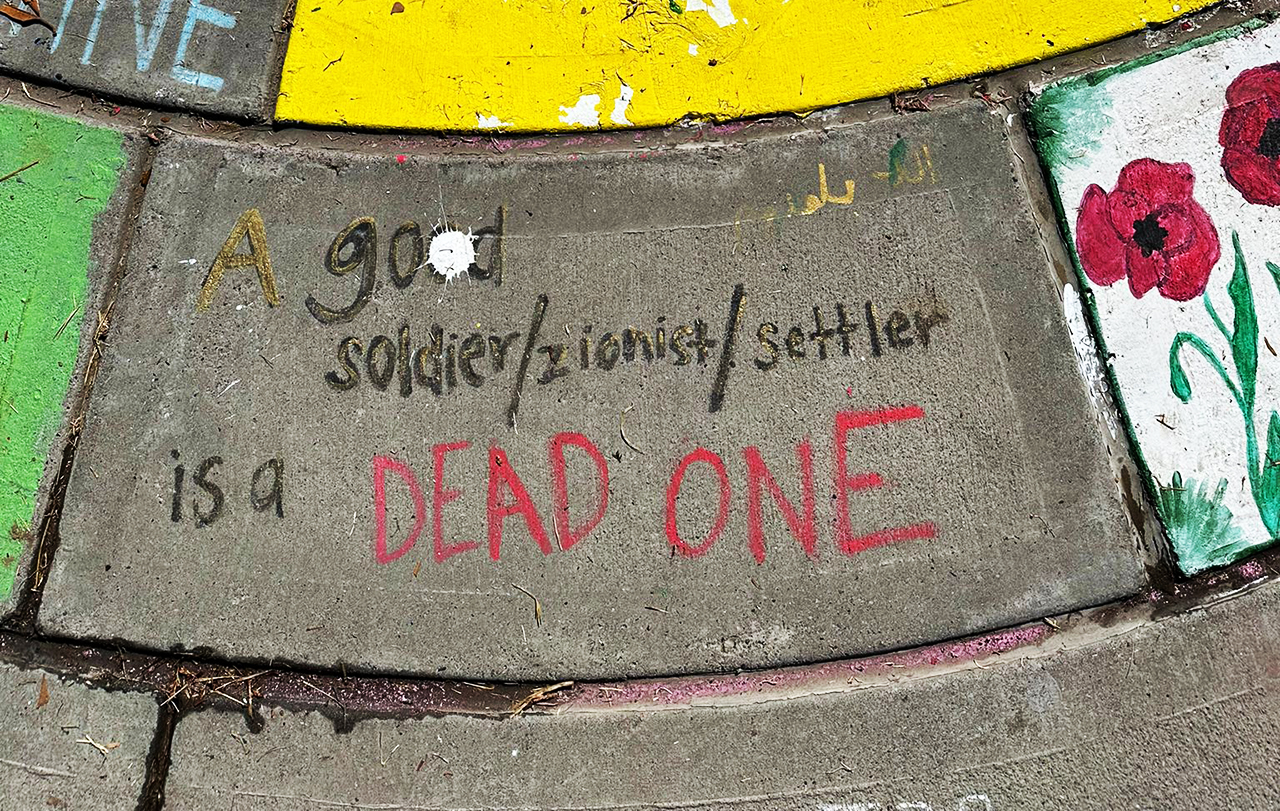
Although the First Amendment does not protect encampments or the occupation of other spaces like buildings, it does protect a wide range of speech. The flags of the terrorist organizations Hezbollah and PFLP at the UC Davis encampment, the hate speech that encampment members spewed, the violent chants to “kill 100 more” or signs stating “a good soldier/zionist/settler is a dead one” are all protected.
The flags, hate speech and violent rhetoric are protected based on the idea that free speech will allow these views to be one of many, challenged and debated. Constitutional history is clear that this plurality of voices and robust debate is directly tied to a healthy democracy.
That is true, except when leadership whitewashes violent rhetoric, such speech is given more power and attempts to counter it are stifled. Most recently, encampment organizers voluntarily dismantled the tents days after our mid-June graduation, UC Davis Chancellor Gary S. May stated: “Students remained peaceful throughout the encampment.” This public statement codifies that terrorist insignia and death threats are considered peaceful.
Meanwhile, some professors have attempted to censor discussions of antisemitism. I recently learned that professors on campus demanded that our diversity, equity and inclusion office cancel an educational presentation on antisemitism by myself and colleagues. This campaign also attempted to discredit our expertise. While the campus DEI office did not completely give in to this silencing agenda, it cut our first presentation by one-third with no notice and then canceled our second presentation.
Illiberal actions at the supposedly liberal campus of UC Davis have had a chilling effect on dissenting views and debate.
UC Davis campus departments are even punishing those who attempt to create spaces for dialogue. From November to May, a local brewery flew an Israeli flag. The owner received numerous complaints demanding he take the flag down. In response he hosted a community conversation. It began with tensions high. But soon, people actually began to engage. They shared their experiences and connected over their hopes for the community.
Despite this progress, at least one UC Davis campus department canceled an event at the brewery. They insisted the Israeli flag causes “discomfort.”
At the UC Davis Whole Earth Festival in April, an event “dedicated to creating a welcoming environment for all of its attendees, staff, and volunteers,” there was a children’s play space that featured the Palestinian flag. A local group of Jewish festival attendees brought an Israeli flag and asked for it to be included as well. Staff refused and, according to a video posted on Instagram, demanded the Jewish group leave “for the safety of the children.” They insist that having an Israeli flag created unwanted discourse.
At the end of May, protesters began disrupting classroom instruction. They forced their way into classrooms, berating students and demanding they walk out of class, even targeting a Holocaust studies class. Hiding their identities with kaffiyehs and masks, they entered my colleague’s class and refused to leave when asked repeatedly. Disruptions even spread, with protesters blocking the university’s bus system on the first day of final exams. Shockingly, it wasn’t the university that ended the blockade, but frustrated students who were forced to fight to access the university they pay for.
None of this is evidence of a campus that fosters or values free speech — even the students within the encampment report feeling harassed and intimidated. Just as those on the far right have sought to roll back discussions of race, gender and sexual orientation on other campuses, illiberal actions at the supposedly liberal campus of UC Davis have had a chilling effect on dissenting views and debate.
American intolerance for diverse perspectives and its tolerance for disinformation spell disaster. That is especially true when our future leaders are learning how to silence, bully and accuse one another during their college years, instead of learning how to engage in productive conversation.
Fortunately, this disaster is preventable and post-secondary institutions have all the tools and structures needed to foster, teach and practice civil discourse. This work should start by encouraging a plurality of voices that, when appropriately supported, would preclude the physical and ideological occupation of the campus center and the related rhetoric. Our campus leaders must commit to protecting free speech while also being explicit about what rhetoric or actions undermine these norms and expectations.
With a renewed commitment to creating a culture of pluralism, free speech and civil discourse, post-secondary institutions can be the bulwark of a healthy democracy we so urgently need.