
The Torah column is supported by a generous donation from Eve Gordon-Ramek in memory of Kenneth Gordon.
Lech Lecha
Genesis 12:1-17:27
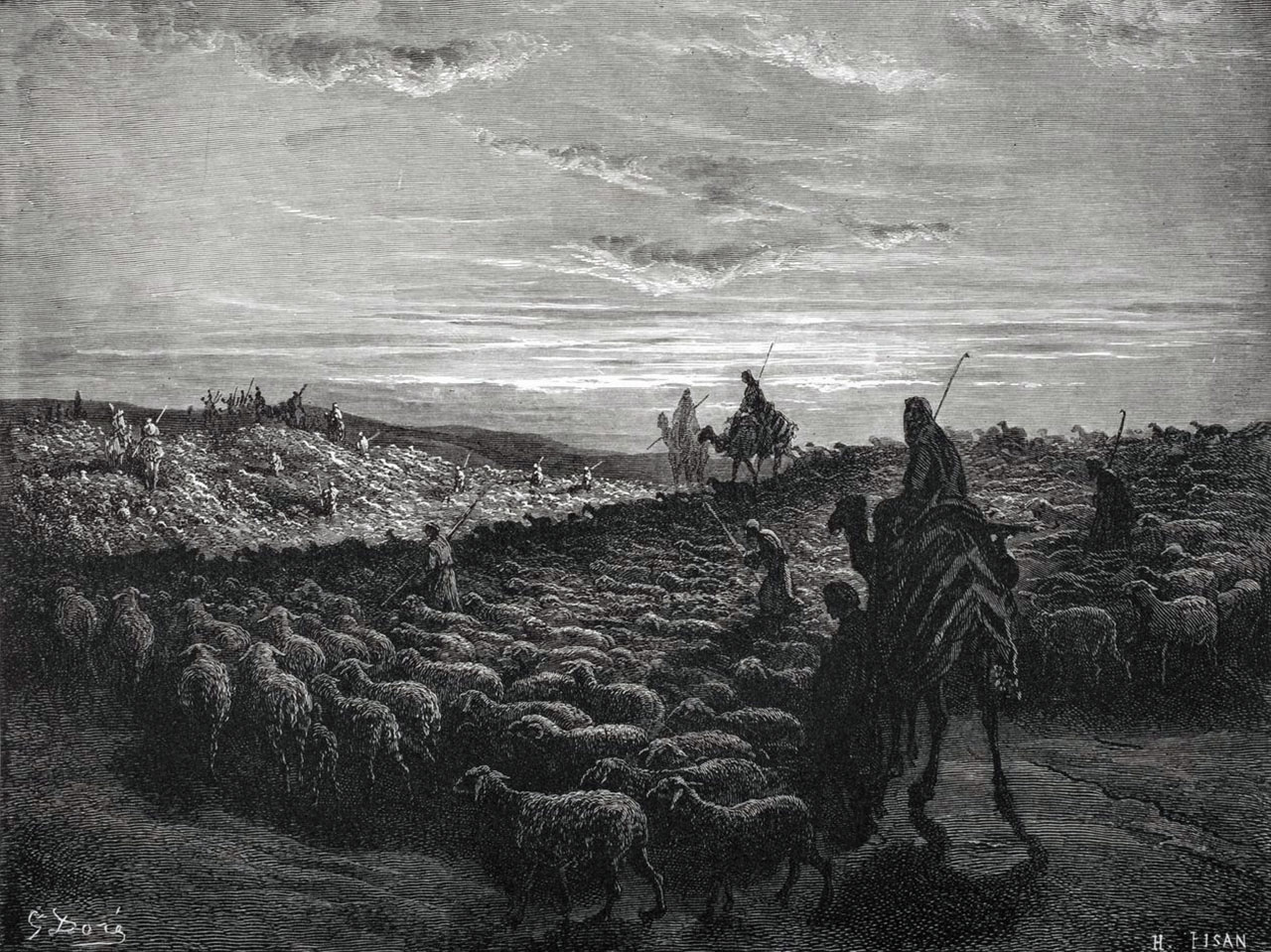
The Divine Presence calls to Abram, “Go for yourself from your land, from your relatives, and from your father’s house to the land that I will show you. And I will make of you a great nation … And Abram went.” (Genesis 12:1, 4)
And thus, the Jewish story begins, with a family leaving everything of its past, following an unseen voice, heading into the unknown.
From start to end, Lech Lecha is a tale of exposure, uncertainty and unrelenting vulnerability. Famine, the abduction of Sarah into Pharaoh’s house, the War of the Kings, fights over land use, the parting of Abram and his nephew Lot and the subsequent kidnapping of Lot — all of this occurs in its first half alone.
In the second half, amid continued infertility, Sarai gives Abram her maidservant Hagar, an arrangement in which we imagine Hagar had no say. She promptly conceives, but flees into the desert after painful conflict with Sarai. As this immense parashah concludes, Abram is commanded to circumcise his own foreskin at the age of 99, and to do the same with every male person in his household.
The potential for tragedy at every turn of this portion is staggering. The Biblical characters are vulnerable in the most classic sense of the word. As Merriam-Webster defines it, they are “capable of being physically or emotionally wounded, at risk or endangered.”
How incredibly vulnerable so many of us feel at this moment in history. As Jews, lovers of Israel and America, and human beings on a volatile planet, safety and security feel terribly out of reach. Maybe such aspirations have never been realistic, as a surface reading of our portion starkly suggests. It’s enough to make a person retreat logically behind a facade of impenetrability, to try to build walls to keep the world and its dangers away from our fragile defenses.
But that’s where the Torah and the teachings of our Sages become, again and always, my greatest source of inspiration and wisdom.
Every instance of naked vulnerability in this week’s sacred story has within it the seeds of growth and redemption. Though the episodes are challenging and even disturbing, Sarai’s stay in the palace results in a fine reward for Abram and his retinue; the war and Lot’s capture establishes Abram as a courageous leader who models the essential value of rescuing the captives; Hagar receives one of the most powerful mystical visions of anyone in the Torah: and Abram’s circumcision makes possible the birth of Isaac, and for the first Jewish couple to be reborn as Abraham and Sarah, with new names infused with the Holy Presence. (Gen. 17:15)
Of course, it all began with their willingness to leave everything behind, to be vulnerable to the uncertainties of a world that so often does not treat their descendants as a blessing (despite that promise), and even one where “your offspring shall be (oppressed) strangers in a land not their own.” (Gen. 15:13)
Having just emerged from the High Holidays — and writing here in my still-standing Sukkah, amid singing birds, floating clouds and roses that still dare to open their faces to this upside-down world — the value of vulnerability feels terribly relevant. Far from being only a negative state, vulnerability opens us up to beauty, to awareness of our transience, and to the sense of mystery and amazement that should rightly inform all of our words, deeds, hours and days.
In a thorough and wonderfully written piece, ”The Role of Vulnerability in Jewish Life,” scholar Akiva Garner defines vulnerability as “the character trait in which a person admits, either to themselves or others, their own incompleteness or weakness. Vulnerability is not tantamount to one oversharing all their difficulties to the world; rather, it is more directly a person’s willingness to present themselves to others as someone aware of, and comfortable with, the fact that attempts to succeed are often inseparable from failures to get there.”
Garner suggests that in all aspects of Jewish life — in prayer, in our communal structures and in our adaptation of Jewish practices — vulnerability and humility are absolutely crucial for both our stability and our growth.
To admit our dependence on the Source of Life, and to articulate all that we lack and hope to yet become — as Abram does when he implores God for a child (Gen. 15:2) — is to move toward answering the call that came to our First Forefather. This is to go “for, to and within ourselves” to discover what extraordinary things may yet lay ahead, even if our dreams and hopes may never be fully realized.
The journey that begins with Abram and Sarai this week was — and still is for us, their children — full of risk and uncertainty. The entire Jewish enterprise has been defined by a daring commitment to standing up to and apart from empires and entities that so often expose and threaten us.
And yet, despite this ongoing, dreadful war, political instability and the searing pain of the hostages yet to be released, we must absolutely continue to advocate for justice and peace, to act with righteousness and chesed, to circumcise the foreskins of our hearts (Deuteronomy 10:16) and remain vulnerable and open — not only to the whims and swirling winds of fate, but always, always, to the possibilities and promise of life and its uncountable blessings.