
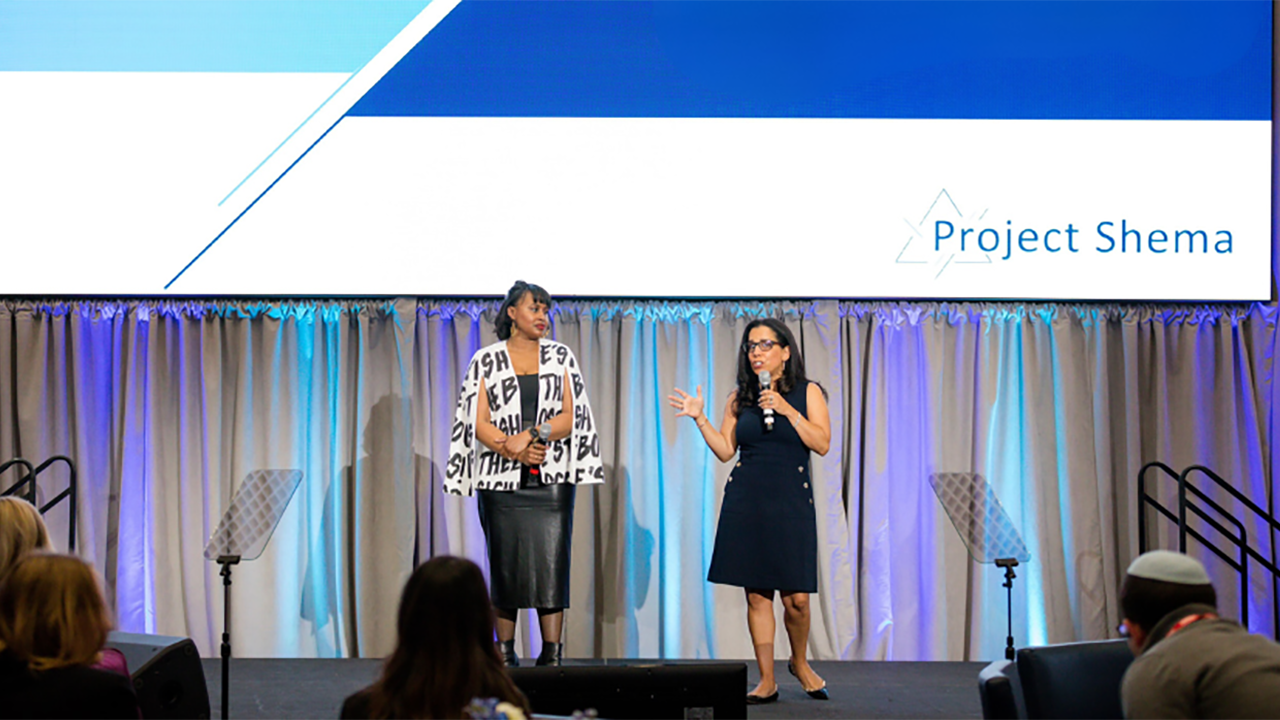
J. is the media partner of the Z3 Conference at the Oshman Family JCC in Palo Alto on Nov. 17. This week, we are publishing a series of op-eds from speakers at this year’s conference, just a slice of the perspectives on the Israel-diaspora relationship that attendees will be able to hear at the event. They were solicited and edited solely by J.
Over 400 days after Oct. 7 and a week after a highly charged election in the U.S., I’ve been thinking a lot about our human family and our mishpocha, our Jewish family and allies. There are immense challenges right now to connecting with our fellow humans and Jews. But connecting is one of the things we, as a Jewish community, do best. We must not stop doing this now, when it feels most difficult.
I am a Black Jew — and despite all the pain some of our allies have caused us, I still believe in the ongoing work of diversity, equity and inclusion. Is it perfect? No, but it is currently the only tool we have for discussing and combating antisemitism in the workplace.
I encourage you to reach out to your company’s DEI professional or those responsible for workplace culture. Ask them to consider forming a Jewish culture “employee resource group” — sometimes called an affinity group — and adding Jewish identity and antisemitism education into their DEI and anti-bias frameworks.
I know it can be stressful to advocate yourself in that way, particularly after not feeling supported. As someone whose public cancellation made international news, I know a thing or two about getting through a debilitating public shaming and reconnecting when it’s hard to do. Following the Israel-Hamas military conflict in May 2021 — after a year of my speaking out in support of Black lives and trans youth and against anti-Asian hate — I posted about antisemitism.
In response, Jewish members of my team at the Society of Children’s Book Writers and Illustrators were attacked. The contents of our personal social media and travels to Israel were exposed by trolls, as if our beliefs and actions were problematic. There were death threats. The FBI got involved. Someone told me, “You’re not Black. You’re a white supremacist.”
I quit my job as chief equity and inclusion officer. I suffered from depression. And I came out the other side realizing that as a global head of DEI, I hadn’t done a good job of including Jewish identity in my own DEI practice. How could I be upset with others who hadn’t?
If you, like me, have been told you should not be a part of a movement because of your Zionism, I invite you to join or stay unless it’s unsafe for you to do so. If we continue to cede space in all of the movements that otherwise reflect our values, Jewish voices will disappear and no one will know us. After demonization and dehumanization, exclusion is the next stage of targeting Jews and has consistently led to violence against us. When we aren’t there, others can say that Jews don’t show up for them, and people stop knowing who we are and what our values are.
For those of you, like me, who have said, “I have given my all to a movement that doesn’t see me, value me, or want me in it, so now I’m going to focus on supporting my community,” I get it. And yet — please still stay engaged in the work. As a Black Jew, I’m committed to renewing the “Black Jewish covenant,” as political analyst Van Jones lovingly refers to our common goals of supporting robust equitable democracies. When our two communities work together, we are unstoppable, which is probably why there have been decades of state-sponsored disinformation campaigns to keep us apart.
I also offer a kind reminder: Please include Black Jews in this work. We navigate these difficult conversations regularly, and it would be a misstep to forget our voices. We should apply the same concept to any coalition building because the Jewish diaspora includes members of the most marginalized communities, including most ethnicities, disabilities, LGBTQ+ identities and those suffering from substance abuse and poverty. When you create events, websites, films, ads and stories about Jews, that diversity should be included.
The theme for this year’s Z3 Conference is “The Future Starts Now.” We have much work to do replanting seeds that have been blown away by the strong winds of hatred, bigotry, disinformation and misunderstanding. My hope is that our communities can rebuild solidarity based on deep roots, like the adopted motto of so many movements from Greek poet Dinos Christianopoulos: “What didn’t you do to bury me / but you forgot that I was a seed.”