

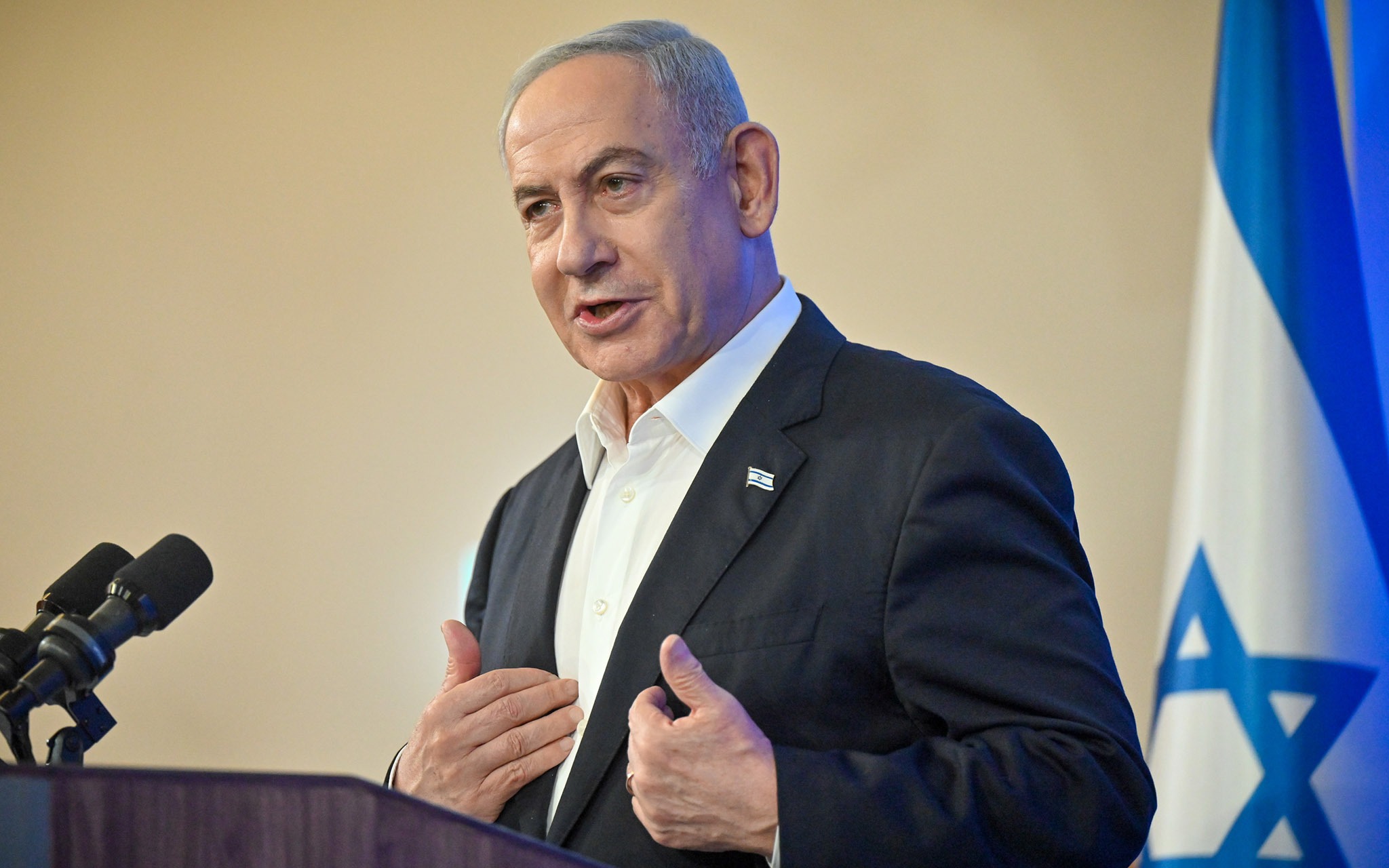
Steven Witkoff, Donald Trump’s Middle East envoy, called Israeli Prime Minister Benjamin Netanyahu on Jan. 10 from Qatar, where Witkoff was involved in the negotiations for the cease-fire deal between Hamas and Israel. He told Netanyahu that he would meet with him early the next day in Jerusalem to close the cease-fire deal before Trump’s inauguration.
According to several reports, Netanyahu demurred at first and suggested that they meet in the evening, after Shabbat — but Witkoff, an American Jew, informed the PM that the meeting would take place with no delays.
Israeli leaders tend not to conduct official business on the Sabbath. In 1977, what eventually brought down the scandal-plagued government of Yitzhak Rabin was the arrival of the first F-15 fighter jets to Israel on a Saturday. Netanyahu is currently leading a coalition that includes several religious parties, and he fears their ire. Yet on that day, he apparently was more fearful of enraging the president elect.
Indeed, Netanyahu’s record would suggest that he tends to avoid bold political moves such as that. He is a very cautious leader, who spends much of his political capital on appeasing and pleasing politicians that he relies on, while marginalizing those he considers potential threats. Since 1996, his modus operandi has been to divide and conquer in the game of coalition building — and to avoid putting himself in political jeopardy. However, he now faces an American president who seems keen on getting a Nobel Peace Prize.
Netanyahu is still standing politically — but for how much longer?
As many of his close advisers would admit, when faced with unyielding pressure, Netanyahu tends to fold: this time, folding might mean pursuing radical steps, such as a Saudi accord, that could alter the face of the Middle East.
There is no politician currently in Israel who can really challenge Netanyahu. And so, for Netanyahu, to forsake the internal politics of coalition maintenance and pursue normalization with the Saudis and all that it entails, will have to come because of pressure from Washington.
The internal politics of Netanyahu’s administration are complex and have deeply impacted his decision-making.
A cease-fire and hostage deal with Hamas — similar to the current one in effect since Jan. 19 — had been on the table since May. Yet until the recent pressure from Trump, Netanyahu had insisted on conditions that prevented the agreement from being signed. Several members of Netanyahu’s coalition that represent hard-right parties had warned that any Hamas deal requiring a full Israeli withdrawal and the cessation of fighting in Gaza would lead to their resignation from the government.
Up to now, Netanyahu has managed quite an impressive political juggling act since the attacks of Oct. 7, 2023. Israel has fought a multifront war, eliminating Hamas and Hezbollah leadership and indirectly contributing to the toppling of the Assad regime.
At the same time, Netanyahu has balanced the opposing demands of the American administration and the more hawkish elements of Netanyahu’s own government: Netanyahu’s justice minister, Yariv Levin, has continued to push his controversial judicial overhaul. Netanyahu has been able to defy the Supreme Court by not fully implementing a plan to conscript ultra-Orthodox men into the military. Amid all this, Netanyahu’s criminal trial, which started in 2020, has continued albeit at a slow pace.
Netanyahu, however, has learned from his predecessors.
Former Prime Minister Ehud Olmert was convicted and sent to jail a decade ago, Netanyahu reportedly told his close allies that Olmert’s error was resigning his post when he was charged. Netanyahu himself has faced criminal investigations going back to his first term in the late 1990s.
From Netanyahu’s vantage point, these investigations were an attempt by the old leftist elites to get rid of the political maverick who challenged their hegemony. He expected to be charged and was determined to stay in power throughout the judicial process. To do that, he needed to ensure that he had a stable coalition behind him, which has been based on the support both of the ultra-Orthodox parties, for whom exemption from military service is the utmost concern, and of the radical right-wing national religious camp with its desire to reverse course from the Oslo process and regain Israeli control over the West Bank and Gaza.
In the immediate aftermath of Oct. 7, the campaign against Hamas and subsequently against Hezbollah garnered wide support in Israel, and for several months centrist parties joined the government, giving Netanyahu wide political latitude. However, many Israelis now question the rationale of continuing what seemed like a futile war in Gaza, while failing to liberate more hostages.
Questioning the war has also been the American position, including — to the surprise of the Israeli right that cheered Trump’s election — that of the new administration. For Trump, ending the war and finding a new political horizon for Gaza is a key part in expanding the Abraham Accords and reaching a normalization agreement between Israel and Saudi Arabia. Trump touted the 2020 accords as his landmark achievement. He sees a Saudi deal as key to his legacy.
For Netanyahu, however, everything is a balancing act.
Right now, moving forward with the latter phases of the cease-fire agreement and engaging in a political solution to the Gaza problem would mean the dismantling of his fragile coalition. (Itamar Ben-Gvir has already resigned his post as minister of national security. Bezalel Smotrich, the finance minister, has warned that if the next phase is implemented, he, too, will resign.) Meanwhile, the specter of conviction and jail time looms for the prime minister.
Netanyahu’s father, Benzion Netanyahu, was a historian of Spanish Jewry. He had a grand vision of Jewish history as a struggle between a persecuted people who carried a universal message and the many empires and nations that tried to eradicate them. As an ardent Zionist and follower of Jabotinsky, Benzion Netanyahu saw an independent Jewish state as the end of this vicious historical cycle — and he viewed his son as the leader who ensured a safe and lasting future for the Jewish state.
Bentzion Netanyahu was prone to far-reaching proclamations and held himself as a kind of prophetic figure, as did his children. But he was ultimately a middling academic who failed to secure a permanent position in Israeli academia, which he blamed baselessly on political persecution by progressive elites in Israeli universities.
Will his son be remembered as a wily politician who fought off, at least in his own mind, these same elites but also presided over Israel’s greatest military and intelligence failure? Or will he try to fulfill his father’s vision for him and for his country despite the potential political costs? What will be Bibi’s last major political gambit?