

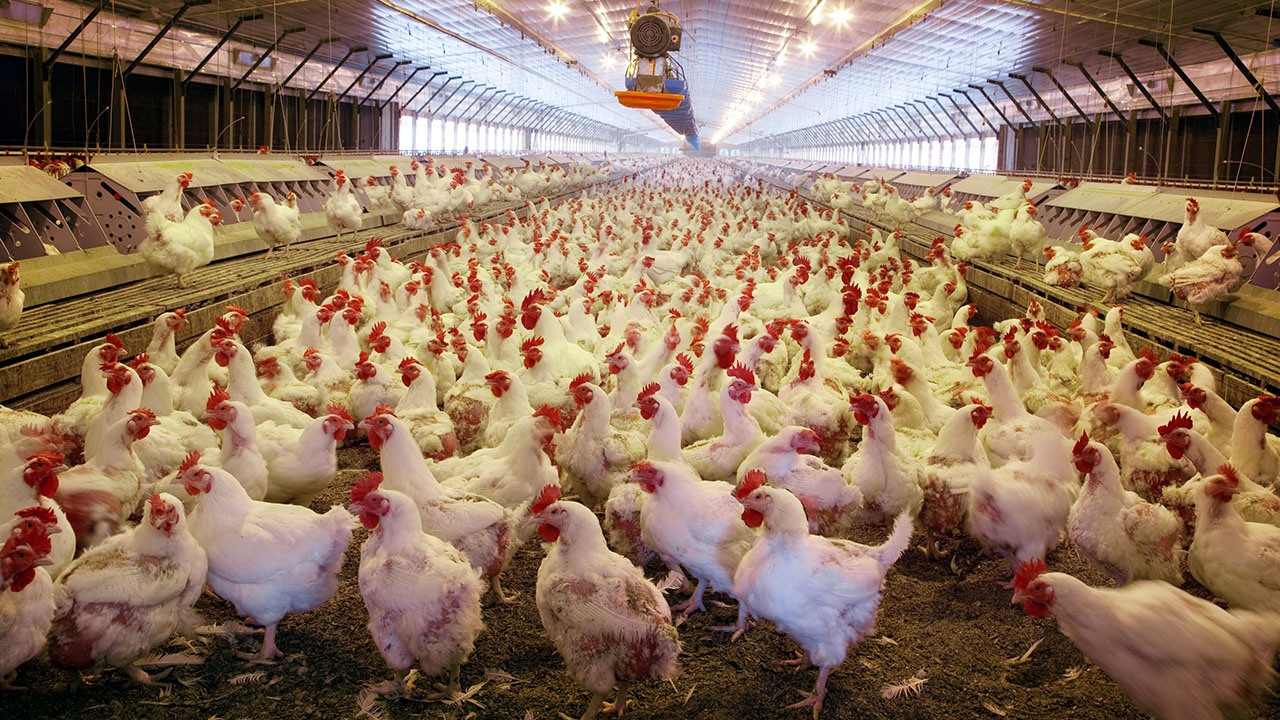
The avian influenza virus has been decimating commercial poultry factories in the U.S. and has infected dairy farms, too. It’s also been found in 67 people, more than half of them in California, who were exposed through direct contact with infected animals. One death from bird flu has been reported, in Louisiana in January.
In California, 38 known cases have been found so far, primarily among farmworkers, all but two of them through contact with cattle. But there was one child in Alameda County who tested positive for bird flu in November, despite not being around any of the known sources of infection (the child recovered fully).
In a recent 30-day period, bird flu was detected in more than 15 million birds, both commercial poultry and backyard flocks, and in nearly 11,000 wild birds.
Maurice Pitesky is a professor at the UC Davis School of Veterinary Medicine. He researches highly pathogenic avian influenza and studies how the virus is transmitted from wild birds to domestic poultry. He lives with his family in Davis, where they attend Congregation Bet Haverim. He’s also on the board of the synagogue.
He spoke with J. about how the disease is affecting California and what the real risks are. The interview has been edited and condensed for clarity.
J.: What exactly is bird flu?
Maurice Pitesky: Just like you and I get the seasonal flu, chickens and birds and dairy cows can also get the flu. The main difference is that chickens get the highly pathogenic avian influenza, which is highly infectious and causes a lot of mortality, or death. The mortality rates are literally close to 100% in domestic birds.
The main carriers are wild waterfowl, like ducks and geese. Many of them are migratory and can literally fly thousands of miles in the fall and springtime for feeding and breeding opportunities. And, unfortunately, they fly into the Central Valley of California, where we grow a lot of our domestic poultry and a lot of our milk.
We probably have close to 8 million [wild birds] and over a thousand dairies and over 600 poultry facilities all sharing the same land.
That explains the birds. But how can cows get bird flu?
There was some thought that cows were actually not susceptible to it, but there was what we call a “spillover” event [when a virus moves from one species to another] in Texas in a dairy there. By the time they had figured out that it was bird flu, the virus had started spreading. Our normal husbandry practices of moving dairy cows and raw milk from one facility to another can spread the virus.
Where else has it been found?
Wild birds, domestic birds, wild mammals, domestic mammals. We’re finding it in groundwater. We’re finding it in human wastewater. It’s somewhat ubiquitous in the environment. We’re starting to find it in humans, with the main risk being occupational for dairy and poultry workers.
What’s the worst-case scenario?
The virus hasn’t been shown to be infectious from human to human yet. The worst-case scenario is you’re going to have people that get sick with a virus that eventually becomes transmissible from human to human — if they come home and they spread it and it becomes an outbreak before our surveillance has captured that.
Hopefully it won’t happen. For now, though, what’s important to keep in mind?
I think some people are starting to realize when they go to the store, like, “Where did the eggs go? Why are egg prices so high?” One of the things I have to remind people is that we’ve had animal agriculture for the last thousand years. This is the worst animal disease outbreak we’ve had in the time that humans have been sedentary and have started farming. We’re dealing with something historic.
I think one of the things I get really scared of is access to raw milk, because the virus is in its highest concentrations in raw milk. So just from my perspective, we need a very robust surveillance system in place to prevent humans from consuming any raw milk with avian influenza.
Raw meat that some people are feeding their cats, that’s also been shown to be a source of infection. Then the worry is that the cat is going to transmit the virus to their owners.
I always tell people, if you’ve got backyard chickens, you’re also on the front line. It’s really important to do the best you can with fencing. You can imagine — some spilled seed and a wild bird or a rodent that sneaks in, eats the feed or drinks the water, poops there, and then spreads disease.
With such a serious disease, are we doing enough to limit the outbreak?
We’re three-plus years into this and we haven’t really leaned into a real strategy to prevent it. We’re just following what’s “kinda, sorta” worked in the past, and that hasn’t worked this time.
We need to start developing models and approaches that are using forecasting-type tools. So instead of weather forecasts, we need waterfowl/high-path AI [bird flu] forecasts that farmers can use. But it takes time for farmers and state and federal folks to start utilizing those tools. This is an insane outbreak. [Farmers] don’t really have the bandwidth to survive and deal with an outbreak at the same time.
I’m an epidemiologist and a veterinarian. My focus is on preventing outbreaks of disease, not responding. It’s pennies on the dollar to prevent them, it’s insanely complex to stop them. If this outbreak just ended tomorrow, it wouldn’t be because of us, it would in some ways be in spite of us.