

The Torah column is supported by a generous donation from Eve Gordon-Ramek in memory of Kenneth Gordon.
Terumah
Exodus 25:1–27:19
How do you figure out what you’re meant to do in life?
When I was in my mid-20s and contemplating different careers, I turned to the writings of the Quaker thinker Parker Palmer. In his book “Let Your Life Speak: Listening for the Voice of Vocation,” Palmer offers an inspirational though perhaps overly romantic answer.
Palmer explains that you find your true vocation when you find that thing you were always meant to do. He writes that vocation “comes from a voice ‘in here’ calling me to be the person I was born to be, to fulfill the original selfhood given me at birth by God.”
He believes that you can trace your interests back early in your life and connect a thread through what you’ve pursued that leads you to your vocation.
Palmer acknowledges that it can be difficult to figure out your vocation. He shares that he was led astray as he was finding his place in the world and subsequently suffered from depression. But ultimately, if you stay true to yourself, you find that thing you were always meant to do — and doing that ultimately helps to make the world a better place.
“Self-care is never a selfish act,” he writes. “It is simply a good stewardship of the only gift I have, the gift I was put on this earth to offer to others.”
A skeptic might say that it seems quite convenient that when you find what you were meant to do you will ultimately be helping the world. Isn’t there a danger that your true self could be selfish? Or couldn’t there be problems if you misinterpret your true calling?
Parker addresses these counterarguments by describing the care one needs to discern one’s vocation. Still, it seems that much of this comes down to belief. Parker asks us to act based on the conviction that if we find our true calling, we will make the world a better place.
Interestingly, our Torah portion this week offers an image that embodies Palmer’s idea.
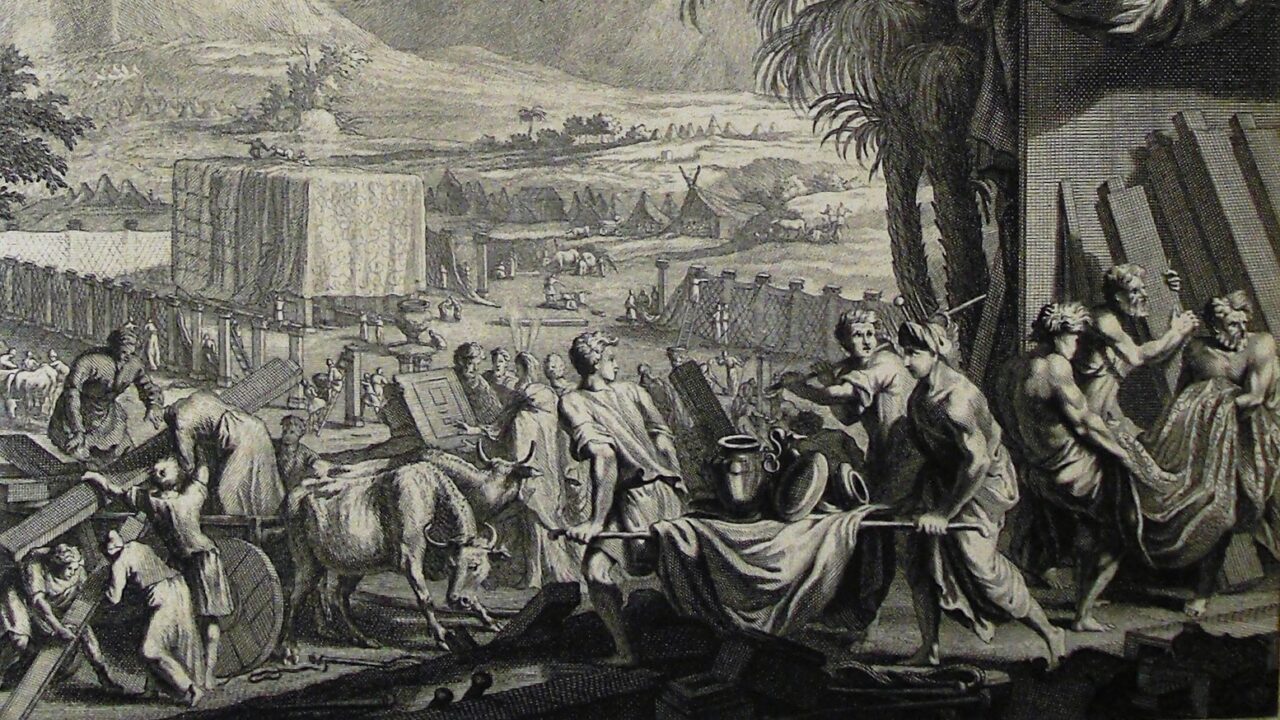
In Parashat Terumah, God tells Moses, “Tell the Israelite people to bring Me gifts; you shall accept gifts for Me from every person whose heart is so moved.” (Exodus 25:2)
With these gifts, God says that the people Israel should build the tabernacle. God says, “Make Me a sanctuary that I may dwell among them.” (Exodus 25:8)
The Torah offers a long, detailed and rich description of what these gifts should be. God tells the people to bring everything from gold to dolphin skins. God offers detailed instructions for building the tent of the tabernacle, the arc, the gold menorah and more.
We are left with a beautiful and idealistic image. If, as the beginning of the parashah suggests, everyone whose “heart is moved” brings their individual and specific gifts, together those gifts can come together to build a structure so ornate and holy that it will bring God’s presence to dwell among the people.
This sounds like the best case application of Palmer’s idea of vocation. When we give truly of ourselves, we can put our gifts together to make the world so much of a better place that we bring God’s presence to Earth.
This year, as I read over Palmer’s book and this week’s Torah portion, I am struck by the importance of faith in both texts.
When the Israelites were amassing their hard-to-come-by gifts in the desert and scrupulously forming these materials into the tabernacle based on detailed instructions, they had to believe that what God told them through Moses was true. If they brought their true gifts and worked hard, they would bring God’s presence down to Earth.
Parker’s idea of bringing one’s gifts to the world through vocation is indeed idealistic. But it seems that this is where faith comes in. Parker’s approach asks us to believe — like the Israelites building the tabernacle in the desert — that if we truly uncover what we are meant to do, we will contribute to a community effort to make the world better.
This work of vocation is not easy. It can be challenging to navigate the need to provide for yourself in addition to the difficulties of determining the true nature of your vocation.
And yet, the image of the building of the tabernacle can become a north star. Like the Israelites in the desert, we may not always know exactly where we are going, but we can take the next step with faith, trusting that our gifts will help build something greater than ourselves.