

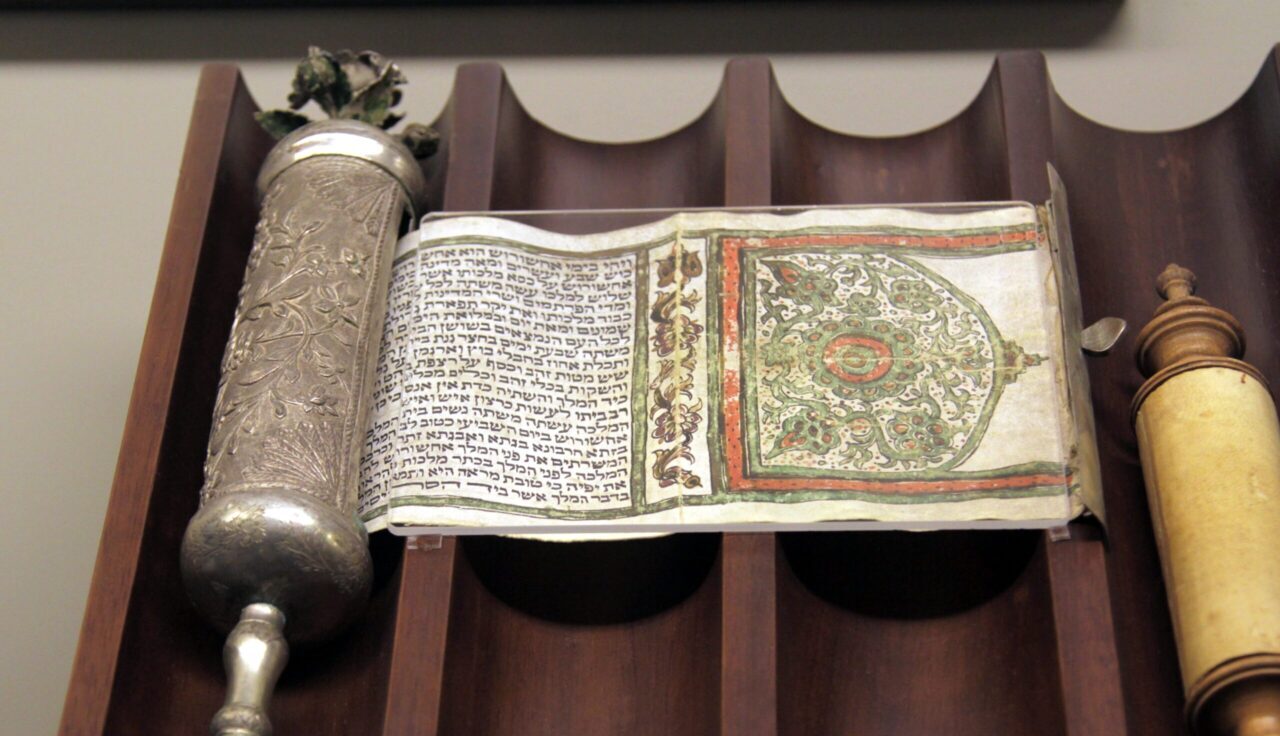
The Torah column is supported by a generous donation from Eve Gordon-Ramek in memory of Kenneth Gordon.
Tetzaveh
Exodus 27:20-30:10
The Jewish calendar is an intricate weave of history and destiny. Every holiday is a fixed point in time, tethered to the event it commemorates. Pesach marks the night of the Exodus. Shavuot recalls the revelation at Sinai. Yom Kippur, the day of Divine forgiveness after the sin of the Golden Calf. The logic is consistent: We remember what happened when it happened.
Except for Purim.
The story of Esther unfolds with remarkable precision. Haman’s decree to annihilate the Jewish people was set for the 13th of Adar. Yet the day of celebration is not the 13th, nor the moment of deliverance itself. Instead, Purim is marked on the 14th of Adar. A day later. As if America were to celebrate July 5th as Independence Day. The question is obvious: why?
The answer reveals something profound — not just about Jewish history, but about the human condition itself.
There are two ways a nation comes together. One is through crisis. The other, through purpose. The first is defensive. The second, aspirational. The first happens when people are bound together by fear and external threat. The second occurs when they are drawn together by a shared vision and collective dream.
Jews have experienced both. The first is as old as Egypt, where we became a people not by choice but by necessity, united under the lash of oppression. But the second? That is Sinai, where we became a nation not of victims but of architects — builders of a civilization based on law, morality and Divine purpose.
And that is why we do not celebrate Purim on the 13th of Adar. That was the day of crisis, when the Jews of Persia stood together because they had no other choice. But the day after — the 14th — was the moment when unity was no longer an act of survival but of identity. It was a choice to celebrate, affirm life and transform existence from mere endurance into meaning.
Survival is not a strategy. It is a condition. The true test of any civilization is not whether it can withstand its enemies, but whether it can justify its own existence beyond them. A nation that exists only to resist destruction has already conceded its future to those who seek its demise.
This is the enduring lesson of Purim.
We live in an era of resurgent antisemitism. It has returned in forms both old and new — dressed in the language of politics, human rights and social justice, but carrying the same fundamental objective: the marginalization, demonization and, ultimately, the eradication of Jewish existence. From the targeting of Jewish students on university campuses to the international obsession with delegitimizing Israel, the oldest hatred has found fresh platforms.
And yet, while vigilance is necessary, it is not sufficient. A Judaism that exists only in response to antisemitism is not a Judaism that will survive.
This is the great strategic miscalculation of those who believe Jewish continuity depends solely on fighting hatred. The reality is that identity built on grievance is unsustainable. The Jewish people did not survive Pharaoh, Haman, Hitler or Stalin simply by fighting back. We survived because we had something to fight for.
That is why we celebrate the day after.
Purim’s message is clear: Do not let crisis define you. Let your vision define you!
It is not the hatred of others that makes us who we are, but the ideals we cherish, the civilization we build, the moral and spiritual revolution we carry forward.
The story of Jewish history is not one of eternal victimhood. It is one of relentless renewal. The tragedy of Jewish existence is not how much we have suffered, but how often we allow that suffering to become the focal point of our identity. Purim is the corrective. It demands that we not simply endure history, but shape it.
That is why Purim is the most radical of Jewish holidays. It is a rejection of fatalism. A repudiation of fear. A refusal to let history be written by our enemies. It is the insistence that Jewish life is not about them — it is about us. About the civilization we build. About the future we choose.
Yes, we fight. We must. But we do not build a civilization on the battlefield. We build it through law and ethics, through mitzvot and study, through art and culture, through the vibrancy of a people that refuses to let its destiny be determined by others.
So this Purim, by all means, remember Haman. But do not dwell on him. The real victory is not that he was defeated, but that we are still here — not just to survive, but to live.
Jewish history is not written on the 13th of Adar. It is written on the 14th.
Chag Purim Sameach.