

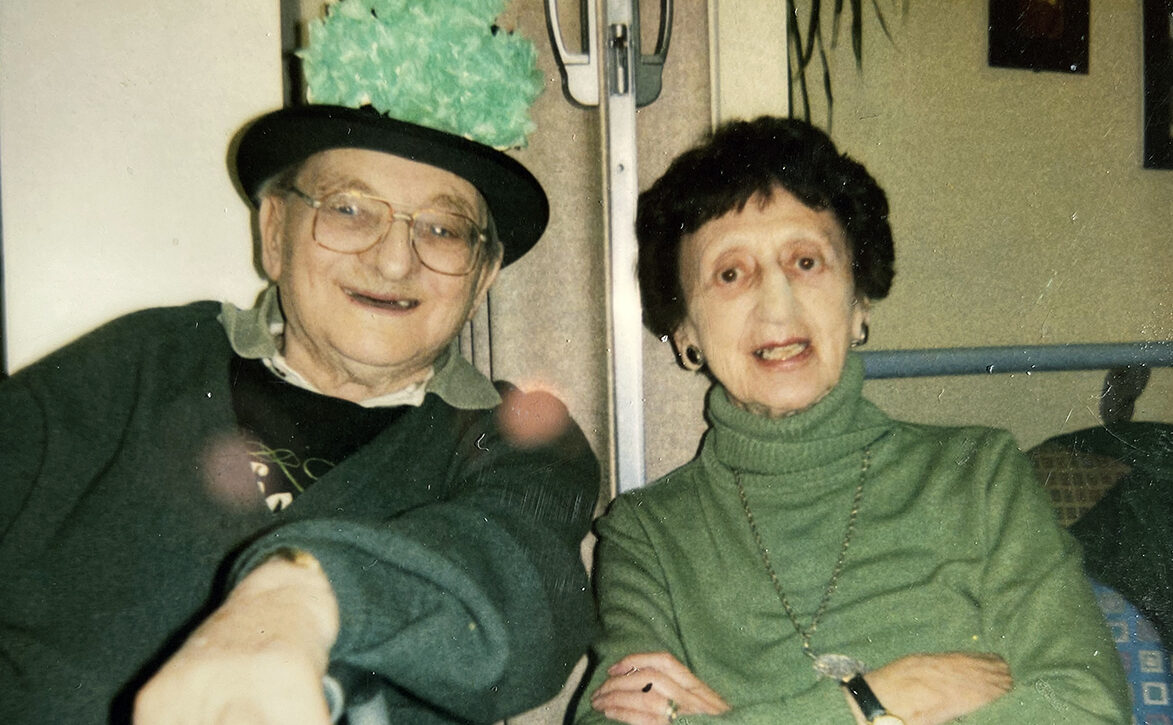
I’m a Dublin-born Jew who has always worn green on the most “Irish” of days, but this year is different.
The pain and hurt of so much ill-will directed toward Israel from so many parts of the world has been difficult. At the front of the pack in this anti-Israel campaign is the Irish government. Amid the war between Israel and Hamas, Ireland’s cabinet decided that it would recognize a Palestinian state and that Ireland would side with South Africa, which has accused Israel of committing genocide in Gaza, before the International Court of Justice.
In May 2024, the Israeli government decided to close its embassy in Ireland. This decision came in response to what Israel’s foreign minister described as Ireland’s “extreme anti-Israel policies.”
Ireland has had a very checkered history when it comes to Jews, who have been in the country continuously since the Middle Ages. In more recent history, Jews settled in Ireland from Eastern Europe at about the same time as they came to North America, in the latter half of the 19th century. For the most part, they were welcomed without prejudice, though there was an infamous economic boycott and pogrom that occurred in Limerick in the south of Ireland between 1904 and 1906. A number of members of Limerick’s small Jewish community were injured from the rocks and stones hurled at them.

Not many Jews remained in Limerick after that. Most moved to other parts of the country, like Cork and Dublin, which were more welcoming.
Then came World War II. Ireland’s antipathy toward the British for centuries of subjugation was so strong that Ireland officially decided not to fight with the Allies, but rather sit the war out. The reality of what actually happened is a bit more complicated, as it has been reported that some 100,000 Irish citizens fought with the Allies. But the Irish government also allowed German U-boats to skirt its shores. When asked to take in children arriving on the Kindertransport, Ireland shamefully declined.
Jews living in Ireland after the war were so outraged when the truth came out about the Holocaust and Ireland’s “officially neutral” position that they left in droves — many settling in Israel.
My parents, both of whom were born in Ireland, decided after the war that they would help settle the new country of Israel. My father was born in Belfast and my mother in Dublin, though as Jews they chose the side of Irish independence in the conflict between the Catholics and Protestants. After all, at that time Jews and Catholics had a common enemy: England.
So with me as a baby in tow, my parents made aliyah to join my father’s brother, Yaacov Morris, the author and the father of the famous Benny Morris, who has written and spoken extensively on the history of the region. Even Isaac Herzog, Israel’s current president, has Irish ties. He is the grandson of Rabbi Yitzhak HaLevi Herzog, Israel’s second chief rabbi, who led the synagogue my mother attended as a child in Dublin.

In the early 1950s for family reasons, my parents reluctantly left Israel and returned to Dublin. As a young child, I remember those years in Ireland vividly. It was a theocracy at the time with one of the strongest Catholic churches in the world. The shock of coming back from a Jewish state to a strongly Catholic one was difficult for all of us. I can still remember the hateful anti-Jewish epithets that came my way from neighborhood children. We stayed in Ireland for the next six years until my family immigrated to Canada.
Looking at the history of Jewry in Ireland is complicated. In 1948, there was a certain sense of pride among Irish Jews, like Jews worldwide at the time, that Israel had stood her ground against much greater enemies. For the most part, Jews in southern Ireland had always been very sympathetic to the movement for self-government, known as “home rule,” that had prevailed for centuries in Ireland. In fact, Rabbi Herzog had been known in Ireland as the “Sinn Fein Rabbi” before he made aliyah. “Sinn Fein,” which means “We Ourselves,” is the name of an Irish political party founded in 1905 and still in existence today.
In the 1920s, the Republic of Ireland won its hard fought independence against the British. So with this shared history of oppression, it is no wonder that Irish Jews are bemoaning the fact that Ireland is, today, at the forefront of antipathy against Israel. For the very few Jews still living in Ireland — perhaps 1,000 from a high of around 6,000 before WWII — this must be a hard pill to swallow.
I have dual citizenship, American and Irish. Not too long ago, one of our grandsons (who is eligible to apply for Irish citizenship as a direct descendant) asked if I would gather the documentation needed for his application. It was very sad for me to tell him that right now I just don’t have the will to do it.
In that same vein this year I cannot, in all good conscience, wear green on St Patrick’s Day.