

The Torah column is supported by a generous donation from Eve Gordon-Ramek in memory of Kenneth Gordon.
Shabbat HaChodesh
Exodus 12:1-20
This week, we read the final of the special Torah readings leading up to Passover. In their own ways, each of these readings helps us prepare for the festival: In one of them, we learn about the obligation to contribute to the maintenance of the Temple in anticipation of the holiday. In another, we read about the purification rituals required before offering the Passover sacrifice.
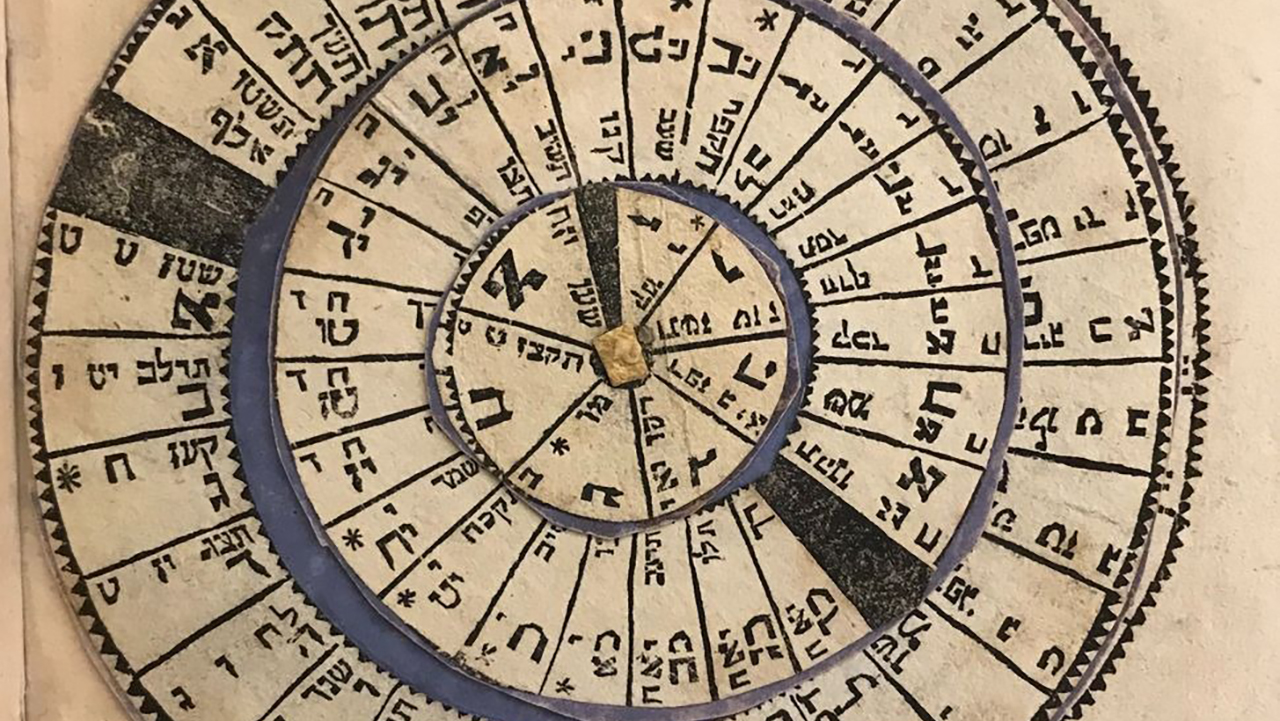
This week’s special reading for Shabbat HaChodesh (Exodus 12:1-20) opens with the very first mitzvah — the first commandment — given to Israel as a nation: “This month shall mark for you the beginning of months.” (Exodus 12:2)
Why is this the first command given to the nascent nation? It may reflect the Israelites’ newfound freedom: The philosopher Susan Buck Morss has observed that revolutionary movements often begin with a violent rupture from the past and recast the present moment as the beginning of a new history. Just as France, in the wake of its revolution, declared 1792 as Year One of the French Republic — marking an intentional rupture with the past — the Torah designates Nisan as Month One of Israel’s freedom.
As slaves, the Israelites’ most precious commodity, their time, belonged to the Egyptians. Liberation begins with God restoring time to the Israelites’ control and inviting them to commemorate and sanctify their history. In creating a calendar, the Israelites are empowered not only to remember their past, but, critically, to shape their present.
This moment is so central to the formation of Jewish identity that Rashi (Rabbi Shlomo Yitzhaki, c. 1040–1105) makes it the subject of his very first comment on the Torah. If the Torah is a book of commandments, he asks, why doesn’t it begin here, with this mitzvah to sanctify time? Rashi answers that the Torah begins with the creation of the world to teach that history itself unfolds according to Divine will.
As the Italian-Jewish historian Arnaldo Momigliano (1908-1987) observed, the ancient Israelites “placed a central value on truth. Because God was truth, the Israelites recorded every encounter,” producing a “narration of events from the beginning of the world such as no Greek historian ever conceived.”
Yet the Torah ultimately pivots from this broad, cosmological perspective to a more specific and communal understanding of time — one rooted in its revolutionary meaning for the Jewish people. The very first act the Israelites are commanded to undertake as a nation is to claim ownership of time, an act that the sages of the Talmud understood as a sacred responsibility of the Jewish people. They recorded in detail the procedures by which the rabbinic court would determine and declare the new month: the careful observation of the new moon’s emergence, the exact criteria for its appearance and the rigorous interrogations of eyewitnesses.
Each action pointed toward a central belief: sanctifying time is how the Jewish people mark their agency in history.
These ideas stand behind one of the most famous and dramatic tales in rabbinic literature. The Mishnah (Rosh Hashanah 2:9) offers this well-known story about Rabban Gamliel, a second-century sage known as an exacting leader who often prioritized fidelity to communal authority over personal sensitivity. It once happened that Rabbi Yehoshua, one of his students, disagreed with the rabbinic court’s calculation of the new month and issued a ruling in opposition to his teacher. In response, Rabban Gamliel ordered Rabbi Yehoshua to appear before him with his staff and his wallet on the very day Rabbi Yehoshua believed to be Yom Kippur. The order demanded that Rabbi Yehoshua publicly violate what he understood to be the holiest day of the year to affirm the authority of the court.
The power to calculate the calendar, Rabban Gamliel insisted, rests not with the individual but with the community and its leadership. While on the surface, Rabban Gamliel’s verdict may appear harsh, it evidences deeper conviction: For Rabban Gamliel, who tradition says lived through the destruction of the Second Temple as a child, the calendar was more than a tool for telling time. It was an entry point into the shared rituals through which Jews maintained a tangible link to their historical past.
This idea was best articulated by Amos Funkenstein (1937–1995), a scholar of Jewish thought who taught for many years at UC Berkeley. Funkenstein argued that it was through ritual and law, not historical writing, that Jews sustained their connection to the past. The performance of ritual, he taught, was imbued with what he called historical consciousness — a sense that, for Jews, past events are not just recalled but re-lived.
The clearest expression of this thesis is found in the holiday of Passover itself. While we are commanded to tell the story of the Exodus, the rituals of the seder ask that we reenact it. We eat the coarse bread of affliction, taste the salty tears of suffering and celebrate liberation through wine and song, reclining like epicurean Greeks. Each of these gestures reinforces one of the Haggadah’s most revolutionary claims: In each generation, we are to see ourselves as though we personally went forth from Egypt — that each of us carries with us the capacity to truly be free.
Through reenacting our past, we discover that the potential for liberation rests in the present moment.
The first commandment given to Israel — to mark and sanctify time — reminds both ancient Israel and us of the meaning of freedom. By commemorating sacred time with family and community and by reenacting our past through powerful symbolic rituals, we transform memory into a vital experience in the present moment. These practices have not only sustained the Jewish people but have nurtured our belief in the potential for a better, redeemed world and affirmed our responsibility for its creation.
As we approach Passover, may we be called to commemorate time with purpose and to work toward creating a world of true freedom — for ourselves, for our communities and for all who yearn to be free.