

Welcome to The J. Interview — a series where we introduce you to leaders in the Jewish community, both lay people and professionals, who help make the Bay Area a hub for Jewish creativity and dynamism.
Ronit Jacobs is the consummate Israeli American. A Tel Aviv native, she moved to Silicon Valley with her husband and triplets in 2000. She has become a dual citizen, thoroughly bilingual and bicultural, and since 2009 has devoted herself to helping Israelis across the Peninsula and South Bay achieve what she calls a “soft landing.”
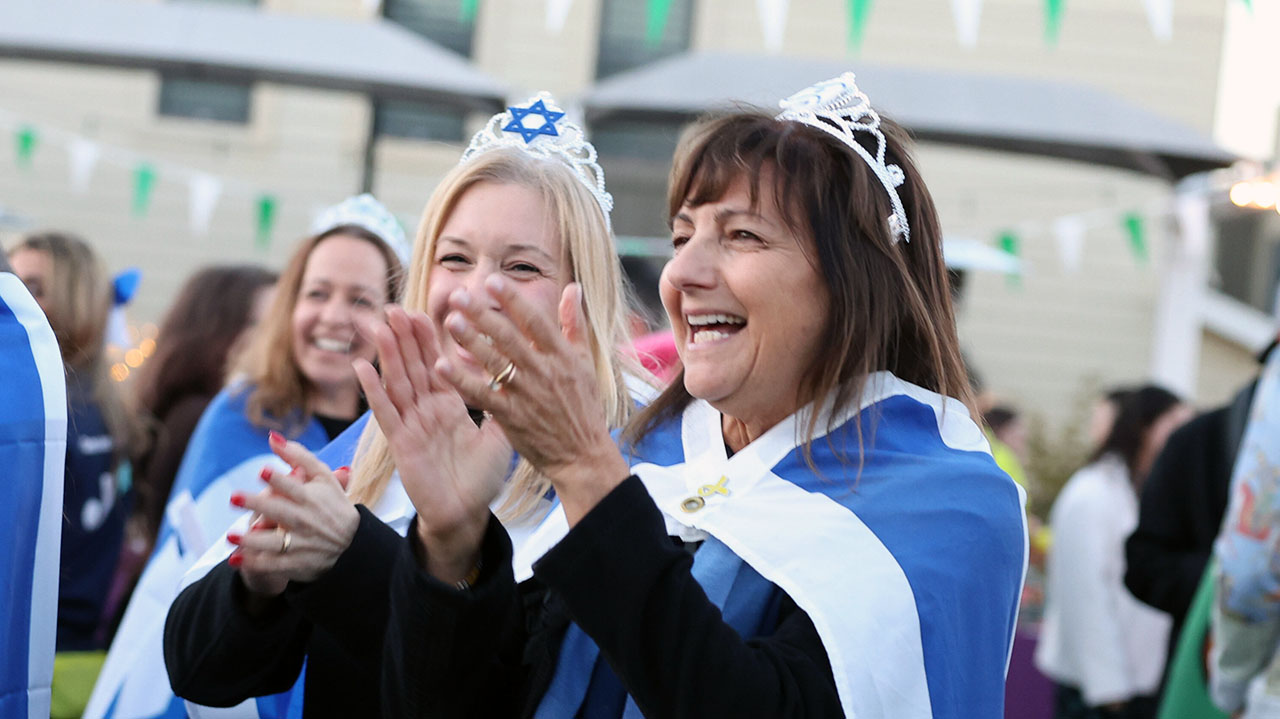
Jacobs is the senior director of the Israeli Cultural Connection, a project of the Oshman Family JCC in Palo Alto. The ICC seeks to serve as a “hub for the Israeli community … where you can connect to your Israeli identity, celebrate Israeli culture and explore what it means to be an Israeli Jew living outside of Israel,” according to its website. The ICC melds Israeli culture and Hebrew language to allow the thousands of Israelis — and all Jews — living on the Peninsula and in the South Bay to deepen their ties to Israel.
Jacobs has been there from the beginning and, as an expat herself, understands how her community longs to maintain ties to the Jewish homeland. In an interview with J., she explained the ICC’s history and how it has evolved over the years.
J.: What was the original concept of the ICC, and why did you feel it was needed?
Ronit Jacobs: The idea came from two realizations that converged at the same time. First, there was a growing understanding from Alex Joffe, then president of the board of the OFJCC, and Alan Sataloff, then CEO of the OFJCC, that the burgeoning population of Israelis in the Bay Area could be brought into the local Jewish community to add to our collective capabilities. At the same time, two key Israeli leaders, Amnon Landan and Orli Rinat, who were on the OFJCC board, saw that there were thousands of Israelis yearning to maintain their cultural identity, especially as they saw their kids growing up more and more as Americans, with less attachment to their Israeli roots.
What was the opportunity there?
For one, the number of Israelis in the Bay Area had reached approximately 35,000, with most in the South Bay. The majority worked in tech. The OFJCC had become a remarkable physical space and was hungry for innovative programing. Orli and Amnon had become comfortable enough in the American Jewish community that they could see the value in integrating an Israeli cultural project within the OFJCC.
Amnon and Orli provided the financial backing that allowed this to get off the ground. It allowed us to conduct focus groups to understand community needs, to develop programs designed to engage Israelis and to begin building a staff. That was the vision. And now, 15 years later, we have proof of concept.
How has the ICC’s scope changed over the years?
Our core goals have stayed the same: creating a home away from home for Israelis and their families; strengthening connections to Israeli and Jewish identity; celebrating Israeli culture; exploring what it means to be an Israeli Jew outside of Israel; building meaningful connections with the local Jewish community; enhancing awareness and support for Israel among both Israelis and American Jews; and creating communities of belonging.
Which programs have been the most successful?
We’ve had quite a few, including Icon, a platform connecting Israeli startups with American companies. With Z3, we created a space to discuss the connection between North American Jewry and Israelis. It’s a place where both can reimagine diaspora-Israel relations. The Beged Kefet Hebrew Language School is a thriving K-12 Hebrew school, plus adult ulpan. Gvanim by the Bay is a leadership program for Israeli adults navigating their Jewish Israeli identity outside of Israel.
How have things changed since Oct. 7, 2023?
The impact has been huge. To be sure, the deep pain that Israelis feel for the tragedy and the hostages is something that few non-Israelis can grasp. It’s just in our DNA. It’s like the hostages are our own family. Each of us have people we know that were either murdered, wounded or taken hostage. They might not be blood relatives, but it is a small country and we are all connected.
None of us are post-Oct. 7. The healing can only begin once the hostages come home, and even then, we’ll have a long way to go. But Oct. 7 was also an awakening for many Israelis here. It made us realize that we Jews are, in fact, one people, whether American or Israeli.
What has the ICC done to cope with rising anti-Zionism?
Many Israelis here became political activists almost overnight, focusing on combating anti-Israel and antisemitic rhetoric in schools and city councils and advocating for the Jewish community in the Bay. They have made significant strides, helping Israelis and pro-Israel Americans secure seats on local school boards and city committees. It’s a remarkable example where Israelis are now working hand in hand with American Jews. The ICC has tried to support these efforts.
Separately, we started offering support for the Israelis going through emotional rollercoasters. On Oct. 10, 2023, we held the first community solidarity event that brought together over 2,500 Israeli and American Jews. Last year, over 3,000 people attended our Oct. 7 solidarity rally. It’s been overwhelming and inspiring to see the outpouring of efforts from our community.
Finally, what has it meant to you personally to be part of the ICC and this community?
I’m incredibly proud of what this community has built and the integration into the local Jewish community. With the strong support of [OFJCC CEO] Zack Bodner, we really have created a “home away from home” and a bridge to American Jewish life.
One additional aspect I’m proud of is that Israelis showed that we can be part of the local philanthropic community, something that Americans have wondered about for years. As much as it may sound like lip-service, Israelis and Americans are investing in and building our community together. Frankly, it’s hard to beat the pride that brings me.