
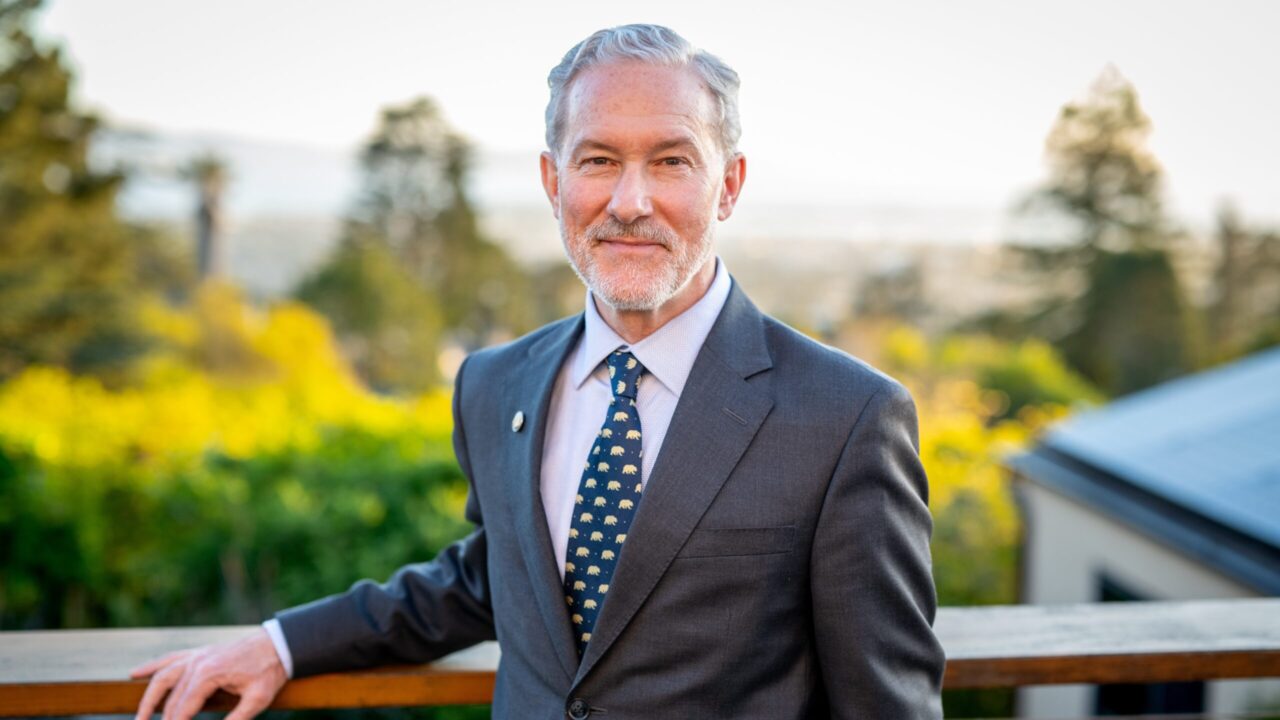
Amid multiple federal probes into antisemitism at UC Berkeley, the House Committee on Education and Workforce has called Cal Chancellor Richard Lyons to testify at a hearing next month.
The Republican-led committee has drawn national attention for combative hearings on antisemitism in which its members grill prominent leaders in American education. A hearing in December 2023 with presidents of Harvard, MIT and the University of Pennsylvania drew intense criticism of their responses and ultimately led to the resignations of those leaders at Harvard and Penn.
Lyons will appear on July 9 alongside Georgetown University’s interim president and the City University of New York’s chancellor. The hearing is titled “Antisemitism in Higher Education: Examining the Role of Faculty, Funding, and Ideology.”
“We continue to see antisemitic hatred festering at schools across the country,” Rep. Tim Walberg (R-Michigan), who chairs the committee, said in a statement. “While much of the discussion has focused on the devastating effects of antisemitism, this hearing will focus on the underlying factors instigating antisemitic upheaval and hatred on campus.”
The committee is composed of 20 Republicans and 16 Democrats, including Rep. Mark DeSaulnier, who represents the district that covers a wide swath of the East Bay including Walnut Creek, Concord, Antioch and San Ramon.
The hearing will focus on “foreign funding and antisemitic student and faculty groups,” Walberg said.
UC Berkeley reiterated its commitment to combating antisemitism and all forms of hate in a statement that spokesperson Dan Mogulof sent J. on Tuesday.
“Chancellor Lyons looks forward to testifying before the committee to share how the campus has been investing, and continues to invest, in resources and programs designed to prevent and address antisemitism on the Berkeley campus,” the statement said.
Lyons, former dean of Cal’s Haas School of Business, has been in the role just under a year. He replaced Carol Christ, who retired at the end of June 2024 after an academic year steeped in pro-Palestinian and anti-Israel protests.
Cal’s campus climate has seen signs of progress in the 2024-2025 academic year, according to professor Ron Hassner, who during the previous school year slept in his office for two weeks to protest the university’s handling of antisemitism concerns. “Berkeley has made significant strides in addressing some of the most disturbing aspects of anti-Jewish bias by enforcing stricter rules and requiring antisemitism education,” he wrote in a February op-ed in J.
Still, concerns remain. Later that month, there were calls for “intifada” during a protest outside Zellerbach Hall during performances of Israel’s Batsheva Dance Company. A year prior, Zellerbach Playhouse was the scene of a violent protest by anti-Israel activists that caused damage to the building, injured multiple students and forced Israeli speaker Ran Bar-Yoshafat to move his event off-campus. Georgetown, the nation’s oldest Catholic and Jesuit university, has faced antisemitic demonstrations and multiple incidents of graffiti since the Israel-Hamas war began on Oct. 7, 2023, according to Jewish Insider. CUNY, which is comprised of 25 campuses across New York’s five boroughs, have been hotbeds of pro-Palestinian activism amid the war, with dozens of arrests of pro-Palestinian demonstrators.