


Several prominent Northern California rabbis are calling for action amid increasingly disturbing reports of mass hunger in Gaza, as condemnations sweep across the Jewish world and political and religious leaders wrestle over who to blame.
“I can only feel responsible for what Israel is doing, not for what Hamas is doing,” said Rabbi Chai Levy, who leads Conservative Congregation Netivot Shalom in Berkeley. After services and kiddush on Saturday, Levy plans to hold a “listening session” for congregants to discuss both the “spiritual, moral, emotional crises of the ongoing devastation and hunger in Gaza” and the rise in violence and antisemitism against Jews across the world.
“This will not be a place for debate, but a place to listen with compassion and respect, whatever our views,” Levy wrote to her congregants in an email Thursday, adding in an interview with J. that she expects “most people who show up will say they are horrified by what Israel is doing.”
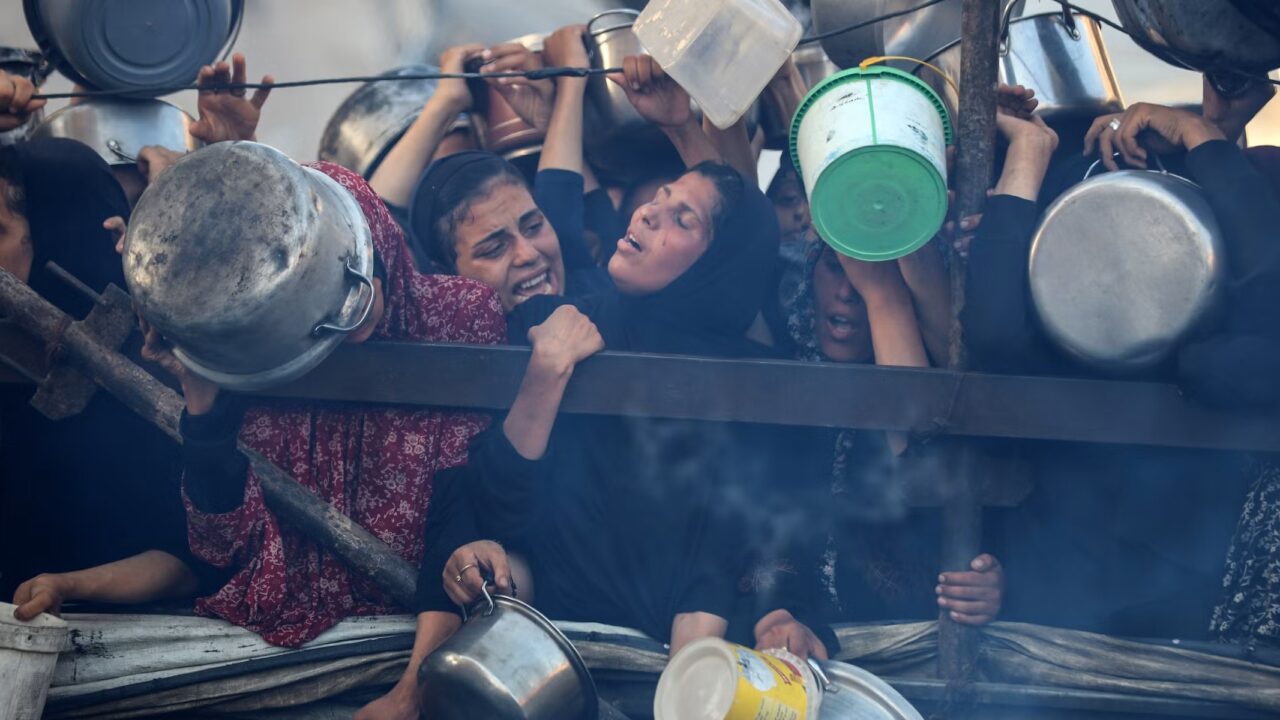
Over the past week, shocking images of starving, emaciated children in Gaza have flooded social media feeds and the front pages of international newspapers.
Cease-fire negotiations, which seemed to be on the verge of a breakthrough, broke down this week. Meanwhile, outrage about the situation in Gaza has continued to intensify. More than 100 international aid groups warned this week of “mass starvation” in the strip, saying that their own workers are going hungry.
More than 750 rabbis on four continents and from a range of denominations signed an open letter this week calling for Israel to deliver more aid to Gaza, with more clergy adding their names by the minute. More than 40 of them, including Levy, are Northern California residents.
“The Jewish People face a grave moral crisis, threatening the very basis of Judaism as the ethical voice that it has been since the age of Israel’s prophets. We cannot remain silent in confronting it,” states the letter, which was organized by Rabbi Jonathan Wittenberg in London, Rabbi Art Green in Boston and Rabbi Ariel Pollak in Tel Aviv.
Rabbi Ryan Bauer, the senior rabbi at San Francisco’s Reform Congregation Emanu-El, one of the region’s oldest and largest synagogues, said that while he won’t be leading Friday night worship, his colleagues plan to address hunger in Gaza during services.
“What happens in Israel affects us in America, and what we do in America is going to affect what happens in Israel,” said Bauer, a staunch supporter of Israel who is not shy about criticizing left-wing antisemitism.
In meetings this week with his fellow Emanu-El clergy, Bauer said, they looked to Jewish texts to understand the moment.
“In Jewish tradition, it says we feed those who are hungry,” he said. “It never defines who ‘those’ are.”
It’s difficult to know exactly what is happening in Gaza, where Israel has battled Hamas since the Oct. 7, 2023, terrorist attack on Israel. Both Israel and Hamas have a strong interest in shaping the story that emerges, as each side accuses the other of lying and distorting the truth.
But around the world, videos and photos of desperate-looking Gazans clamoring for food at distribution points, accounts from adults describing hunger so severe they grow dizzy as they walk, and pictures of gaunt, sickly children have broken through.
They are provoking a soul-searching among Jews, including staunchly pro-Israel Jews, who are increasingly concerned that a human rights catastrophe is unfolding amid the 22-month war. Many if not most Jews have defended the war from the start as a legitimate response to Oct. 7, when Hamas massacred 1,200 people in Israel and took 251 hostages. Hamas continues to hold 50 hostages, of whom 20 are believed to remain alive.
Opponents of Israel have accused the Jewish state of starving Gazans since the early weeks of the Israel-Hamas war, often leading Israel’s supporters to dismiss such descriptions as anti-Zionist propaganda. But when the most recent cease-fire ended in mid-March, Israel cut off aid to Gaza entirely until May in a fruitless effort to pressure Hamas to surrender. And since the Israel- and U.S-backed Gaza Humanitarian Foundation began distributing food in May, chaos has repeatedly reigned.
Israel continues to maintain that it is now providing enough aid to sustain Gazan civilians, though that aid has been dangerous to access with numerous reports of civilians getting injured or killed near distribution sites in recent weeks. At the same time, Israel has said that the United Nations has failed to facilitate the delivery of aid sitting in hundreds of trucks along the border.
A senior Israeli official who briefed reporters this week acknowledged that aid is not being distributed adequately and conceded that “action is required to stabilize the humanitarian situation.” He placed the blame on Hamas and the United Nations for not allowing the aid to reach civilians.
On Friday, Israel announced it would allow air drops of humanitarian aid from foreign nations.
Rabbi Jacqueline Mates-Muchin, who leads Oakland’s Reform Temple Sinai, said that it’s important to acknowledge the propaganda battle at work behind much of the information coming out of Gaza right now — a battle that she said Israel appears to be losing. She described it as a form of “communication warfare.”
“People starving is horrible,” she said. “I think it is very complicated to know exactly what’s going on. I think it would be great if we all knew exactly who was to blame.”
She described an “existential question” facing American Judaism: how to “work together” to improve the prospects for peace rather than getting mired in political and ideological fights.
Rabbi Paula Marcus of Reform Temple Beth El in Aptos, who has facilitated visits at her congregation with Palestinian peace-makers, spoke with J. on Friday. She had just come from spending time with preschoolers as they were eating challah. She said it brought up the sharp contrast of hungry children in Gaza, as well as the young victims of Hamas brutality, such as the Bibas children.
Marcus said she generally avoids talking directly about the Israeli-Palestinian conflict from the bimah. “People don’t want to be ruffled on Shabbat,” she said. But she often delivers a “prayer for the urgent protection of human life.”
At the same time, Marcus, said she experienced a personal “turning point” when the fighting resumed after the most recent cease-fire ended in mid-March.
“What’s happening now is a disaster,” she said.
Philissa Cramer of JTA contributed to this report.