
Malcolm Margolin founded Heyday, Berkeley’s independent, nonprofit press, in 1974 and ran it for almost 50 years, releasing more than 500 books about California history, naturalism and culture. He wrote eight books of his own and won numerous awards for his leadership.
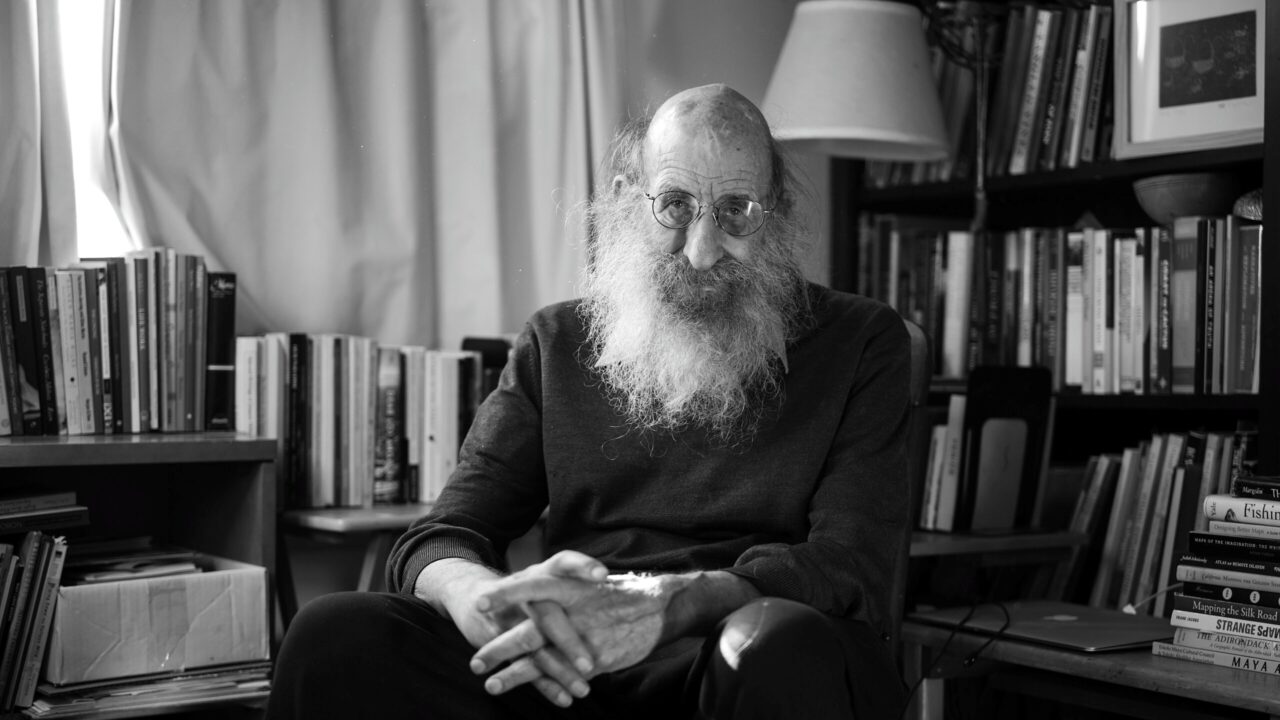
A familiar figure around Berkeley with his “rabbinical” white beard and round glasses, he was known for his passion for books.
“When my dad had his office at home, there were hundreds of boxes in the house,” recalled Sadie Costello, his daughter. “They were stacked to the ceiling … and along the living room walls, stored under all of our beds, even the bathtub.”
Margolin died on Aug. 20 after living with Parkinson’s disease for 20 years. He was 84.
He spoke with J. in 2016, saying that although he was not religiously observant, Judaism infused his values. One of those values was his empathy toward anyone who was an outsider because he felt like one himself in his early years.
Margolin was born to Orthodox Jewish parents in 1940. Growing up in ’40s Boston in what he described as an era of East Coast “gamblers, bookies and gangsters,” he lived in a world where “everyone had an angle.” He felt out of place in his youth and yearned for a deeper sense of the world, so he turned to books for answers. He told J. he credited his “sense of scholarship” to his Jewish upbringing. He graduated in 1964 from Harvard, where between classes he took long hikes and discovered a deeply rooted admiration for nature and ecology.
After graduation, he and his wife, Rina, wandered through the U.S., Mexico and Canada. After visiting San Francisco during the 1967 Summer of Love, Margolin felt immediately drawn to the Bay Area. The next year, the couple left New York City in their VW bus and headed west. The two bounced around California’s North Coast, living off the land, the bus and a typewriter for two years.
Tired of van life, they settled in Berkeley in 1970. Over time, he fell in love with the natural beauty of the region, particularly in the East Bay, where he found his purpose nestled between redwoods. He went on to write works about East Bay ecology and Native American cultural renewal — most notably 1978’s “The Ohlone Way: Indian Life in the San Francisco-Monterey-Bay Area,” a product of his three-year deep dive into UC Berkeley’s West Americana Bancroft archive. He was also the editor of “The Way We Lived: California Indian Stories, Songs, and Reminiscences,” an 1981 anthology of Indigenous Californians in their own voices, according to Heyday.
Gregg Castro, cultural director of the Association of Ramaytush Ohlone, praised Margolin’s deep commitment to Indigenous writers.
“He saw a wrong that had been done to the California people and did something about it. And it was way more than just ‘something,’” Castro told J. “Perhaps more than any other ally, Malcolm has raised our profile in modern society, elevating our voices and giving us a platform to speak our truth.”
Margolin retired in 2015 when he was 75, continuing nonprofit work by founding the California Institute for Community, Art & Nature (I CAN), which is dedicated to “re-indigenizing” the Bay Area and preserving local Native archives. In his final years battling Parkinson’s, it gave him great satisfaction to look back at his “ocean of papers for islands of quirk and lucidity,” he wrote in a message on a GoFundMe page started by his friends. “Revisiting all the things I have contributed to has sustained me throughout this whole experience.”
J. asked him in 2016: “What has life taught you?” Margolin responded, “We live in a world of tremendous abundance; one so much more beautiful than anybody deserves or understands. We are capable of great things, and anything that diminishes or takes away from our sense of human greatness is an enemy.”