

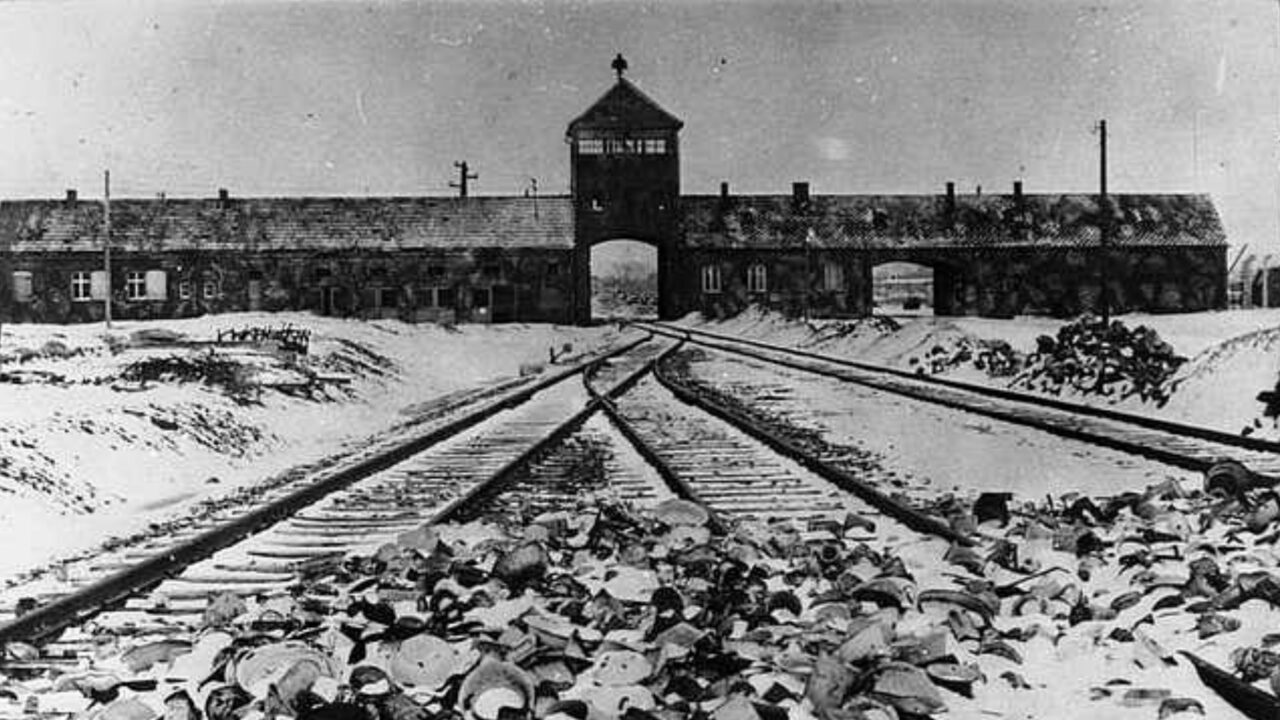
When I was doing postdoctoral fieldwork on Holocaust memory and memorialization in central Ukraine, I vividly remember visiting an elderly Holocaust survivor in the town of Tulchin. She had been imprisoned both in the Pechora camp, a site of mass starvation under Romanian occupation, and in labor camps on the German side of the Southern Bug River.
Another woman, a decade younger and also a survivor of Pechora, was providing care for her. While I was visiting, I overheard the older woman bluntly tell her caregiver: “I suffered more.”
At the time, I was stunned by this comparative victimhood. But over time, I learned it wasn’t uncommon for Holocaust survivors to pit themselves against one another in an attempt to prove who had suffered more.
I saw this phenomenon repeat itself when I visited the home of a couple who had evacuated from the town of Bratslav to the Ural Mountains in the east. They bitterly complained that survivors of ghettos and camps received Claims Conference compensation for their suffering, while they did not. Not only did some survivors compete for trauma recognition, but the system of postwar compensation (available to Soviet Jewish survivors starting only in the late 1980s and early 1990s) entrenched divisions — camp versus ghetto, while excluding evacuation entirely.
In this current moment of suffering in Gaza, it is disturbing to see similar comparative claims of suffering emerge as the hostages who have been in captivity for 700 days continue to endure bombardment, torture and starvation, and the Palestinian population faces unspeakable hardship — bombings, displacements, and devastating mass hunger amid a scarcity of humanitarian aid.
Both groups have been used as pawns in this war. I’m pained to see comments on social media that go something like this: “If you posted about Palestinians starving but not the hostages…” or the converse, “If you posted about the hostages but not about Palestinian suffering…” The implication is that such comments mean you are callous and uncaring, biased and one-sided.
I find this competition for victimhood appalling. Where did our empathy go? Yet the need to compare and compete in this domain of relative suffering is sadly human. After all, Holocaust survivors, who endured so much that we will never fully know or understand, did this to each other in the postwar period. While I could excuse this among a population that had suffered so profoundly, the rest of us who are mere witnesses and bystanders to tragedy should know better. No human suffering is tolerable, nor should it be compared to determine who is more deserving of compassion and care.
I have studied the Holocaust in Ukraine and the harrowing narratives Ukrainian Jews tell of their experiences of death and survival in camps, ghettos and hiding. I interviewed Pechora survivors who spoke candidly about their experiences of starvation. The intense debates over terminology in the media miss the critical point I want to make. We have an obligation to care about everyone’s suffering in this war and to seek an end to this suffering however possible, indeed, before it is too late.
The terminology used to define this war will one day be decided by legal scholars, policy-makers and historians. But at this moment, it feels more important to act urgently to ensure a lasting peace, address the humanitarian crisis of mass hunger and deprivation and its dire health impacts, and rescue the remaining hostages before they all die of illness, torture and starvation. New revelations of loss emerge daily. It is not one or the other. It is all part of the same tragic story.