

The Torah column is supported by a generous donation from Eve Gordon-Ramek in memory of Kenneth Gordon.
Nitzavim
Deuteronomy 29:9-30:20
There is a story about a man who travels back in time to prevent the Titanic from sinking.
He knows there are icebergs ahead, so he rushes to the captain to warn him. But the captain waves him off: “Don’t worry. We’re professionals. We know what we’re doing.”
The man is desperate. He persuades his girlfriend to distract the captain, seizes the wheel himself and turns the ship a few degrees to the right.
What he does not know is that the captain had already received the warning. The ship’s course had already been adjusted to safety. And by meddling, our hero unwittingly turns the vessel back into the very path of the iceberg.
It is a fascinating story.
But it is not a Jewish story.
Because it suggests that the future is already determined. That the script is already written. That no matter what we do, the outcome is fixed.
If that is the case, then what are we? Merely actors, reading lines someone else wrote. Puppets on strings, moving to a tune we did not compose. It may be a compelling way to tell a story, but it is a terrible way to live a life.
Because if everything is preordained, then nothing is ever my fault, nothing is ever my responsibility, and nothing I do really matters.
Judaism rejected that worldview from the very beginning.
In fact, Judaism is the most radical protest against it. The glory of a human being is not that we are flawless, but that we are free. That we are responsible. That we can choose.
That is why, in this week’s Torah reading, Moses says to the people: “I place before you today life and death, blessing and curse. Choose life!” (Deuteronomy 30:19)
It doesn’t say: “Life has already been chosen for you. Destiny has already been sealed.”
It says: You choose. You are not prisoners of your past. You are not shackled by fate. You are the captain of your destiny.
And that is the heartbeat of the High Holidays. Rosh Hashanah and Yom Kippur come to teach us this one great truth: The future has not yet been written. The next chapter of your life is blank. The pages are waiting for you.
This is why, in one of the most powerful prayers we recite on these days, Unetaneh Tokef, we speak of God writing in the Book of Life on Rosh Hashanah and sealing it on Yom Kippur.
Those words can feel terrifying. They can make us feel small and powerless. But then comes the line that changes everything:
“U’teshuvah, u’tefillah, u’tzedakah ma’avirin es ro’a hagezeirah.”
“But repentance, prayer and charity have the power to transform the harshness of the decree.”
Think about that. If the decree was fixed, if the script was already written, then how could anything change?
But Judaism insists: You can change. Your choices matter. Your prayers matter. Your generosity matters. You can rewrite the story.
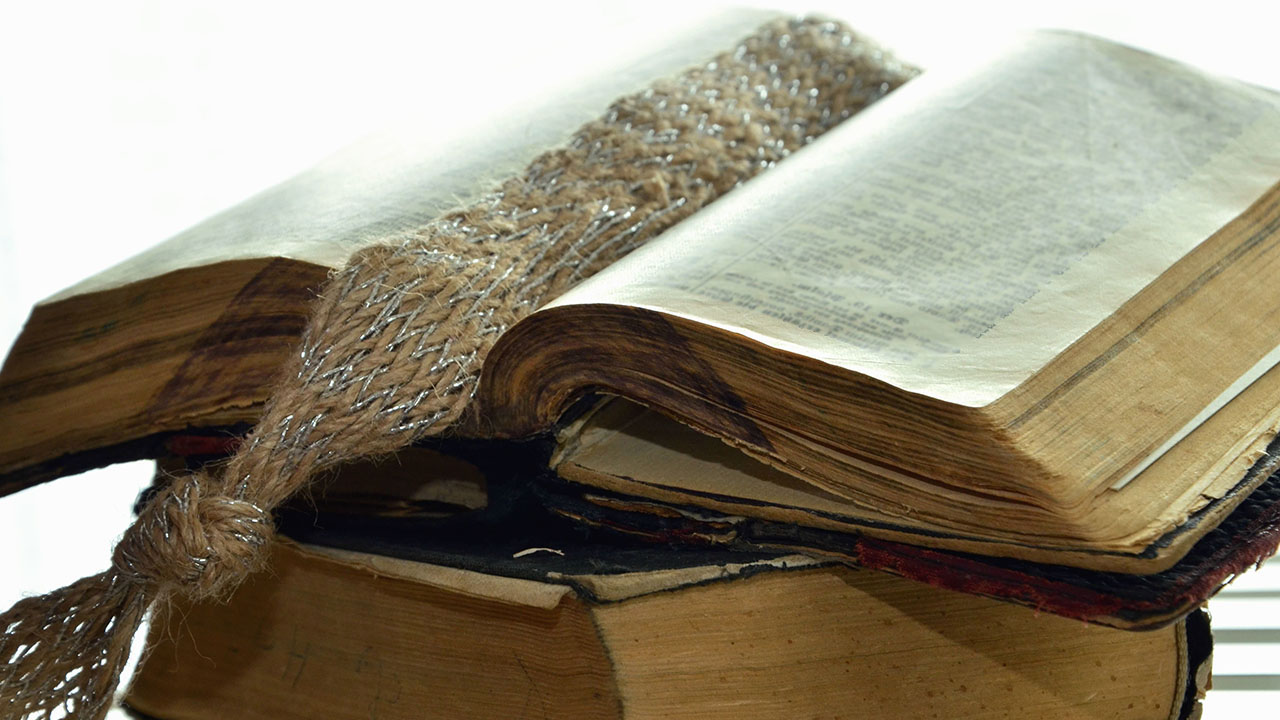
And here is a detail we often miss. The prayer says that when the Book of Life is opened, the entries are written in our own handwriting: “v’ḥotam yad kol adam bo” — every person’s signature is there.
God opens the Book, yes.
But who fills in the lines? Who writes the sentences? Who tells the story?
We do.
We write the notes of our own lives.
That means you are not reading a book already written. You are writing it as you go along. You are not stuck with the rough draft of last year. You can edit. You can erase. You can start a new chapter.
This is what makes these days so extraordinary. They are not only about judgment. They are about authorship. They are about partnership. God gives us the paper, the pen, the ink. But God waits for us to write.
The future is a book we co-author with Heaven. And that is why the Book of Life is not simply a metaphor. It is a mission statement.
The question is not “What has been decreed for me?” but “What will I choose to inscribe?” What kind of life will I draft with my words, my actions, my choices?
When we stand in shul and pray, we don’t ask: “God, could You let me peek at the next chapter? Just a glimpse? Maybe tomorrow’s stock market page?”
And if we did, God’s response would be: “There is nothing to see. The pages are blank. You haven’t written them yet.”
The only pages already filled are the ones you’ve lived, the chapters already written. But even there, Judaism insists, you can revise. You can repair. You can redeem. With teshuvah, with tefillah, with tzedakah — the book is not closed.
Our fate is not in the stars. Our fate is in our hands.
So as we enter this season, let us remember: We are not spectators of our lives.
We are not passengers on the Titanic of fate.
We are its navigators. We are the ones who hold the wheel.
Choose life. Choose blessing.
Choose to write a story that your children and grandchildren will be proud to read.
And may God bless us all with a year of goodness, sweetness and life.