

More than 200 Jewish faculty across the University of California system have signed an open letter expressing alarm that UC leaders have allegedly begun negotiating a settlement with the Trump administration over allegations of “systematic antisemitism” at UCLA.
The letter urges the university system not to “compromise” or negotiate with the Trump administration, as have other universities such as Columbia.
“The University of California will survive federal funding cuts if it must,” the letter states. “It will not survive the sacrifice of our institutional autonomy, academic freedom, or civil rights on the altar of a specious claim to be ‘combatting antisemitism.’”
In late July, the Trump administration proposed a $1 billion settlement to the UC system to restore medical and science research grants to UCLA. The federal government froze or threatened to freeze hundreds of millions of dollars in grants earlier this year in response to UCLA’s alleged mishandling of reports of pervasive antisemitism during the 2023-2024 school year. UC leaders have said that such a payout would “devastate” the university system. Democratic politicians have called it a “billion-dollar political shakedown.”
In a related matter, UC Berkeley announced earlier this month that it had provided documents, including the names of roughly 160 students, staff and faculty, to the U.S. Department of Education’s Office for Civil Rights related to an investigation into antisemitism on its campus, the Daily Cal reported.
As of Wednesday, 235 Jewish faculty had signed the letter related to UCLA.
Not all Jewish faculty chose to do so. Two Jewish professors at Cal told J. they did not sign it over disagreements with its central claims.
“I too oppose the administration’s attack on our universities,” UC Berkeley political science professor Ron Hassner wrote in an email to J. “But to pretend, as this letter does, that campus antisemitism is a figment of the DOJ’s imagination goes too far. This letter neither condemns nor promises to remedy the campus antisemitism that we have all witnessed.”
The other Jewish professor opposed to the letter spoke on the condition of anonymity and declined to be quoted.
The letter argues that the Trump administration is targeting the UC system not because of antisemitism, but because the UC system represents a “considerable obstacle to authoritarianism.”
“We are united in denouncing the federal government’s attempt to hobble the University of California … under the cynical and pretextual guise of ‘combatting antisemitism,’” the letter states.
UC Berkeley Law School Dean Erwin Chemerinsky is one of 107 Jewish Berkeley faculty who have signed the letter. Chemerinsky is also one of several attorneys representing UC professors in a class-action lawsuit against the Trump administration.
In the past, Chemerinsky has been outspoken in calling out antisemitism on college campuses and has himself been the target of campaigns by pro-Palestinian protesters at Cal.
Two weeks after the Oct. 7, 2023 Hamas attack on Israel, Chemerinsky published an op-ed in the Los Angeles Times titled “Nothing has prepared me for the antisemitism I see on college campuses now.” Rather than advocating for federal intervention, however, he urged his colleagues to address the problem at the campus level.
“There has been enough silence and enough tolerance of antisemitism on college campuses,” he wrote. “I call on my fellow university administrators to speak out and denounce the celebrations of Hamas and the blatant antisemitism that is being voiced.”
Chemerinsky elaborated on his stance in a Sept. 17 email to J.
“Antisemitism exists on every campus. But the Trump administration is using it as a pretext to inflict great harm on universities,” he wrote. “If this were about UCLA not adequately responding to antisemitism, the law prescribes the procedures the government must follow. It has not done so at all.”
The global rise in antisemitism and anti-Zionism following Oct. 7 played out on UC campuses in a number of ways.
In February 2024, an anti-Israel protest turned violent at UC Berkeley’s Zellerbach Playhouse, where Israeli attorney and military reservist Ran Bar-Yoshafat was scheduled to speak. Protesters damaged the building and injured multiple Jewish students.
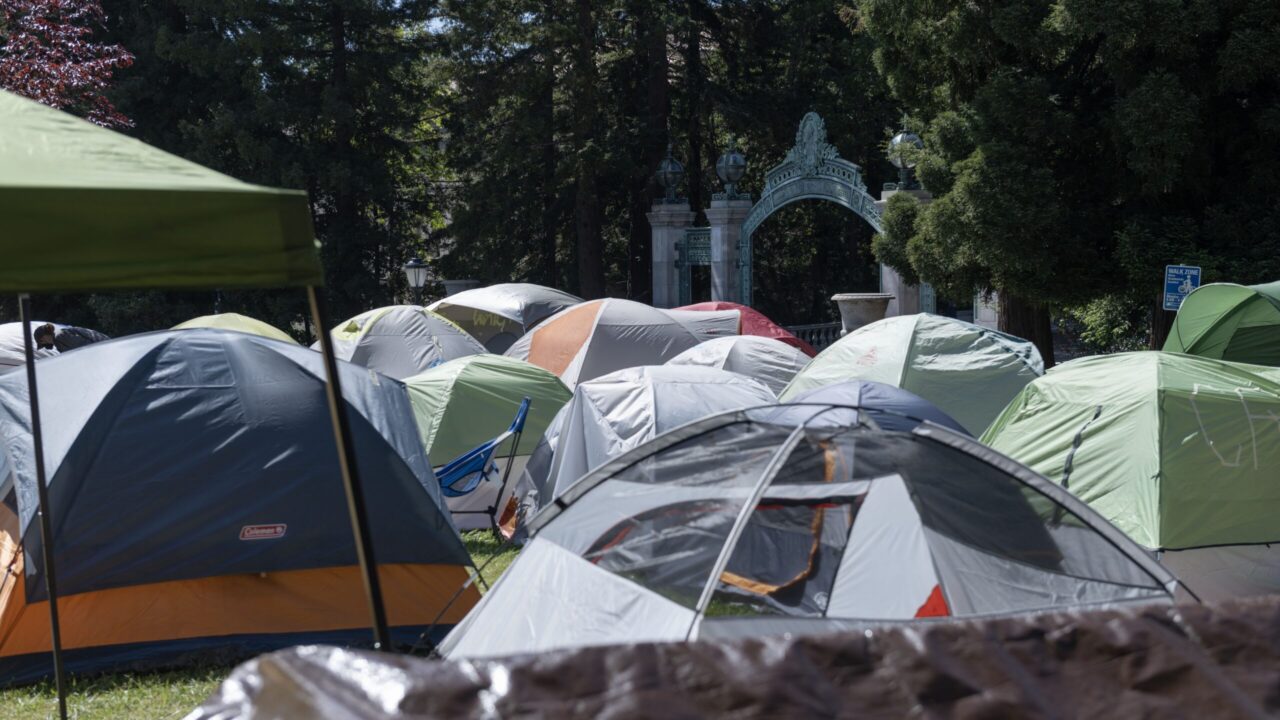
That spring, pro-Palestinian tent encampments sprang up on campuses across the country including at Cal and at UCLA.
In October 2024, UCLA’s Task Force to Combat Antisemitism and Anti-Israel Bias published a report on the impact of pro-Palestinian protests on Jewish and Israeli students on its campus. Among the incidents mentioned in the report was the use of the encampment as a barrier to block suspected Zionists from accessing parts of the campus.
Regarding UC Berkeley’s release of documents this month to the Department of Education’s Office for Civil Rights, faculty members are pushing hard against the disclosure of personal information to the federal government.
A Sept. 15 letter signed by the Berkeley Faculty Association and the American Association of University Professors criticizes Cal Chancellor Rich Lyons and chief campus counsel David Robinson for cooperating with the federal government on this issue.
At the direction of the UC President’s Office, UC Berkeley handed over documents that contained the names of students, faculty and staff who are potentially connected to these reports of antisemitism, the San Francisco Chronicle and Politico reported.
The Sept. 15 letter argues that by compelling the disclosure of the names, the Office for Civil Rights aims to create a fear of retaliation and a chilling effect on free speech.
“We believe the release of [personally identifiable information] was wholly unnecessary and legally improper,” the letter reads.
Chemerinsky said that the Office for Civil Rights can ask for names of individuals if such a request is necessary to its investigation. However, in response, UC Berkeley could have also “refused and litigated whether the names were necessary,” he wrote in a Sept. 17 email to J.
While the UC system continues its efforts to unfreeze grant money, it has notched at least a temporary win in federal court. This week, CNN reported, a federal judge ruled that the Trump administration had likely violated the Administrative Procedure Act and ordered the restoration of $500 million in grants to UCLA.