
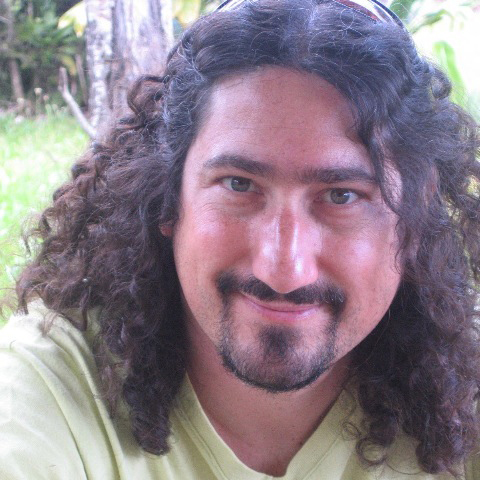

Looking at Steven Pinker’s piercing blue eyes and boyish mien, even on a Zoom call, it’s easy to imagine him as an 11-year-old upstart, filled with righteous scorn over his synagogue’s hypocrisy.
In his latest book, “When Everyone Knows That Everyone Knows…: Common Knowledge and the Mysteries of Money, Power, and Everyday Life,” the renowned linguist, psychologist and Harvard professor recounts the origin story of his lifelong involvement in American political and intellectual debate.

At the center of the book, which he will discuss on Oct. 8 at a Commonwealth Club event at Santa Clara University with former U.S. chief data scientist DJ Patil, and on Oct. 9 at the JCCSF, Pinker makes a compelling case for the power of common knowledge.
The term “common knowledge” generally refers to information that everyone is assumed to know and is aware that everyone else knows. One example is the moment in the fairy tale “The Emperor’s New Clothes” when people recognize that everyone can see that the ruler is naked, turning private knowledge into something publicly recognized.
Used in the technical sense, the term refers to publicly recognized information, as opposed to gradations of private knowledge, as when the child in the tale declares that the emperor is naked. Until that moment, everyone in the crowd can see the king’s bare bottom but can’t be sure what their neighbors perceive. In blurting out the truth, the guileless youth makes it clear to everyone present that everyone else also sees the king unclothed, radically transforming a celebration of power into a carnival of mockery.
In his new book, set to be published Sept. 23 by Scribner, Pinker describes the formative moment when he started thinking about how other people think about what other people think. The key was learning about Maimonides’ ladder of tzedakah, the “argument that the righteousness of a charitable act does not just depend on the size of the gift but on the circumstances of the giving, in particular the states of mutual knowledge of the donor and beneficiary,” he said. “This kind of blew my mind. It’s ingenious! Maimonides was a genius, and it was a premonition of my interest in psychology.”
Born and raised in an intellectually rigorous Reform Jewish family in Montreal, the 71-year-old Pinker didn’t shy away from questioning conventions. In his new book, he recounts looking around his childhood synagogue and seeing various rooms and items adorned with the names of donors. The 11-year-old couldn’t resist pointing out that this convention flew in the face of Maimonides’ best practices for charity.
The question never left him. Decades later, he and a team of researchers designed studies to find answers to the questions posed by Maimonides’ ladder. Why is a “double blind” dynamic, where neither the benefactor nor recipient know each other’s identity, the best model for tzedakah?
“The hypothesis was that when the donor and beneficiary know each other, the donor could call in a favor, so there’s something in it for him,” Pinker said. But “if it’s double-blind, anonymous with no common knowledge, it has to be out of the goodness of his heart because he can’t call in a favor. And we showed indeed that’s how people interpret those scenarios.”
Maimonides is hardly the only Jewish sage who thought deeply about the nature of tzedakah, Pinker noted. Following in the Rambam’s footsteps, the 13th-century Sephardic Rabbi Shlomo ben Avraham, the Rashba, argued against Maimonides, saying there’s an affirmative duty to publicize charity “because a publicly acknowledged gift incentivizes others to get the same esteem by giving in their turn,” Pinker said. “It’s a better thing to give them due credit.”
A third Jewish sage is comedian Larry David, or so says Pinker, because David explored the tension between these divergent opinions.
In the “Curb Your Enthusiasm” episode “The Anonymous Donor,” a conflict between Larry David and Ted Danson “taps into exactly that paradox: Why should you care how public or anonymous the donor is?” Pinker said. “The recipient can buy just as much food with the cash whether or not he knows who the donor is.”
In the new book, Pinker notes that a museum names a wing for David in honor of his contribution, while a neighboring wing’s plaque reads “Donated By Anonymous.” When Danson lets it be known that he’s the anonymous donor, he gets the kavod [honor] for giving “and the extra kavod for giving anonymously,” Pinker said. “Or as Larry David called it ‘faux anonymity.’ And I think he put his finger on exactly what divided Maimonides and the Rashba.”
Tzedakah only takes up a small part of “When Everyone Knows That Everyone Knows…” which uses examples from game theory to explore the ways in which the struggle to attain or suppress common knowledge shapes human society. More than that, Pinker argues that common knowledge is the foundation on which culture is built.
The belief in the essential nature of common knowledge connects many of the far-flung fields in which he’s staked out positions in multiple books that have put him in the thick of national discussions. While his early work focused on the nature of language and how and why it evolved, he has increasingly become an influential public intellectual.
Pinker is co-founder and co-president of the Council on Academic Freedom at Harvard, pushing back against attempts within the university to punish and censor people for the content of their opinions.
“Now we have to face an even more dangerous threat from the Trump Administration trying to impose its viewpoints on the university,” he said.
His most recent book offers both an explanation of cancel culture and a ringing defense of open debate. Pinker supports the ideal of how a university ought to function as a space where “you should be able to express any opinion and anyone can point out what’s wrong with it,” he said.
“The reason is that none of us is infallible or omniscient. How can we hope to find the truth given that we’ve got these flawed, finite, buggy primate brains?” he said. “Part of the answer is some people express an opinion and other people point out what’s wrong with it. The ideal of free speech is a weird, exotic, unnatural commitment, even though it’s a really good idea.”