



Bay Area Jews, including a man whose relatives were massacred on Oct. 7, 2023, are breathing a collective sigh of relief after Hamas released the final 20 living hostages on Monday.
Adding to a tempered sense of hope, Israeli Prime Minister Benjamin Netanyahu announced in the Knesset later that day the “end of two years of war.”
The punishing Israel-Hamas war, which began when terrorists invaded Israel, brutally killed 1,200 people and took 251 others as hostages, is seemingly over as long as both parties abide by a multistep cease-fire agreement.
The impact of the longest war in Israel’s history will continue to reverberate, though, as Israelis and Palestinians mourn the loss of loved ones — and as Palestinians return in droves to the rubble where their homes once stood in Gaza.
Jews across the Bay Area this week reflected on the momentous occasion, even as many worry about the future.
Every day for two years, Zack Bodner wore a metal dog tag around his neck with the words “Bring them home now.” Above those words, in Hebrew, it read “Our hearts are in Gaza.”
On Monday morning, Bodner, CEO of the Oshman Family JCC in Palo Alto, looked in the mirror and wondered whether it was time to remove it.
“The last living hostages have finally come home,” Bodner said in an email that day to JCC staff. But he noted that “our work is not done” and that Israel is still awaiting the return of the bodies of 28 hostages who were killed or died in captivity. As of late Tuesday in Israel, Hamas had returned the remains of eight people, though the identity of the latest four bodies had not yet been confirmed.
“The peace deal needs to be [seen through]. And many lives need to be rebuilt,” Bodner said. “But today is a day to rejoice. This is a day to remember.”
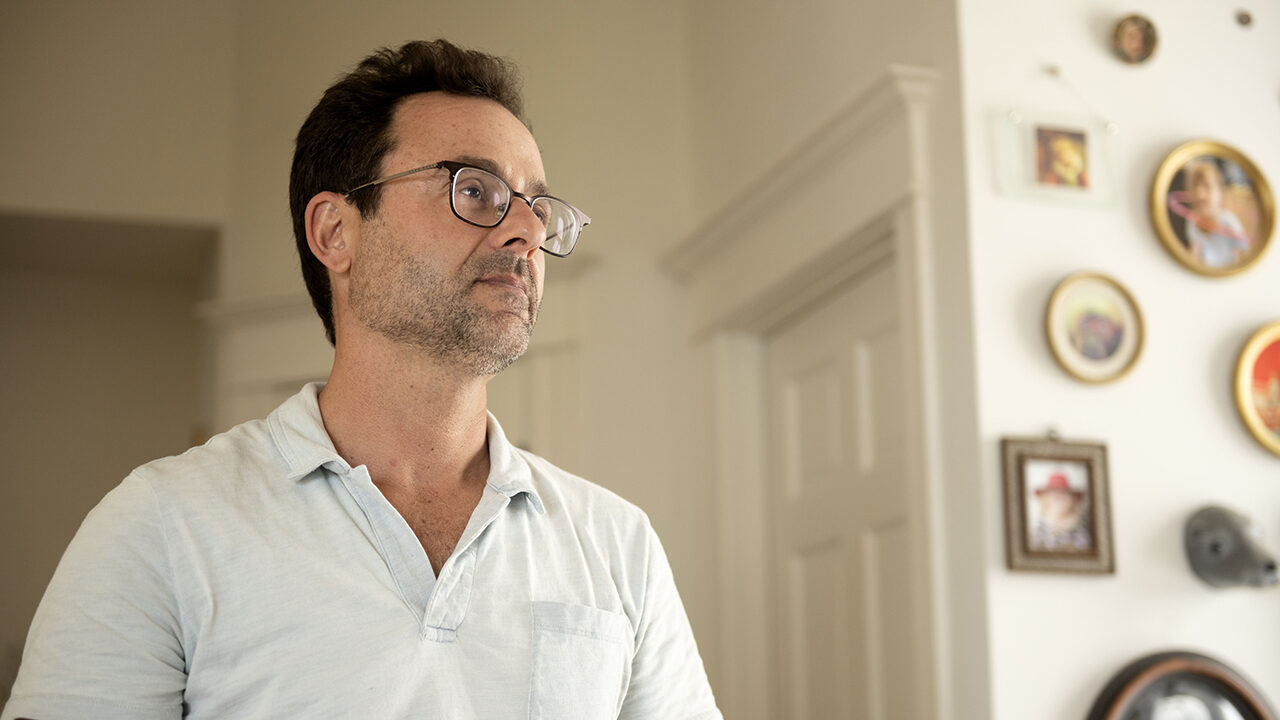
From Pacifica, Oren Rubinstein watched the emotional videos of the hostages reuniting with their families. And he cried.
Rubinstein’s cousins, Shiri and Noga Weiss, mother and daughter, were kidnapped from their home on Kibbutz Be’eri by Hamas terrorists on Oct. 7, 2023. Fifty days later, they were among the hostages freed during a short cease-fire. More than 120 Be’eri residents were murdered on Oct. 7, including four members of Rubinstein’s extended family.
Last month, Rubinstein stood with his relatives in the Be’eri cemetery, surrounded by graves all “with the same death date,” he said. They gathered to mourn and bury Ilan Weiss, the husband of Shiri and the father of Noga and her two sisters. In August, the Israel Defense Forces had recovered Ilan’s body from Gaza.
“We’re standing by the families that are still grieving,” Rubinstein said Tuesday, reflecting on the Israeli families awaiting the remains of their loved ones or mourning the soldiers killed in Gaza.
Despite the horrors of the war, the return of the last living hostages provided a moment to celebrate, Rubinstein said.
“I still think about what’s left to do, but tonight is to celebrate and … to really just care for everybody that’s been impacted by this.”
Marco Sermoneta, Israel’s S.F.-based consul general to the Pacific Northwest, described the complexity of the current moment.
After nearly 740 days of war, “it feels too soon to remove the yellow pin,” he said.
“Just like every Israeli, we are all closely watching and hoping the process would go as agreed,” he said. “One dominant sensation is a huge relief. But all of us understand that this is not over yet. Hamas is not complying with its obligations” to return all of the remaining bodies of hostages.
Sermoneta also reflected on the rise in antisemitism that has accompanied the war.
“The job of fighting antisemitism really slapped all of us in our faces. It will continue to be top of mind for the community,” he said.
Meanwhile, Shany Klein, a Sunnyvale activist who has rallied for the return of the hostages, expressed a sense of astonishment that the day she’d been working for had finally arrived.
A little over two weeks after the Oct. 7 attack, Klein founded Run for Their Lives, weekly walks and runs designed to raise awareness about the hostages. Since then, the movement has spread worldwide.
“The unbelievable — the very thing we in the Run for Their Lives global movement believed in — has happened. Twenty hostages are home, alive!” Klein said in a text to J. “It’s a small but powerful victory for humanity.”
In light of the return of the living hostages, and out of safety concerns for participants in some locations who have faced harassment and threats, Klein announced on Monday that the group will pause its global walks.
“As the war has ceased,” she wrote on Facebook, “times may again become uncertain and unsafe. Antisemitism and hate still exist.”
Several chapters already closed, she told J., after a man firebombed a Run for Their Lives event in Boulder, Colorado, in June and one participant later died of her injuries.
“From now on,” Klein said Tuesday, “we recommend that our global leaders shift their focus — from running for the lives of the hostages, to acting for… the families of the fallen hostages still waiting for the return of their loved ones.”