
Just two weeks ago in Israel, the first of 20 living hostages began returning home, families were being reunited after more than two years, and a nation was holding its breath with cautious hope for what might come next.
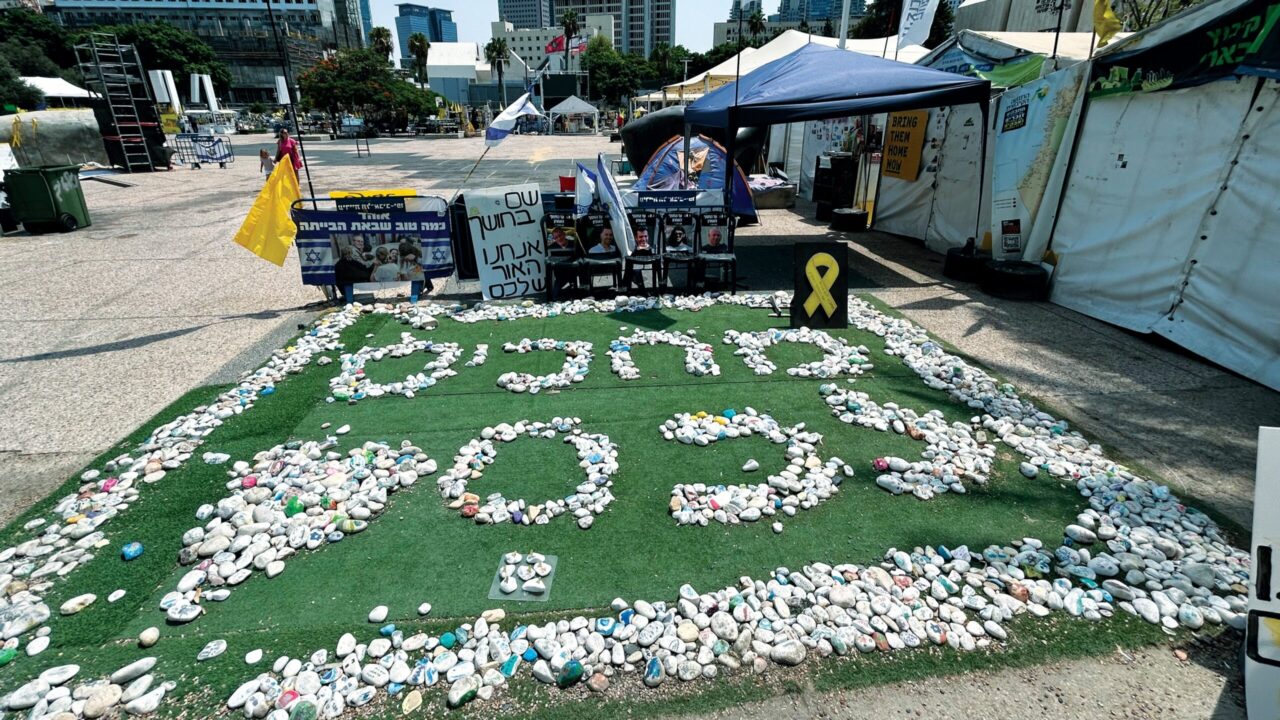
I was in Israel during this time and felt fortunate to stand in Hostages Square in Tel Aviv on Oct. 10. Thousands gathered on that Sukkot Friday to sing Hallel, age-old prayers of gratitude for release from captivity. We prayed, some of us with lulav and etrog in hand, for the seeds of hope planted by an arrangement coming together to release all of the hostages, to release Israel from war, and to release hope from the darkness that has held so many in its grip in Israel and in Gaza.
What struck me most was not the prayer itself but who was there: secular and religious, young and old, people from every part of Israeli society standing together — united in anxious hope, anticipation and gratitude.
Then on Oct. 13, I returned to that same square as the first group of remaining, living hostages were released. Big screens showed them talking to their families by phone and traveling the road back to Israel from Gaza. With each image, the crowd erupted in cheers — joy and relief pouring out even as we felt the shadow of sadness for all that was lost and doubt about the future.
Two days later, on the second yahrzeit for those killed on Oct. 7, 2023, I was at Har Herzl, Israel’s national cemetery, for a memorial service at the grave of a 20-year-old lone soldier from Britain who was killed defending his base from Hamas — a base that was protecting nearby kibbutzim just 5 kilometers from Gaza City. He was the son of family friends.
Standing there, I felt the full weight of what Rachel Goldberg-Polin, Hersh’s mother, described at a Jerusalem vigil on the weekend just before the hostages were released. She spoke about holding “paradoxical and yet appropriate sensations at the same time.” Drawing from Ecclesiastes, which we read during Sukkot, she reminded us: “There is a season for everything and a time for everything. But now we are being asked to digest all of those seasons, all of those times at the exact same second: winter, spring, summer, fall — to experience all four, right now.”
“A time to weep and a time to laugh — and we have to do both right now,” she continued. “A time to sob and a time to dance — and we have to do both right now.” As she acknowledged the difficulty of doing all of this at the same time, she implored us to show “delicate tenderness and holiness toward each other.”
Many of us hold gratitude for those released and devastating grief for those who will never come home. Deep sadness for those who are wounded — of body and of mind — and profound hope for peace alongside recognition of tremendous loss. Celebrating life while honoring those who died, caring for those who are broken. We hold it all at once. This crushing mixture is hard to hold. Still, for many of us, it is our reality.
At San Francisco’s Jewish Community High School of the Bay, where I serve as head of school, we will keep counting the days until the last of the hostages, including those returning in coffins, come home. And we will keep counting on each other to hold space in our hearts for them, for their families and for all who continue to wait and hope.
The Jewish tradition teaches that every human being is created b’tzelem Elokim — in the Divine image. For me, this also means holding space in my heart for the loss of innocent life beyond Israel’s borders.
At this moment in Jewish history, we don’t need to have perfect words or clear answers for each other. We just need to show up with “delicate tenderness and holiness toward each other.”
Jewish history and life — in real time. Through it we are creating the Jewish future together.