
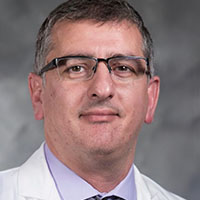

J. is the media partner of the 2025 Z3 Conference at the Oshman Family JCC in Palo Alto on Nov. 9. This week, we are publishing a trio of op-eds from speakers at this year’s conference, just a slice of the diverse perspectives on the Israel-diaspora relationship that attendees will be able to hear at the event. They were solicited and edited solely by J.
History will remember Oct. 7 not only for its brutality, but for the seismic rupture it caused in the human spirit. The atrocities committed that day shattered lives across borders and identities.
What followed in Gaza were scenes of devastation I could never have imagined. Yet amid the rubble, something else was born — something even I did not believe possible. It was the revelation that in our deepest suffering, we can still choose to build, to heal and to stand together. It was the truth that, even in war, we are better together.
Before that day, my life was defined by ambition. I had dedicated decades to becoming one of the premier experts in the field of neurosurgery on the world stage. My focus was singular: professional excellence and personal advancement.
As a Palestinian descendant living abroad, I had formed deep relationships across cultures and faiths, including cherished friendships within the Jewish community. I believed those relationships to be unbreakable — until they were tested by collective grief and suspicion.
In the wake of Oct. 7, I felt the ground shift beneath me. Conversations were cut short. Trust dissolved. I saw in the eyes of friends not familiarity but fear. My heritage became a barrier. For the first time, I experienced what it meant to be judged not by who I am, but by where I come from.
The emotional toll was unbearable, but it also became a catalyst. I made a vow to reject despair, to use everything at my disposal not for rebuilding my reputation or career, but for rebuilding humanity. My North Star became clear: to provide immediate relief and to build bridges of hope in a world pulling itself apart.
In December 2023, I joined the first medical convoy permitted to enter Gaza since the war began. Crossing that border was like stepping into another realm, one where time was measured not in minutes but in lives lost. Hospitals were overwhelmed. Supplies were scarce. The cries of injured children echoed through corridors that had once been schools and homes. I operated on dozens of severely wounded children, many of whom had lost their entire families. No medical training prepares you for the moment when a child wakes from surgery asking for a mother you know will never come.
I returned in April 2024. The conditions were even more dire. Yet even amid suffering, I witnessed something extraordinary: resilience. Children who had next to nothing still shared what little they had. Strangers comforted one another as kin. It was in those moments that I understood: War can destroy buildings, but it cannot extinguish the human capacity for love.
During these missions, I not only operated on patients, but used significant personal resources to pay local Palestinians to help search for Israel’s hostages. Pain does not discriminate, and neither can compassion.
I have also traveled to Israel during the war. When I visited the ruins of a kibbutz and the site of the Nova music festival, a vision took hold. Surrounded by evidence of death, I chose to imagine life. I imagined a village, not for one people, but for all children — Palestinian and Israeli — orphaned by this conflict. A place of healing, education, joy and safety. A village that would say to the world: We refuse to raise another generation on the narratives of hate.
The idea was bold. The village I pictured would include a school, a pediatric field hospital, rehabilitation centers, therapy services and a community where every child would be treated not as a symbol of war, but as a promise of peace. When I first shared this idea with major NGOs, U.N. agencies and government officials, I was met with skepticism, disbelief and even ridicule. They said it was impossible logistically, politically and financially.
But what they did not see was what I had seen. I was able to muster, one by one, a network of Israelis and Palestinians who, behind the scenes, away from politics and cameras, believed in something greater than revenge. These were people willing to risk reputations, careers and even safety to build a future rooted in shared humanity. These unlikely alliances, forged in secrecy and trust, turned the impossible into reality.
On July 26, in Deir al-Balah in central Gaza, we opened the Academy of Hope. It now provides holistic care to 600 orphans, with education, daily hot meals, medical treatment and psychotherapy. They do not only learn math and language; they learn play, laughter and possibility. They are not spoken to as victims, but as future leaders.
The success of the Academy of Hope ignited a movement. Thousands of Israelis and American Jews joined in partnership to construct a second academy, this one for 1,500 orphans. The momentum accelerated as organizations like World Central Kitchen and Longer Tables joined forces with us. Together, we are building four additional academies, projected to be completed by mid-November, to serve over 6,000 orphaned and vulnerable children.
This effort has expanded beyond education. We are delivering baby formula, essential medicines and pediatric supplies. We have rescued zoo animals to be integrated into therapeutic programs for children. We have acquired a hospital and are converting it into Gaza’s only tertiary, multi-specialty hospital, an institution that will stand long after the war ends, as a symbol of what cooperation can build.
None of this would have happened without a radical belief: that we are better together.
Better together is not a slogan. It is a lifeline. It is the antidote to hate, the refusal to let extremists dictate our future. It is the understanding that a child’s life is not worth more on one side of a border than the other. It is the courage to reach across lines drawn in blood and say: Your suffering is my suffering. Your healing is my healing.
Yes, the world is in a time of darkness. But even in this darkness, there are sparks — individuals, communities, networks of conscience — daring to dream outrageously. We are not waiting for politicians or treaties. We are building peace with our own hands, one child at a time.
To believe we are better together is to believe in the future. It is to build bridges where others build walls. It is to stand firm in the truth that hope is not naive. It is necessary.
And if those who have suffered most can choose hope, then so can the world.
In Gaza, amid war, we are building not just shelters, but sanctuaries. Not just schools, but futures. And not just hospitals, but healing. No matter how loud the voices of conflict may be, there is a truth that cannot be silenced: We are, and always will be, better together.