

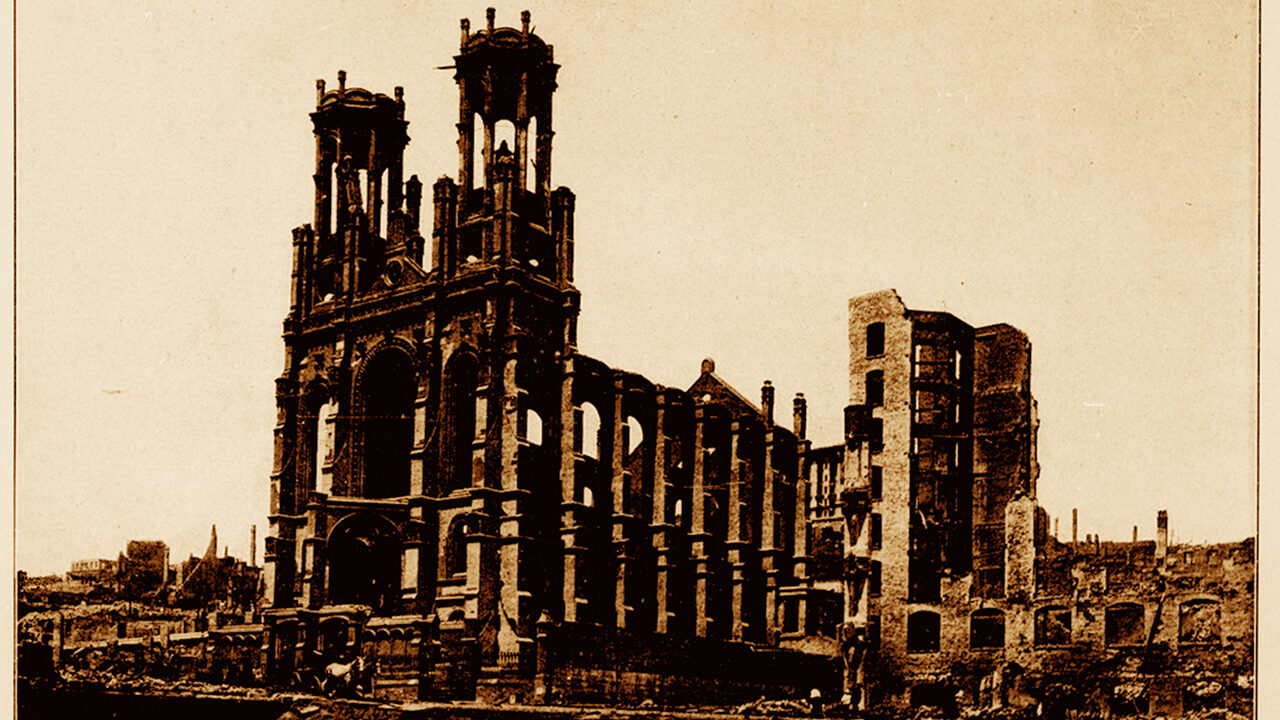
This paper is 130 years old. That’s over 6,700 Shabbats, not to mention scores of Hanukkahs, Thanksgivings, Passovers and even quite a few Jewish Christmases.
When this paper was founded in 1895, California had only been part of the U.S. for 45 years, but the city had a robust population of close to 300,000 and a thriving mercantile scene that arose during the rough-and-tumble boom of the Gold Rush. While the Jewish community may have been a bit sparse outside the city, there were also Jews (and synagogues and cemeteries) scattered throughout the countryside and towns.
Now San Francisco is almost three times larger than it was in 1895, while the Greater Bay Area has almost 8 million residents. Jews are an integral part of the state at every level, not to mention a big part of the region’s current economic boom. This time, it’s the likes of Mark Zuckerberg in place of giants like Levi Strauss.
To commemorate our 130th year in the Jewish news business — or our b’nai mitzvah times 10, if you prefer — we’ll take a stroll through history over the next two J. Archives columns, ambling through 13 decades of The Emanu-El (our original name), onto several versions of “The Bulletin” and, finally, to J. For each decade, we’ll pick out one story that was published around the paper’s November anniversary.
These selections will give only a small taste of where we’ve been, but there’s much more to explore in our digitized archives, which are available online to browse for free.
The 1890s: The first issue, dated Nov. 22, 1895
Most of our first edition was an introduction and an answer to the question, “Why another Jewish paper?” There were others in California at the time, including a couple in S.F., but founding editor Rabbi Jacob Voorsanger, who led S.F. Temple Emanu-El, wanted to create a “rational” paper that would present local news but also support American Reform Judaism, which was only about 50 years old at the time.
Along with local news, ads and a society page in that first issue, there was also this bit of news from Berlin, decades before the Holocaust, about a notoriously antisemitic German politician; the optimistic note is chilling in hindsight.

“Rector Ahlwardt, whose ghost will not down [sic], has prepared a bill confiscating all Jewish wealth to the State, and reducing the Jews, by law, to the position of day-laborers. One cannot avoid looking at the humorous side of such suggestions. They tend to show the hopeless want of both cause and logic in the attitude of the anti-Semites. As a political measure, called into existence by Bismarckian influences, anti-Semitism is dead.”
The aughts: The Russians are coming, Nov. 24, 1905
Russian territories were in the grip of pogroms that would eventually lead to a surge in immigration to the U.S., which itself would cause some soul-searching for the Jews already here. American Jews were raising money, and an editorial by Voorsanger also called for a central body to organize help.
“The critical times that confront the Jewish people demand heroic measures. Eight millions of Jews in Russia and Roumania, not to mention those of the farther east, await the hour of their deliverance with impatient tears. The womanhood of our people has been degraded and outraged in the late Russian massacres, which have made the Russian countries infamous… The world is loth to help us in this gigantic effort: its pulse does not stir for the calamities of the unhappy Jew. If we remain indifferent, another century and twenty revolutions will overlook the Russian Jew.”
On the next page, a list of West Coast donors to the Russian Jewish Relief fund was published; it had raised $28,500 so far — the equivalent of over $1 million today.
The teens: Lamps for the needy, Nov. 19, 1915
There are many, many instances in the paper of calls for charity over the years. Jews in America were clearly ready to both ask and give, as this call from the Children’s Auxiliary of the Hebrew Board of Relief shows.
“Under uncertain, flickering gas jets, set up near the ceiling, nearly all of our little children spend hours every evening doing home work and reading newspapers, books, etc. The purses in these homes are not elastic enough for all needs. Children have to eat first and headaches and weak eyes do not cost anything; at least, not in dollars and cents, for there are free clinics. Perhaps somewhere in your storerooms or cellars there may be an unused gas lamp or even a good coal oil lamp with a shade. If so, will you please let us have them to put into those needy homes? While you are looking for those lamps it is possible that you may find that there is a forgotten baby buggy or cart that you are not likely to use again.”
The ’20s: Expanding to Oakland, Nov. 20, 1925
The Emanu-El was (and still is!) headquartered in San Francisco, but it was a paper for the whole of Northern California. In 1925, prominent rabbi Rudolph Coffee wrote for the paper about 50 years of Jewish life in Oakland, dating back to the first steps taken toward an official community in November 1875 at a meeting “in the store of Nathan Rosenberg.”

“Oakland is a growing community and its present rate of progress is excelled by few cities in the country. Its industrial development, its splendid schools, its temperate climate and many other natural advantages lead to the hope that here will develop in time one of the greatest cities on the Pacific Coast. The members of Temple Sinai believe that the coming growth of Oakland means the building here of a large Jewish center. While there will never be as many Jews in Oakland as across the bay, the possibilities for growth and for service to God and country must not be overlooked.”
The ’30s: The Nazi Olympics, Nov. 15, 1935
In 1935, this paper was often occupied with the controversy over whether America would boycott the Olympics being held in Nazi Germany. (We didn’t, by the way.) Meanwhile, experts were predicting the imminent fall of Naziism for economic reasons.
“David A. Brown, national chairman of the $500,000 American ORT campaign, on his return to this country, predicted the beginning of the end of Hitlerism. ‘The German people,’ said the ORT chairman, who has just completed a survey of the organization’s European activities, ‘have lost confidence in their own currency. Nothing, not even the butter lines in Berlin, is as indicative of the panicky condition of the national state of mind as is this illicit emigration of capital from Germany. This flight of capital from a country has preceded economic wreckage in Russia, post-war Germany and in all other countries that have so suffered since the World War. Nothing that has developed, as yet, is as encouraging to the foes of Nazism.’”
We end here, in 1935, with another eight decades to travel in our next column. What will we find in the war years, the postwar boom, the hippie years and beyond?