

The Torah column is supported by a generous donation from Eve Gordon-Ramek in memory of Kenneth Gordon.
Beshalach
Exodus 13:17-17:16
A dear friend, who is a spiritual seeker and artist, shared with me recently that he feels most at home when he hears the hymns and prayers in Jewish synagogues and Black churches. He added that he had also been deeply moved by the music at an annual festival for Indigenous peoples.
Though identifying with none of those groups directly, he wondered aloud why these particular communities touched his soul so profoundly.
“Maybe it’s because, in defiance of absolutely everything that they’ve endured, they find a way to keep singing,” I ventured, eliciting tears from both of us.
In Beshalach, this week’s Torah portion, the Israelites arrive at the Sea of Reeds with Pharaoh’s thundering chariots in pursuit. Trapped, they cry out in terror. The Eternal directs Moses to stretch out his hand, and with the power of a Divine wind, the waters part, the freed slaves walk through to freedom, and the doomed Egyptians perish beneath the churning sea. It took unimaginable suffering and unnecessary loss of life, but the Israelites have been delivered.
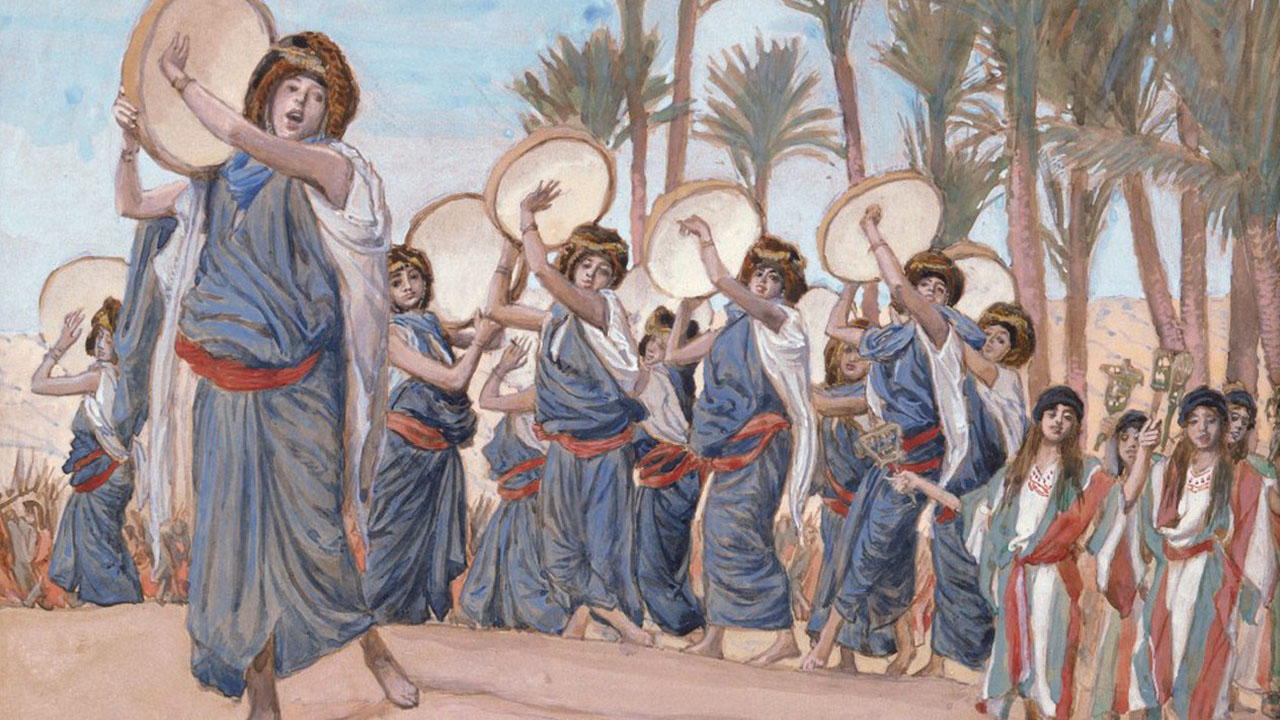
“Then, Moses and the Children of Israel sang a song to the Eternal.” (Exodus 15:1)
I always imagine the moment before the Song of the Sea as a breathless, expectant pause, like when a conductor raises her baton and the orchestra sits in total stillness, awaiting the direction to begin. In that moment, after 25 generations of bondage, during which time we heard only cries of pain from the enslaved, a song of gratitude and exaltation rises from the wilderness.
The rabbis of the Talmud (Sotah 30b) have a spirited discussion about the way the song was intoned. Rabbi Eliezer suggests Moses sang each phrase and the congregation echoed him word for word. Rabbi Akiva offers that Moses moved through the song, and the people sang only a repeated refrain, such as “I will sing to God,” after each line. Rabbi Nehemiah imagines Moses beginning the song alone and the people singing the remainder together, in a miraculous moment of collective prophecy.
What resonates with me about the Talmudic debate is the contentions of Rabbis Akiva and Eliezer that the 18-verse song was sung antiphonally, leisurely and carefully as each phrase was heard and absorbed. For the first time in centuries, the people moved at their own pace, freed from the taskmasters’ whips and the unrelenting, grueling labor.
What could have been more perfect for the Torah to depict at that earth-shaking moment than a rousing choral event in the desert? So much research has proven that singing and making music, especially in a group, improves both physical and psychological health. These ancient activities help with relaxation and breathing, contribute to a healthy immune system, reduce stress, improve memory and increase participants’ sense of happiness and social connection.
As University of Oxford psychology researcher Jacques Launay writes succinctly, “Song is a powerful therapy indeed.”
Moses, Miriam and the newly freed Israelites seemed to know intuitively that their song would be the first needed step toward healing after indescribable trauma.
But I can also imagine some among the vast assembly thinking: How can we sing after what we have just witnessed? Would not silence, formal prayer or more tears have been more appropriate?
A well-known midrash describes God silencing the angels who rejoiced at the Egyptians’ downfall and declaring, “My creations are drowning in the sea, and you want to sing?” (Exodus Rabbah and Megillah 10b) We, too, embrace that Godly compassion for human suffering as we lessen our cups of joy at the Passover Seder by spilling drops of wine when the plagues are remembered.
In the moment of deliverance, though, the people’s song is untempered and jubilant beyond measure.
Truly, how could they keep from singing? As my sensitive friend noticed, the ability of persecuted people to continue to compose and share music, age after age, is a gift that can bring light in days of darkness and danger. Singing, especially, is often an act of courageous defiance in the midst of despair.A beloved hymn that encapsulates this idea, and one I take comfort in a lot these days, was sung often by the late, great Pete Seeger. “How Can I Keep from Singing?” acknowledges the impulse to sing that sometimes cannot be denied and encourages us to be secure in faith and the power of song, no matter what and whom we face.
Here are some excerpts from a version of the song edited by Doris Plenn:
My life flows on in endless song
Above earth’s lamentation.
I hear the real, though far-off hymn
That hails the new creation
Above the tumult and the strife,
I hear the music ringing;
It sounds an echo in my soul
How can I keep from singing?
What though the tempest loudly roars,
I hear the truth, it liveth.
What though the darkness round me close,
Songs in the night it giveth.
No storm can shake my inmost calm
While to that rock I’m clinging.
Since love reigns over heaven and earth
How can I keep from singing?
I can only surmise that the original lyricist, known only as Pauline T., was thinking of the Song of the Sea when she submitted her poem to The New York Observer, where it first appeared on Aug. 27, 1868. In it, I hear echoes of the ordeal of Egypt and the Exodus, as well as the promise of the new dawn that had risen. The Israelites would now need to lean on faith in God and each other and strengthen themselves for the road ahead. They did so with song. How could they not?
May we continue to sing songs of redemption.