

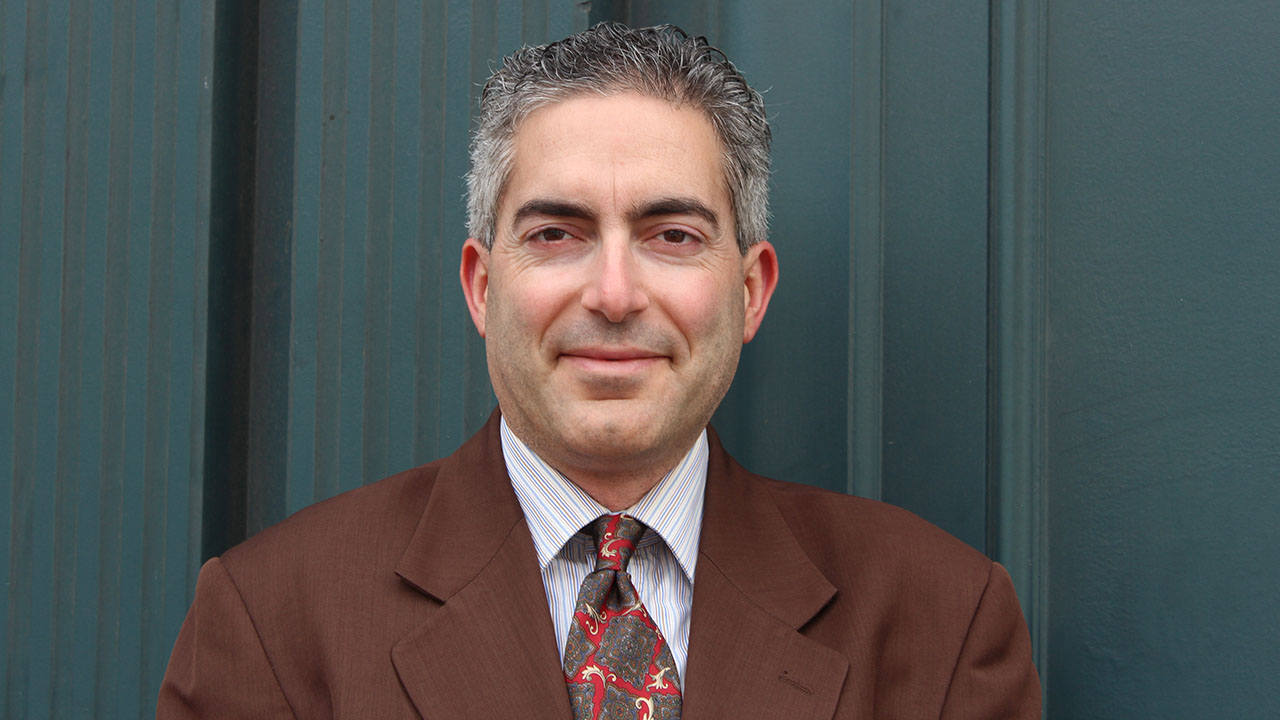
Born into a prominent Persian Jewish family, Shahpour “Shawn” Matloob was just 6 years old on Feb. 11, 1979, when the Iranian Revolution culminated in the dramatic fall of the Shah. The trajectory of his life was forever changed by the cataclysmic event, as the pro-Western Pahlavi dynasty was overthrown and replaced by a theocratic Shiite Islamic republic.
The new regime imposed strict conservative religious laws, including mandatory hijabs for women, and reversed the country’s foreign policy by developing an anti-Western, anti-U.S. and anti-Israel stance, while projecting its influence across the Middle East, contributing to the rise of Islamic extremism.
Matloob’s father was a respected psychiatrist who loved his job and had no intention of leaving Iran, despite the mass exodus of most of the family’s relatives, friends and Jewish community.
Matloob, on the other hand, knew by age 12 that he wanted to come to America.
“I knew that I didn’t have a future in Iran,” he said, noting that as a gay Jewish person who wanted to pursue a higher education, he would have had a very difficult time surviving there.
It took him two years to convince his parents to let him go. But at age 14, on the day he would have started high school in 1987, he instead started his journey to immigrate to the U.S.
Matloob was smuggled out of Iran with other Jews, spending Rosh Hashanah in the dangerous desert between Iran and Pakistan. He flew from Karachi to Austria and stayed in Vienna for about 10 months with other Jewish refugees from Iran and the Soviet block, supported by the Hebrew Immigrant Aid Society (now called HIAS). Finally, about a year after leaving his parents in Iran, he arrived in Los Angeles as a Jewish refugee.
From there he lived with a series of uncles, aunts and cousins until he made his way to the Bay Area, attending UC Berkeley and UC Law San Francisco.
Matloob, who is a member of Congregation Sha’ar Zahav, has been practicing immigration law for over 25 years. In addition to running his own firm, Matloob is dedicated to helping immigrants in any way he can, from mentoring other attorneys for asylum and immigration cases to representing naturalization applicants pro bono and volunteering with the Jewish Community Relations Council Bay Area, AIDS Legal Referral Panel, American Immigration Lawyers Association and the Bar Association of San Francisco’s Justice and Diversity Center. In September he was hired by UC Berkeley as a part-time staff attorney providing immigrant legal services for legal permanent residents at his alma mater.
Matloob spoke with J. about Iran, immigration and how his personal story affects his professional practice. This interview has been edited for length and clarity.
What was your childhood like in Iran?
I was born in a very Jewish but nonobservant family. The only observant person in my family was my paternal grandfather, who was the principal of the first Jewish school in Tehran. So before the Islamic Revolution, we would only celebrate the major holidays. But when the revolution happened, religious studies became mandatory. My parents had to decide whether they were going to send me to Jewish classes or Islamic classes. On Friday mornings I would go to Jewish studies and Hebrew and Torah studies, which my parents would never have had me do if it wasn’t mandatory.
What was it like to be Jewish living under an Islamic government?
My mother had many issues. Almost all of her relatives had left, and the government wanted to confiscate their properties, so she had to go for regular interrogations. Then, from 1985 to 1992, she was forbidden from leaving the country, since they kept her hostage while trying to confiscate her relatives’ properties. My mother experienced a lot of hardships for being Jewish. On the other hand, my father, because he was a psychiatrist during the war with Iraq, was very respected, so it kind of counterbalanced in a way. At the beginning of the revolution, we were afraid they were going to come to our house, but nobody ever did. They asked my father to go for one interrogation, and once they found out what he did, they never called him in again.
What was it like coming to America?
I was coming to what we call “Tehran-geles.” Los Angeles was like Tehran before the revolution, which is where I wanted to live. I knew more people, more cousins and friends in my high school in L.A., than I knew in the school I left in Iran.
Was there a moment when you realized, “OK, I’m going to be fine here”?
I knew that my future was here. Despite all the difficulties of immigrating, especially after the first eight or nine months when I was staying with different family members, I did not know where I was going to live. So even at the risk of becoming homeless, I never had a doubt that I would want to live here. It was the best decision of my life. It never crossed my mind that I would ever go back.
Did you always know you wanted to become a lawyer?
No, when I came to L.A. one of my uncles gave me the idea. And watching “L.A. Law” at the time, I guess, helped too. When I applied for my own naturalization, I was a Cal student. I didn’t have the resources to even look for an attorney, and I thought, “as a Cal student, I can do it by myself.” I tried it, and I was successful. So then my next client was my mom. By then, I was in law school when I petitioned for my mom, who was my second client. She immigrated in 1998, but she continued going back and forth because her brother and my brother lived there.
How does your personal story affect the way you show up for clients?
I came here as a Jewish refugee, so definitely being Jewish Iranian is a big part of my immigration story. The fact that I knew at the age of 12 I had to immigrate helps me understand why other people immigrate too, and what they go through to immigrate, especially my younger clients.
What would you say is the hardest part about immigrating to the U.S. that people usually underestimate?
One big thing is not knowing how long it takes for those who want to come here legally. If it is possible at all, it may take many years waiting in their home country. Even getting here took me a year. People think immigrants just get on a plane and come here.
What is one change you’d make to the U.S. immigration system if you could?
Comprehensive immigration reform to legalize the status of over 11 million undocumented people here. Many of them have lived here for many, many years. Many have mixed families, including U.S. citizens, spouses, children, parents. They’ve been paying taxes and they do not get the benefit of the taxes they pay. Many of them own homes and businesses. So I would do a comprehensive immigration reform to legalize their status, but in a way that doesn’t put them ahead of the line. One argument that we hear all the time is that many people are waiting abroad for their turn, and I do sympathize with that. We all benefit every single day from the services provided by the more than 11 million undocumented people who, especially these days, have been living in fear and uncertainty of whether they can remain here.
What do you wish policy-makers understood about people who immigrate?
I wish that policy-makers would push for humane conditions for those who are here and stop ICE from its inhumane activity. That will be the first step, considering what’s going on in Minnesota and many other parts of the country, with the way ICE has been treating people. Government officials say they’re going after the criminals, but the reality is the great majority of people they’re going after have no criminal records whatsoever. One thing people forget is that being undocumented here is not a criminal violation. It’s only a civil violation. So most of the people who the government is going after, terrorizing, only have civil violations and not criminal violations.
What is it like to watch what is unfolding now in Iran, especially as we are facing our own political crises here in the U.S.?
It’s a very difficult time, both as an immigration attorney and as an Iranian, but because my focus is on my work in immigration, what has been happening in this country to immigrants affects me almost every hour of my life, every moment of my life. But of course, what happens in Iran affects me and my friends. Many of my friends here are very much affected because they have many close relatives and friends there. The event I just came from before this conversation was a showing of a recent Iranian movie made underground, as many movies are made in Iran. It’s called “The Crowd,” and it’s a very brave movie about the LGBT community in Iran, which is, of course, also underground.
What has your experience been like as a queer Iranian Jew? Have you always been open about your identity?
For many years, I wasn’t. It took me a long time to initially tell close friends one by one, and then close family members one by one. I started going to my first coming out group in my first year of law school. Around the same time, in the mid to late ’90s, I found out about Sha’ar Zahav and that’s when I started going on and off.
Why did you struggle with coming out?
I would say first of all due to internalized homophobia, which I guess is very much related to the very conservative Persian Jewish community and culture. In many ways, the Persian Jewish community is a lot more conservative than both the Jewish community at large in the U.S., and also, I would say, even the Persian community at large.
What gives you hope right now?
That’s a hard one. What gives me hope is what the people are doing, especially these days. When I hear people in Minnesota, in freezing weather, are protesting and supporting immigrants, that’s what gives me hope. But I hope to see a lot more of it all over the country, and not just when there is a tragic incident in one location. I hope that we will see more widespread protests and general strikes against what’s happening to immigrants in this country.