

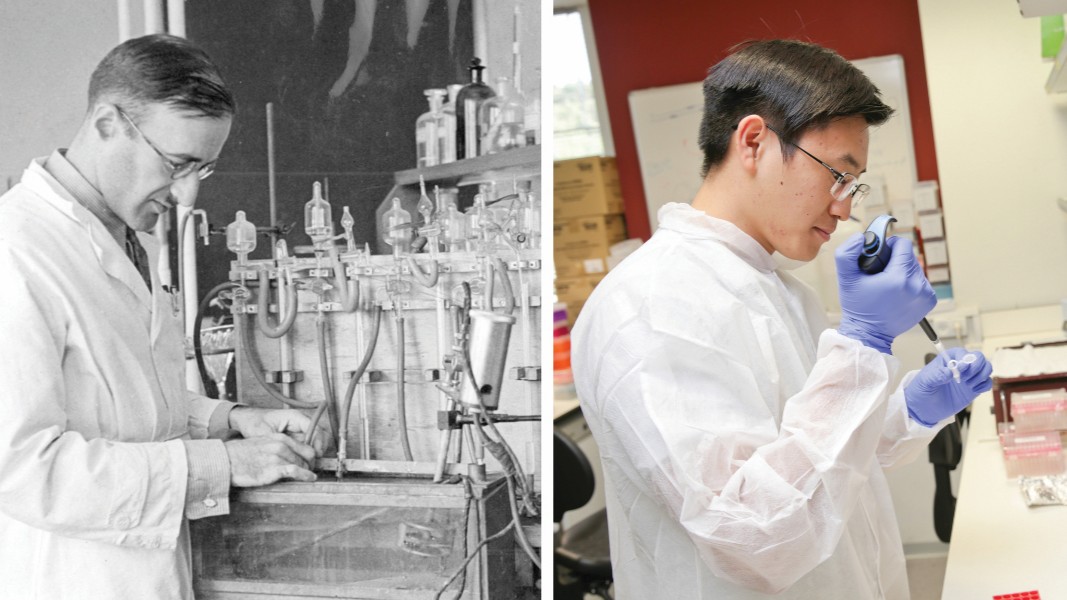
The establishment of the Hebrew University of Jerusalem (HU) in 1925 represented more than the founding of an academic institution; it embodied a visionary approach to knowledge creation that would fundamentally reshape scientific inquiry in the Middle East and beyond. Concurrently, the formation of American Friends of the Hebrew University (AFHU) under the leadership of philanthropist Felix M. Warburg created an unprecedented model of international academic partnership that has sustained and amplified the University’s impact for a full century.
This relationship produced measurable outcomes across multiple dimensions of human progress: scientific breakthroughs that have saved millions of lives, technological innovations that have transformed industries, and social research that has influenced policy worldwide. The partnership between AFHU and Hebrew University represents a paradigmatic example of how sustained philanthropic investment in academic excellence can generate returns that benefit all humanity.
Historical Foundation and Visionary Leadership
The conceptual framework for Hebrew University emerged from the First Zionist Congress in 1897, but its realization required the collaborative vision of extraordinary intellectual leaders. Albert Einstein, whose theoretical contributions revolutionized physics, served not merely as a founding father but as an active participant in the University’s development. His role extended beyond symbolic endorsement to practical engagement: he delivered the University’s inaugural scientific lecture, edited its first collection of scientific papers, and served on both the Board of Governors and Academic Council.
Einstein’s commitment to the institution was so profound that he bequeathed his entire literary estate and personal papers to Hebrew University in his last will and testament. This bequest, which included over 55,000 items ranging from scientific manuscripts to personal correspondence, established the Albert Einstein Archives as one of the world’s most significant repositories of scientific and intellectual history. The economic value of Einstein’s intellectual property rights, which Hebrew University holds exclusively, continues to generate resources that support research and education.
The University’s founding committee included other luminaries whose contributions shaped modern thought. Sigmund Freud, whose psychoanalytic theories transformed psychology and psychiatry, lent his support to an institution dedicated to advancing human understanding.
Martin Buber, the philosopher whose work on dialogue and human relationships influenced both academic discourse and practical conflict resolution, saw in Hebrew University a platform for exploring the fundamental questions of human existence.
Chaim Weizmann, who would become Israel’s first president, understood that the University represented what he termed “the first major project of modern Zionism.” His vision extended beyond nationalist aspirations to encompass a universal commitment to scientific progress and humanitarian advancement.

The Centennial Moment: Reflection and Vision
Joshua Rednik, CEO of American Friends of the Hebrew University, articulates the profound significance of this centennial milestone with clarity and conviction. “Over the last 100 years, few institutions have had as significant an impact on the land, people, and politics of Israel as the Hebrew University,” Rednik states. “We frequently say Hebrew University was the original Zionist project before Israel was even Israel. It has touched every corner of Israeli society.”
When Rednik assumed his role in 2022, he expressed being “thrilled and honored to lead AFHU into the future as the University approaches the centennial of its opening in 2025,” noting that “rarely has a University contributed so profoundly and left such an indelible mark on humanity through its award-winning research, visionary leadership, extraordinary facilities, brilliant faculties and dedicated students.”
Professor Tamir Sheafer, President of the Hebrew University, emphasizes the University’s comprehensive mission: “As a leading research institution, the Hebrew University sees itself as responsible for educating future generations, conducting groundbreaking research across nearly all fields of study, fostering extensive international engagement in both research and teaching, building strong ties with advanced industries in Israel and abroad, nurturing a diverse academic community, and translating knowledge into meaningful social impact while maintaining deep involvement in local communities, throughout Israel and within the international community as well.” His vision encompasses not merely academic excellence but social responsibility and global engagement, priorities that align seamlessly with AFHU’s commitment to connecting resources with Israeli innovation.
These perspectives from both AFHU and Hebrew University leadership demonstrate the alignment of vision and purpose that has sustained the partnership through a century of dramatic change and challenge.
Quantifiable Impact on Scientific and Medical Progress
The partnership between AFHU and Hebrew University has generated measurable outcomes that demonstrate the tangible value of sustained philanthropic investment in research excellence. Hebrew University faculty and alumni have received ten Nobel Prizes across multiple disciplines, with particular strength in economics and sciences. Fittingly, the most recent Nobel Prize was awarded in this centennial year to Prof. Joel Mokyr, an HU alumnus and current visiting professor, for his contributions to the understanding of the mechanisms underlying sustained technological progress and the role of innovation in economic development.
Daniel Kahneman’s receipt of the 2002 Nobel Prize in Economics for his work on behavioral economics, conducted while at Hebrew University, fundamentally altered how economists understand human decision-making. His collaboration with Amos Tversky produced insights that have influenced fields ranging from public policy to corporate strategy, with applications that affect millions of lives through improved healthcare delivery, financial services, and educational approaches.
Israel Aumann’s 2005 Nobel Prize in Economics recognized his pioneering work in game theory, mathematical frameworks that have proven essential for understanding strategic interactions in economics, politics, and social relations. Aumann’s contributions have practical applications in auction design, negotiation theory, and conflict resolution—tools that governments and organizations worldwide employ to achieve more efficient outcomes.
The University’s medical research has produced breakthroughs with direct humanitarian impact. Hebrew University researchers have contributed to advances in cancer treatment, Alzheimer’s research, and infectious disease management. The institution’s work in agricultural sciences has led to the development of drought-resistant crops and innovative irrigation technologies that address food security challenges in developing nations.
Perhaps most significantly, Hebrew University has generated over 11,500 registered patents, ranking among the top institutions globally for technology transfer and commercialization. These patents have spawned more than 180 start-ups, creating economic value that extends far beyond academic recognition. The University’s technology transfer activities demonstrate how basic research can generate practical applications that benefit society while creating sustainable revenue streams for continued scientific advancement.

opening ceremony held on HU’s Mt. Scopus campus on April 1, 1925.
Economic and Social Transformation
The partnership between AFHU and Hebrew University has catalyzed economic development that extends throughout Israel and into the global technology sector. Hebrew University graduates have founded or led major technology companies, contributing to Israel’s emergence as a leading innovation economy. The institution produces one-third of Israel’s civilian research output, making it a central driver of the “start-up” nation.
AFHU’s fundraising capabilities have been instrumental in this transformation. In this past fiscal year ending September 2025, the organization raised $89.2 million—the largest annual contribution in its history—demonstrating the continued confidence that American donors place in Hebrew University’s mission. This financial support has enabled the University to attract and retain world-class faculty, construct state-of-the-art research facilities, and provide scholarships that ensure access to education regardless of economic background.
The social impact of this partnership extends beyond economic metrics to encompass contributions to democratic governance, social justice, and cultural understanding. Hebrew University graduates include four Israeli Prime Ministers, numerous Supreme Court justices, and leaders across multiple sectors of Israeli society. Twenty-five percent of current Knesset members and two-thirds of Israel’s Supreme Court justices are Hebrew University alumni, indicating the institution’s profound influence on democratic institutions and legal frameworks.
The University’s commitment to diversity has created educational opportunities for students from all backgrounds, including Arab-Israeli students who comprise nearly 20% of the student body. This inclusive approach has generated research and policy recommendations that address minority rights, social integration, and conflict resolution—contributions that have relevance far beyond Israel’s borders.
Contemporary Challenges and Institutional Resilience
The two years following October 7, 2023, have presented Hebrew University with unprecedented challenges. The conflict resulted in over 7,500 Hebrew University students, faculty, and staff being called to military service and has had a profound impact on the entire university community.
Despite these challenges, the University has maintained its research output and educational programs, demonstrating the institutional strength that has remained for a century. The enduring partnership between AFHU and HU has been resilient during times of crisis and validates the long-term strategy that both organizations have pursued, showing how sustained philanthropic commitment creates institutions capable of weathering extraordinary difficulties while maintaining their core mission.
Hebrew University’s research partnerships span across continents, creating networks of scientific collaboration that amplify the impact of AFHU’s investments and extend HU’s knowledge and expertise across the globe. The institution maintains active research collaborations with leading universities in the United States, Europe, and Asia, facilitating knowledge transfer that benefits the global scientific community. AFHU stands squarely alongside the University in efforts to mitigate the worldwide rise in antisemitism and efforts to derail Israeli academia.
Future Directions and Strategic Opportunities
As both institutions enter their second century, strategic opportunities exist to expand their impact across multiple dimensions. Hebrew University’s goal of achieving a top-twenty global ranking is supported by AFHU’s commitment to raising $100 million annually, a target that would provide resources for faculty recruitment, infrastructure development, and program expansion.
The emergence of artificial intelligence, biotechnology, and sustainable energy as critical research areas presents opportunities for Hebrew University to build on its existing strengths in computer science, medicine, and environmental research. AFHU’s role in connecting American expertise and resources with Hebrew University’s research capabilities positions the partnership to address emerging global challenges in these fields.
The growing recognition of mental health, social inequality, and democratic resilience as critical societal issues aligns with Hebrew University’s strengths in psychology, sociology, and political science. Research in these areas, supported by AFHU’s fundraising capabilities, can generate insights and interventions that benefit societies worldwide.
The Boundless Potential of Collective Partnership
Now that the centennial year has concluded, the partnership between American Friends of the Hebrew University and the Hebrew University of Jerusalem stands as a testament to the transformative power of sustained philanthropic commitment to academic excellence. The measurable outcomes—ten Nobel Prizes, over 11,500 patents, hundreds of medical breakthroughs, and countless contributions to human knowledge—demonstrate the tangible returns that result from long-term investment in research and education.
More significantly, this partnership has created an institutional model that demonstrates how international collaboration can address global challenges while fostering scientific advancement and social progress. The relationship between AFHU and Hebrew University proves that sustained commitment to academic excellence generates benefits that extend far beyond the immediate recipients of that support.
The future remains uncharted, filled with challenges that current knowledge cannot fully anticipate and opportunities that emerging technologies will create. Yet, the century-long partnership between AFHU and Hebrew University has established a foundation of institutional strength, international collaboration, and innovative capacity that suggests no challenge is insurmountable when approached through collective commitment to scientific excellence and humanitarian values.
Through their continued partnership, American Friends of the Hebrew University and the Hebrew University of Jerusalem have demonstrated that there is no limit to what can be accomplished when vision, resources, and dedication combine in service of advancing human knowledge and improving the world for all people. The next century beckons with possibilities that their collective strength and shared commitment make not only achievable, but inevitable.
To learn more, please go to afhu.org.
***